If you click an affiliate link and subsequently make a purchase, I will earn a small
commission at no additional cost (you pay nothing extra). This is important for promoting tools I like and
supporting my blogging.
I thoroughly check the affiliated products' functionality and use them myself to ensure high-quality content for my readers.
Thank you very much for motivating me to write.
TL;DR:
I used AI to build tools quickly — and watched them quietly break or stall. The problem wasn’t AI. It was the lack of structure. By adding a clear problem statement, a detailed spec, milestones, and disciplined Git commits, I turned vibe coding into a repeatable system that builds apps I actually use.
📚 This post is part of the "AI Productivity Workflows" series
The AI Coding Workflow: From Vibe Coding to Deployed Apps
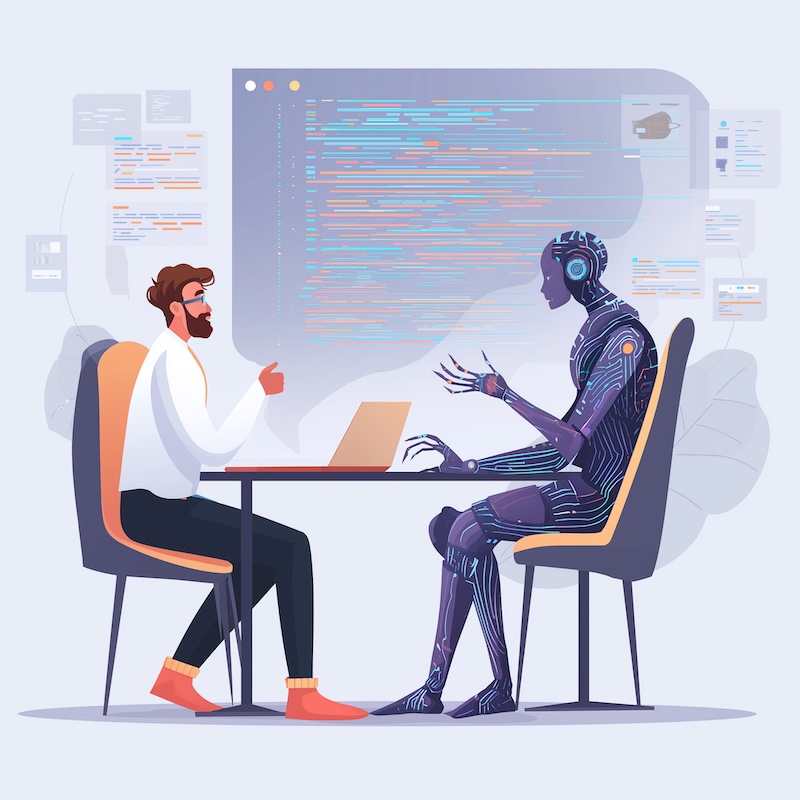
Vibe coding is an AI-assisted development approach where you describe an app idea in natural language and an AI tool generates working code directly, without an upfront specification or implementation plan.
You open an AI tool, describe an idea, and minutes later, you have working code.
I built apps that way, too.
Some worked. Most didn’t last.
Those vibe-coded apps were exciting experiments — but not reliable tools.
Over time, I realised something uncomfortable:
Vibe coding wasn’t enough.
If I wanted apps that I actually used — apps that saved time, automated workflows, and ran reliably — I needed structure.
Why Vibe Coding Fails Without Structure: A Case Study
I built an AI-powered tool in one evening. It felt magical — until it broke when I needed it most. I couldn’t explain the architecture, trace the changes, or roll back safely. The tool worked, but it wasn’t built to last. I rebuilt it with a clear problem definition, a spec, milestones, and Git discipline. The second version didn’t just run — it held up. That’s when I realised vibe coding wasn’t enough.
AI can generate code in seconds — but without a structured AI coding workflow, it rarely produces reliable software.
The AI Coding Workflow: From Idea to Deployed App
🔒 Subscribe to keep reading.
Key Takeaways: Building a Reliable AI Coding Workflow
🔒 Subscribe to keep reading.
You've hit a Deep Dive tutorial.
I spend dozens of hours researching, coding, and breaking things to write these guides. This content is free, but reserved for my subscriber community. Drop your email below to unlock this guide (and all past/future deep dives):
Full content temporarily unavailable — refresh in a moment
You're in
I'll send weekly notes on AI tools, Python, and what I'm actually building. Check your inbox for Set a password to unlock articles — the form does not log you in.
New subscribers get an inbox mail: Set a password to unlock articles. The form does not log you in — use the same email afterwards.
References
About Elena
Elena, a PhD in Computer Science, simplifies AI concepts and helps you use machine learning.
Citation
Elena Daehnhardt. (2026) 'Vibe Coding Wasn't Enough — The Lightweight System I Use to Turn AI Prompts into Deployed Apps', daehnhardt.com, 04 March 2026. Available at: https://daehnhardt.com/blog/2026/03/04/vibe-coding-wasn-t-enough-the-lightweight-system-i-use-to-turn-ai-prompts-into-deployed-apps/
Want the Fantastic AI 2026 toolkit and the Vibe Coding Checklist in your inbox?
Fantastic AI: The 2026 ToolkitVibe Coding ChecklistAI Coding Safety Card
+4more free gifts
You're in
I'll send weekly notes on AI tools, Python, and what I'm actually building. Check your inbox for Set a password to unlock articles — the form does not log you in.