Data is Food 🍎
If you want to be strong, you eat vegetables. If an AI wants to be smart, it eats Data.
Human Growth:          AI Growth:
┌──────────┐          ┌──────────┐
│  Food    │          │  Data    │
│  🥕🍎🥛  │    →     │ 📊📷📝  │
└──────────┘          └──────────┘
     ↓                     ↓
 Stronger!            Smarter!
Supervised Learning (School with a Teacher) 👨🏫
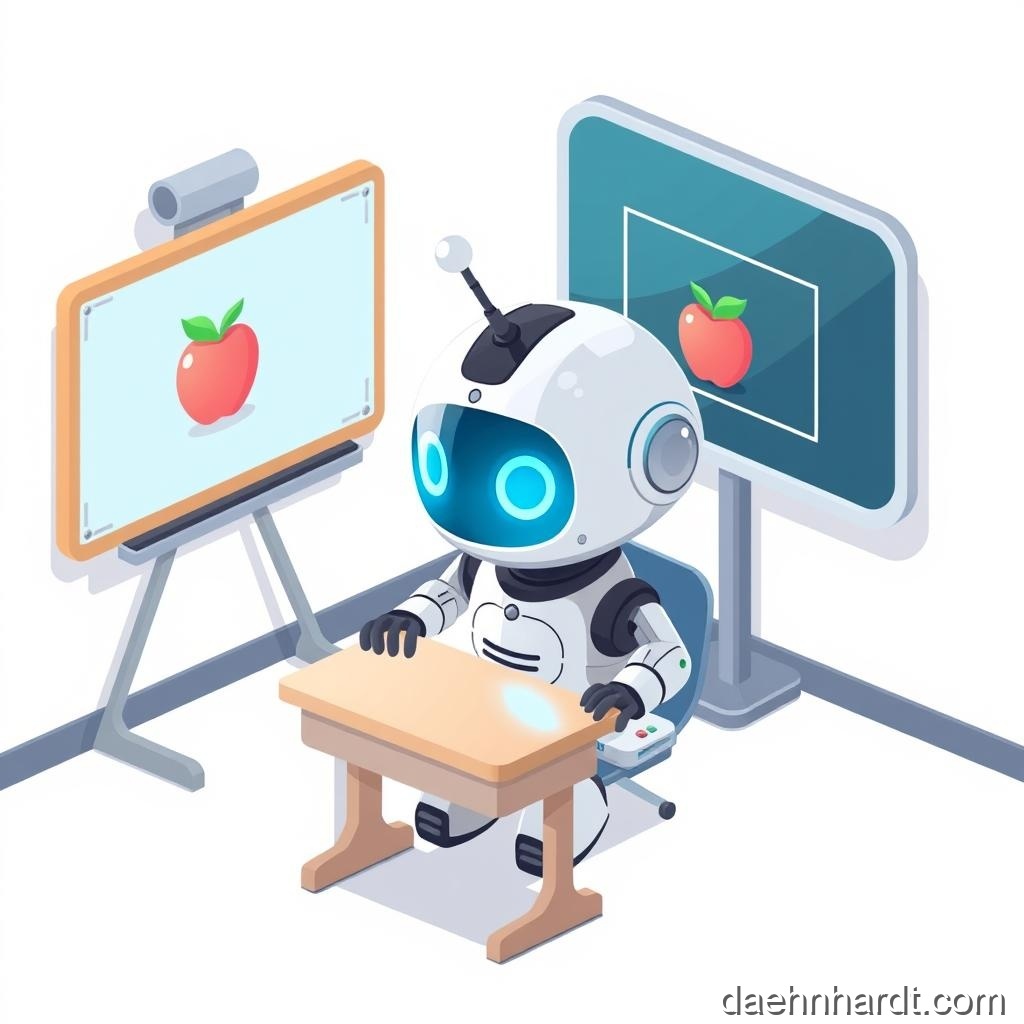
This is like school with a teacher. The Teacher gives the AI a Training Set (Practice Test) and the Labels (Answer Key).
The Training Process:
┌─────────────────────┐
│ Teacher holds up:   │
│ 🍎 "This is Apple"  │
│ 🍌 "This is Banana" │
│ 🍊 "This is Orange" │
└─────────────────────┘
         ↓
┌─────────────────────┐
│ Student (AI) learns:│
│ Red + Round = Apple │
│ Yellow + Long = Banana│
│ Orange + Round = Orange│
└─────────────────────┘
Example conversation:
- Teacher: “What’s this?” (shows red apple) 🍎
- Student AI: “Ball?”
- Teacher: “No, Label = Apple.”
- Student AI: “Okay, Red + Round + Stem = Apple.” ✅
The AI adjusts its internal rules until it gets it right!
🎮 Real-World Connection
This is how Face ID learns YOUR face! Someone (you!) shows it your face many times (training data) with the label “This is the owner.” Then it learns to recognize you!
Activity: Be the Algorithm! 🤖
YOU are the AI now! I will give you Training Data to teach you how to spot a “Happy Sentence”.
Training Phase:
DATA 1: "The sun is shining." → LABEL: HAPPY ☀️
DATA 2: "I dropped my ice cream." → LABEL: SAD 😢
DATA 3: "I got an A+!" → LABEL: HAPPY 😊
DATA 4: "My puppy is cute!" → LABEL: HAPPY 🐶
DATA 5: "I failed the test." → LABEL: SAD 😔
Now Test Yourself!
Based on what you learned, label these:
- “My puppy is sleeping.” → ??
- “It’s raining on my birthday.” → ??
- “I’m dying of laughter!” → ??
- “I love ice cream!” → ??
Click for answers!
**Suggested Answers:** 1. **HAPPY** (puppies usually = happy context!) 2. **SAD** (rain on birthday = disappointing) 3. **HAPPY** ("dying of laughter" means laughing a lot!) 4. **HAPPY** (love = positive!) **Notice:** #3 is tricky! "Dying" sounds sad, but "laughter" is happy. **This is why AI needs LOTS of examples to understand context!**What Did You Just Learn?
You just experienced supervised learning! You:
- Saw examples (training data)
- Saw labels (happy/sad)
- Found patterns (certain words → certain feelings)
- Applied those patterns to NEW data
That’s exactly what AI does! 🎯
The Three Ingredients of AI Learning 🥘
1. Training Data
The examples you show the AI. More data = Smarter AI!
2. Labels
The “answers” for each example. “This is a cat” or “This is a dog”
3. The Algorithm
The math that finds patterns. (We won’t worry about the math—just know it’s happening!)
Recipe for AI:
┌──────────────────────────┐
│ 1000 cat photos (DATA)   │
│ + "cat" labels (LABELS)  │
│ + Pattern finder (ALGO)  │
│ ──────────────────────── │
│ = Cat Detector AI! 🐱   │
└──────────────────────────┘
Junk Food = Junk AI! 🍔💩
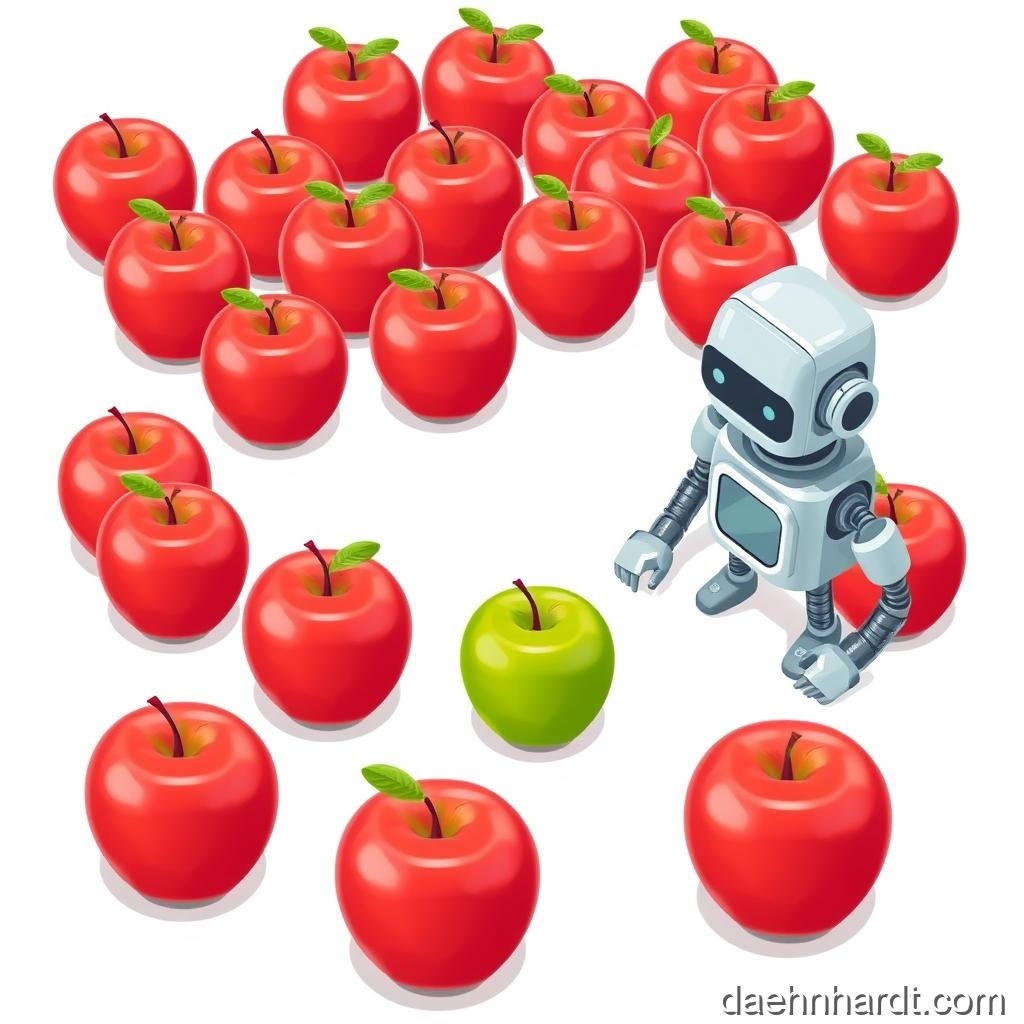
If you eat only candy, you’ll feel sick. If you teach an AI only bad data, it learns bad patterns!
This is called Bias.
Real Example 1: The Doctor Problem
Bad Training Data:
- 900 photos of male doctors
- 100 photos of female doctors
What AI Learns: “Doctors are usually men.”
The Problem: The AI now thinks women can’t be doctors! That’s bias!
Real Example 2: Facial Recognition
Some facial recognition programs struggle to see people with darker skin.
Why? The engineers mostly trained them on photos of people with lighter skin.
The Fix: Train with DIVERSE data representing everyone!
Bad Data = Biased AI:
┌──────────────┐
│ 90% Group A  │ →  AI assumes everyone
│ 10% Group B  │    is like Group A!
└──────────────┘

Good Data = Fair AI:
┌──────────────┐
│ 50% Group A  │ →  AI recognizes
│ 50% Group B  │    everyone equally!
└──────────────┘
The Golden Rule:
🌟 Garbage In, Garbage Out 🌟
If you feed AI junk data, you get a junk AI!
More vs. Better Data 📊
Question: What’s better—more data or better data?
Answer: Both! But QUALITY matters more than QUANTITY.
SCENARIO 1:
1,000 blurry cat photos = Bad AI

SCENARIO 2:
500 clear, diverse cat photos = Good AI
Better to have 500 good examples than 1,000 bad ones!
Try It Yourself: Spot the Bias! 🔍
Imagine you’re building a “Good Book” detector.
Training Data:
- 50 books you love (labeled “GOOD”)
- 50 books you hate (labeled “BAD”)
Question: Will this AI work for OTHER people?
Click for answer!
**NO!** This AI will only match YOUR taste! **The Problem:** The data is biased toward YOUR preferences. **The Fix:** Get training data from MANY different people with different tastes!🎉 Achievement Unlocked: Data Detective! Level: Student (2/6 complete)
📝 Today’s Key Concepts
Supervised Learning:
- Training Data (examples)
- Labels (answers)
- Algorithm (pattern finder)
= Trained AI!

Bias:
- Bad/unfair data
- Leads to unfair AI
- Example: Only photos of male doctors

Quality > Quantity:
- 500 good examples better
  than 1,000 bad examples!

Remember:
"Garbage In, Garbage Out"
Quick Quiz 📝
- What is the “Answer Key” called in training?
- What happens if you train an AI only on green apples?
- If you feed an AI “junk food” (bad data), what happens?
- Who provides the labels in Supervised Learning?
- True or False: AI memorizes every specific image it sees.
Click for Answers!
**Answers:** 1. **Label** (or "ground truth") 2. **It won't recognize red apples!** (It learns the wrong pattern) 3. **You get a junk AI!** (Garbage In, Garbage Out) 4. **Humans!** (The teacher provides labels) 5. **False!** It learns *patterns* (like "pointy ears"), not specific images **Your Score:** - 5/5: 🌟 Training Expert! - 3-4/5: ⭐ Learning Well! - 1-2/5: 💫 Review the lesson!🔍 AI Detective Says:
“Whenever you hear about an AI making unfair decisions (like rejecting loan applications unfairly), ask: What data was it trained on? Often the problem is biased training data, not the AI itself!”
💡 Parent/Teacher Discussion
Great conversation starter: “If we built an AI to detect ‘good students,’ what data would we need? Would test scores alone be fair? What else should we consider?” This helps kids think critically about fairness in AI.
🌟 Hands-On Activity
Be a Data Collector!
- Find 10 photos of dogs online
- Find 10 photos of cats
- Notice: Are they all the same angle? Same lighting? Same breed?
- Think: Would these 20 photos be enough to train an AI? Why or why not?
Next up: How does AI actually process all this data? We’ll peek inside the Neural Network!
This post is part of the What is AI? series.