The Web of Decisions 🕸️
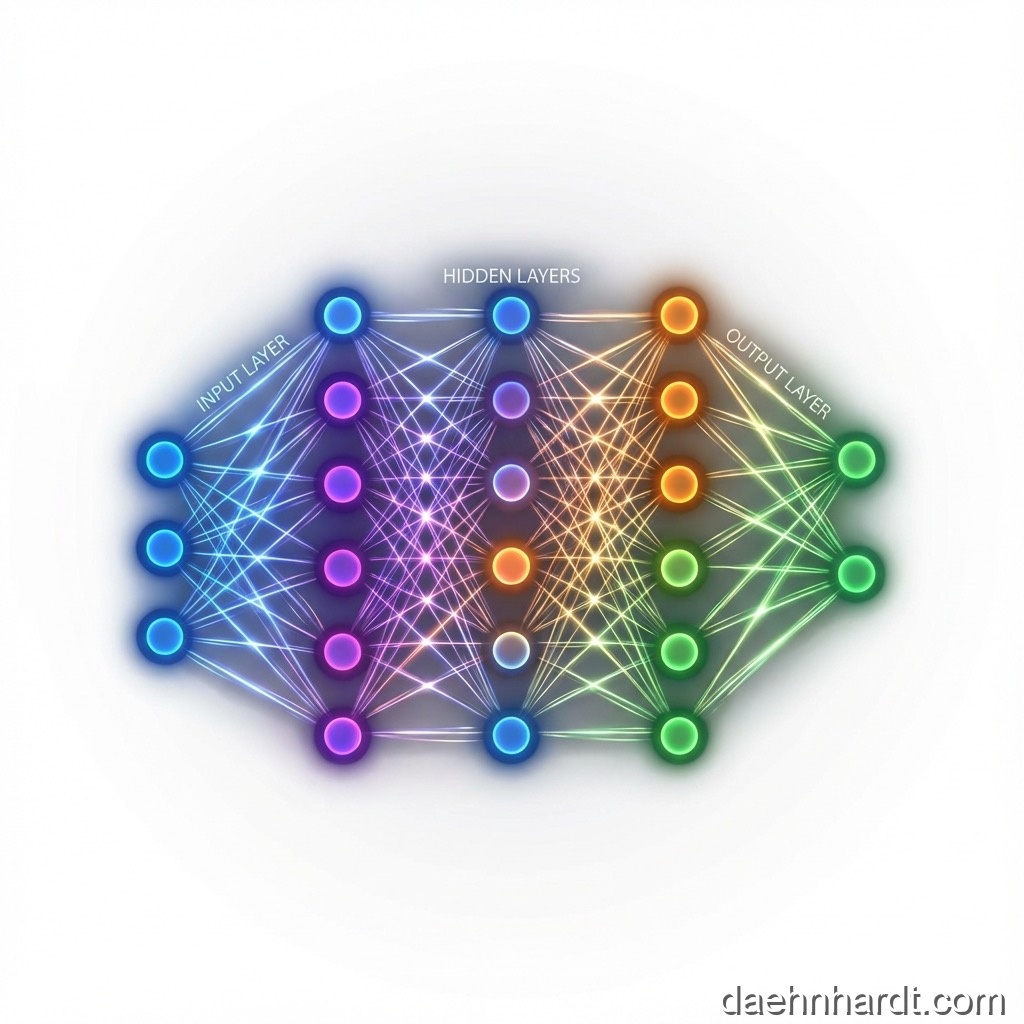
Your brain uses Neurons (brain cells). AI uses Nodes (artificial neurons). They are connected in a giant web!
Human Brain:           Artificial Neural Net:
┌──────────┐          ┌──────────┐
│  Neuron  │          │   Node   │
│    ●─●   │          │    ●─●   │
│   ●─●─●  │    VS    │   ●─●─●  │
│  ●─●─●─● │          │  ●─●─●─● │
└──────────┘          └──────────┘
 (Billions!)            (Millions!)
How Computers “See” 👁️
Computers don’t see pictures like we do. They see NUMBERS.
A black and white image is just a grid of numbers from 0 (Black) to 255 (White).
What WE see:     What AI sees:
   😊            ┌─────────────┐
                 │ 255 255 255 │
                 │  0   0   0  │
                 │ 100  50 100 │
                 └─────────────┘
                   (Just numbers!)
Color images? Three grids! One for Red, one for Green, one for Blue!
🎮 Real-World Connection
When you apply a Snapchat filter, the AI reads your face as millions of numbers (pixels), finds the pattern for “eyes,” “nose,” “mouth,” then adds the filter perfectly! All in milliseconds! ⚡
The Detective Squad (Layers) 🕵️
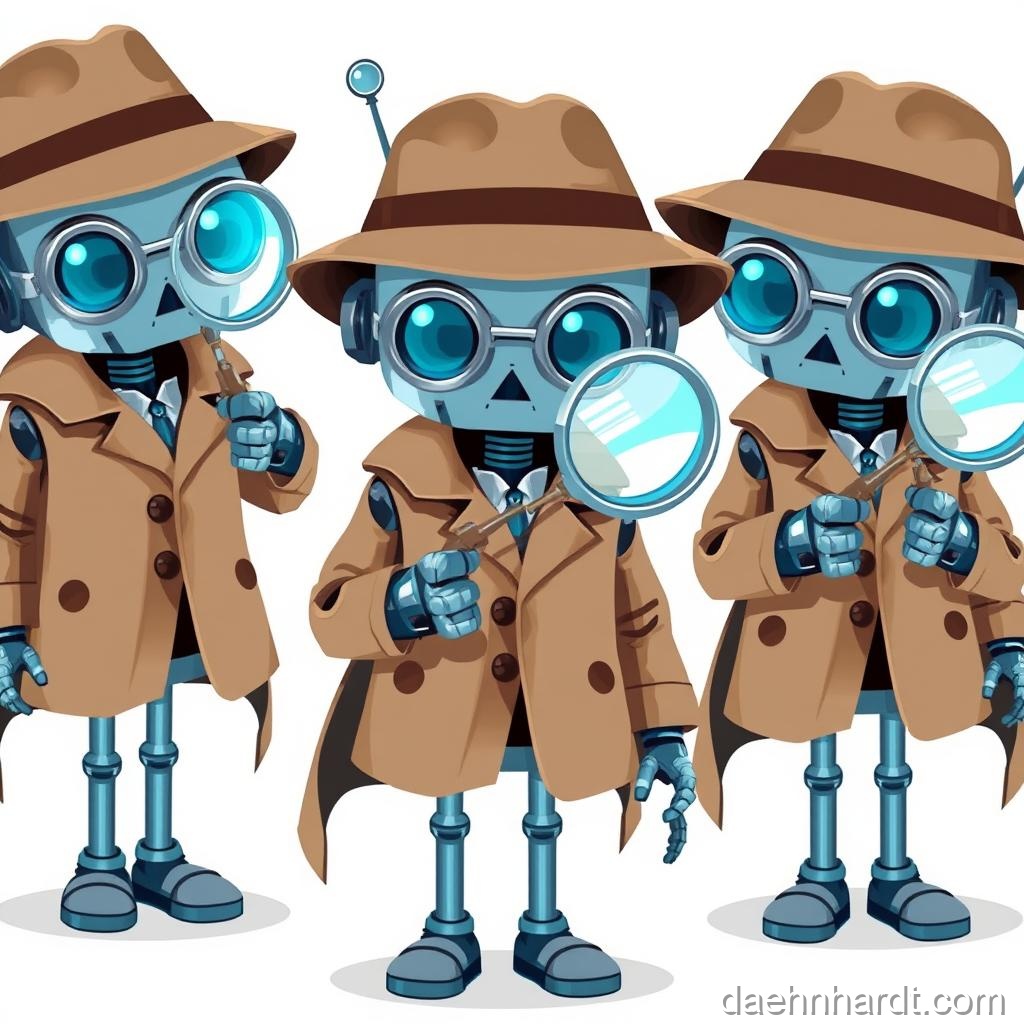
Imagine layers of detectives passing notes to each other:
Layer 1 (Input):    Layer 2 (Hidden):    Layer 3 (Output):
    ●───────────────→●─────────────────→●
    ●───┐           ●─────┐             │
    ●───┼───────────→●────┼─────────────→●
    ●───┘           ●─────┘             │
                                        ↓
                                   "It's a CAT!"
The Flow of Information:
Layer 1 (Input): Sees raw pixels “I see lots of numbers… 255, 128, 64…”
Layer 2 (Feature Detection): Finds simple patterns “Aha! I see a vertical line here!” “I see a curve there!” “I see a dark spot!”
Layer 3 (Shape Recognition): Combines patterns “These curves look like an eye!” “These lines look like whiskers!”
Layer 4 (Output): Makes decision “Eyes + whiskers + pointy ears = CAT!” 🐱
This is called Deep Learning because the network is Deep (many layers).
Simple Network:      Deep Network:
Input → Output      Input → Hidden → Hidden → Hidden → Output
   (Shallow)           (DEEP - better at complex tasks!)
Activity: Draw Your Own Neural Network! ✏️
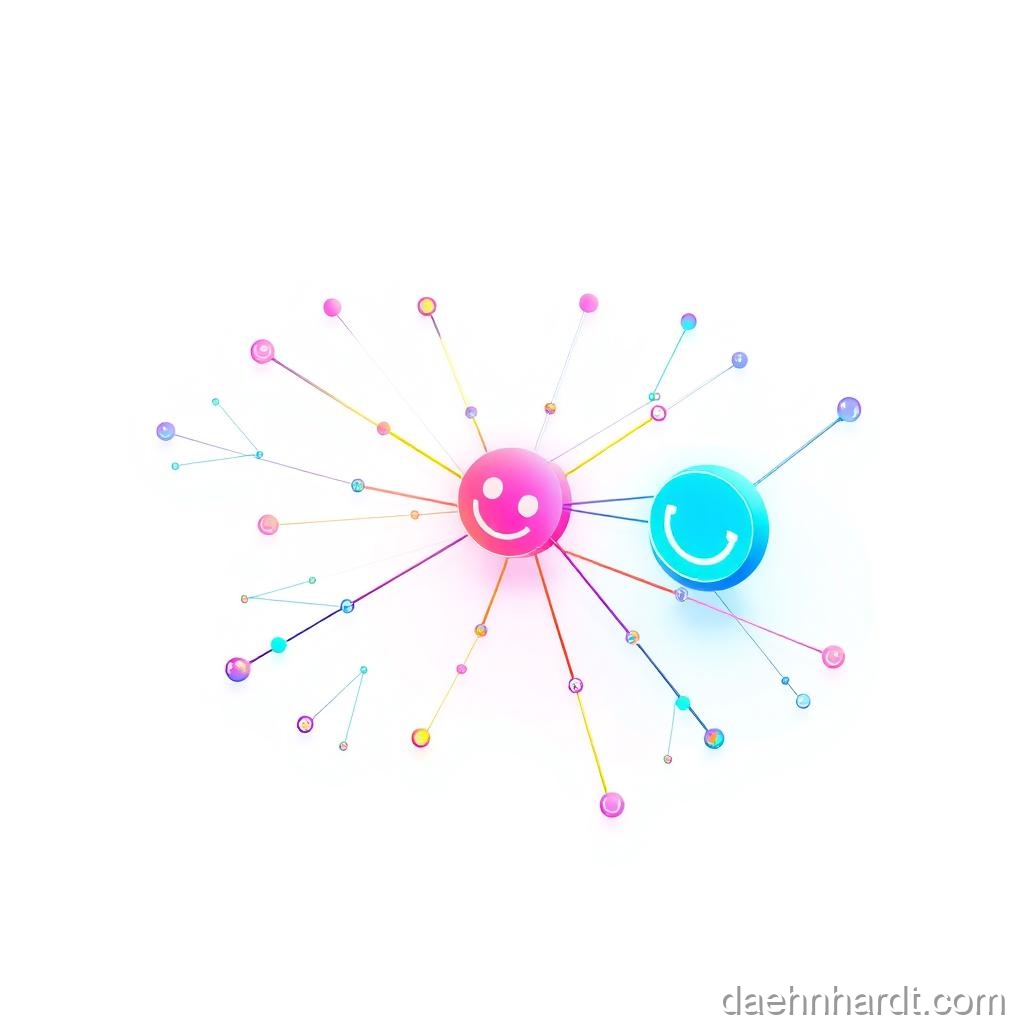
Get a piece of paper. Let’s design a Smile Detector!
INPUT LAYER          HIDDEN LAYER         OUTPUT LAYER
(What AI sees)      (What it detects)    (Decision)

   ●                     ●                    ●
  Eyes              Mouth shape           SMILE!
   ●                     ●
                                             ●
   ●                     ●                 NOT SMILE
  Nose              Eye position
   ●                     ●

   ●
  Mouth
   ●
How it works:
- Input sees: Curved line at bottom of face (mouth position)
- Hidden layer notices: “The mouth corners are UP!”
- Output decides: “That’s a SMILE!” 😊
Now imagine a straight line:
- Input sees: Straight line at bottom
- Hidden layer notices: “The mouth is FLAT”
- Output decides: “NOT a smile” 😐
🚀 Try This Activity!
Draw different mouth shapes:
- 😊 Smile (curve up)
- 😐 Neutral (straight)
- ☹️ Sad (curve down)
For each one, trace with your finger how information would flow through your network!
The Magic of Connections 🔗
Each arrow (connection) has a weight (importance).
Example:
● Eyes position ──(weight: 0.3)──→ ● Smile Detector
● Mouth curve ───(weight: 0.9)──→ ● Smile Detector

The mouth curve is 3x more important!
(0.9 vs 0.3)
During training, the AI adjusts these weights until it gets good at detecting smiles!
Why “Deep” is Better 🏔️
Shallow Network (1-2 layers): Can learn simple patterns “Red = Apple”
Deep Network (Many layers): Can learn complex patterns “Red + Round + Shiny + Has Stem + Specific texture = Probably Apple (unless it’s a ball!)”
Task Complexity:

Simple (Shallow OK):     Complex (Needs Deep):
- Is it red? ●─●         - Is this a cat? ●─●─●─●─●
- Is it > 10? ●─●        - What emotion?  ●─●─●─●─●
                         - Is this spam?  ●─●─●─●─●
Real Examples:
- Spam filter: Shallow network (just keywords)
- Face recognition: Deep network (complex patterns)
- Self-driving car: VERY deep network (life-or-death decisions!)
Connecting It All Together 🧩
Let’s see how a Neural Network recognizes a cat photo:
STEP 1: Image becomes numbers
🐱 → [255, 200, 180, 100, ...]

STEP 2: Input layer receives numbers
[●●●●●...] (one node per pixel!)

STEP 3: Hidden layers find patterns
Layer 1: "I see edges and lines"
Layer 2: "These edges form shapes"
Layer 3: "These shapes look like eyes and ears"

STEP 4: Output layer decides
● Cat (95% confident)
● Dog (3% confident)
● Bird (2% confident)

RESULT: "I think it's a CAT!"
🎉 Achievement Unlocked: Neural Navigator! Level: Intermediate (3/6 complete)
📝 Today’s Key Concepts
Neural Network:
- Inspired by human brain
- Made of nodes (artificial neurons)
- Connected in layers

Layers:
- Input: Receives raw data (pixels)
- Hidden: Finds patterns
- Output: Makes decision

Deep Learning:
- Many hidden layers
- Can learn complex patterns
- "Deep" = many layers

How it works:
Raw data → Input → Hidden layers → Output → Decision!
Quick Quiz 📝
- What is an artificial neuron called?
- What does “Deep” mean in Deep Learning?
- What does a “Layer” consist of?
- Do computers “see” pictures as colors or numbers?
- True or False: A single neuron is smarter than a network.
Click for Answers!
**Answers:** 1. **A Node** (or artificial neuron) 2. **Many layers!** (Deep = lots of hidden layers) 3. **A group of Nodes** working together at the same stage 4. **Numbers!** (Pixels are just numbers 0-255) 5. **False!** The power comes from CONNECTIONS between many nodes! **Your Score:** - 5/5: 🌟 Neural Network Expert! - 3-4/5: ⭐ Good Understanding! - 1-2/5: 💫 Review the lesson!🔍 AI Detective Says:
“When someone says ‘Deep Learning,’ they just mean a neural network with LOTS of layers! The deeper it is, the more complex patterns it can learn. But it also needs more data and more time to train!”
💡 Parent/Teacher Activity
Build a Physical Network!
- Get 10 pieces of paper
- Write “INPUT” on 3, “HIDDEN” on 4, “OUTPUT” on 3
- Lay them out in layers
- Use string/yarn to connect them
- Trace a “signal” flowing through!
This makes the abstract concept concrete!
🌟 Fun Facts About Neural Networks
- The first neural network was created in 1958! (Called the Perceptron)
- GPT-3 (the AI behind ChatGPT) has 175 BILLION connections!
- Your brain has about 100 TRILLION connections!
- A single layer can have thousands of nodes!
🎨 Creative Challenge
Design your own detector!
- What would a “Happy Song Detector” look like?
- What features would the hidden layers detect? (Fast tempo? Major key? Upbeat lyrics?)
- Draw the network with your own labels!
Next up: How AI creates NEW things! We’ll explore Generative AI and learn to talk to these machines!
This post is part of the What is AI? series.