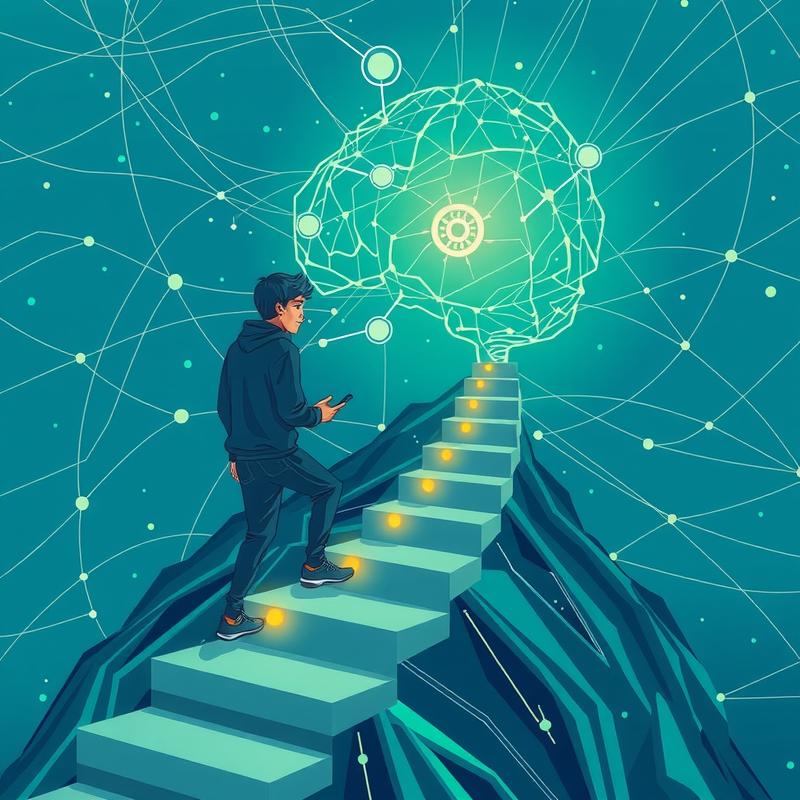
Deep Learning is a subset of machine learning that uses multi-layer neural networks to learn data representations directly from raw inputs. Having some machine learning experience with Scikit-learn, I was always curious about Deep Learning. My plan is to learn the basic concepts and apply the algorithms to a real-life situation, something I have always enjoyed doing. I found a DataCamp course, Introduction to Deep Learning in Python, part of the Deep Learning in Python track.
Introduction to Deep Learning in Python covers the fundamentals of Deep Learning and shows how neural networks are built in Keras, the high-level deep learning API. At the time I took the course, Keras ran on top of TensorFlow as its official interface; Keras has since become framework-agnostic and can also run on JAX or PyTorch. The course itself is easy to follow. The most challenging concept it explains is backpropagation: the algorithm that minimises the prediction error by propagating the loss gradient backward through the network to adjust each layer’s weights. In TensorFlow, this gradient computation is handled by automatic differentiation, so you rarely need to derive the maths by hand. The programming exercises are easy to follow and run in an excellent in-browser interface — no local Python setup needed.
To keep myself accountable and cope with possible delays, I decided to share my progress on Twitter. I post the main things I learn in the course and retweet helpful visuals I find in my network. I have found that the data science community on Twitter is supportive and generous with newcomers like me. There is also a pretty helpful hashtag, #66DaysOfData, which keeps me motivated to continue.
DataCamp lists the course as a four-hour commitment, but it took me longer, as I fitted it around other commitments. By the end of the Introduction to Deep Learning in Python course, I had earned the certificate. By the way, I am working on a course summary post that will contain some actual code. Stay tuned, and thanks for reading!

Next, I completed Introduction to TensorFlow in Python, which builds on the Keras course by covering TensorFlow itself — the open-source machine learning framework originally developed by Google’s Machine Intelligence research team and open-sourced in 2015.

References
- Introduction to Deep Learning in Python, DataCamp
- Deep Learning in Python track, DataCamp
- Introduction to TensorFlow in Python, DataCamp
- Keras: Deep Learning for humans
- Keras: The high-level API for TensorFlow, TensorFlow Core
- About Keras 3
- Introduction to gradients and automatic differentiation, TensorFlow Core
- TensorFlow
- TensorFlow, Google Open Source Projects
Did you like this post? Please let me know if you have any comments or suggestions.
Posts about Machine Learning that might be interesting for youStay Ahead in AI, Machine Learning & Python
No hype. Weekly notes on AI tools, Python, and what I'm actually building — plus seven free gifts, including Fantastic AI: The 2026 Toolkit and Git Commands and Contribution Workflow Cheatsheet.
You're in
Check your inbox for Set a password to unlock articles if you want gated tutorials. Log in with the same email.