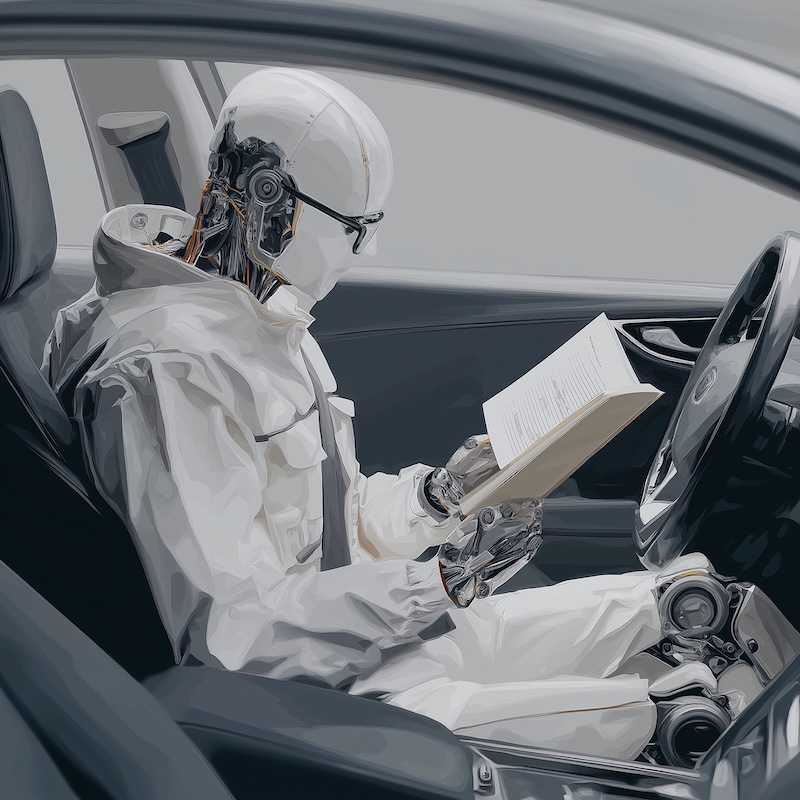
AI Weekly Signal: California’s AI Safety Law, EU Autonomous Mobility, and MIT’s SCIGEN Materials Discovery
I have been watching AI news for some time now. Some weeks pass quietly with incremental improvements, nothing spectacular. And then you get a week like this one. California passes a law. The European Union announces big plans. MIT shows us something that makes you stop and think.
Policy, infrastructure, and actual science are moving at once this week:
- California passes a landmark AI safety and transparency law
- The EU pushes for AI-first mobility pilot cities
- MIT’s SCIGEN constrains generative AI to real physics
California SB 53: Landmark AI Safety and Transparency Law for High-Compute Models
Source: apnews.com
California just passed what regulators call a landmark “AI safety & transparency law.” If you build models that consume significant compute — what the law calls “high-compute” — you will need to expose your safety practices publicly. Should something go wrong, you have 15 days to report it. The law includes whistleblower protection.
California’s AI safety and transparency law is a state-level accountability framework that requires high-compute model developers to publish safety practices and report incidents within a fixed 15-day window, rather than leaving disclosure voluntary.
Read Associated Press coverage
California's law means something practical for you. If you are building AI systems, you cannot think about safety as something you add later. It needs to be there from Day 1. No more afterthoughts.
EU AI-First Mobility Push: Self-Driving Car Pilot Cities and Regulatory Strategy
Source: reuters.com
The EU has made its position clear: it wants pilot cities for AI-first mobility, encompassing self-driving cars, innovative infrastructure, and the entire system. Ursula von der Leyen said it plainly: Europe wants to lead, not follow.
The EU’s AI-first mobility initiative is a coordinated push to pair autonomous-vehicle deployment with purpose-built infrastructure and regulation in designated pilot cities, rather than retrofitting self-driving tech onto existing roads. Transportation is not just about algorithms — it is about infrastructure, regulation, and technology working together.
Are you working on perception systems? Routing algorithms? Simulation environments? Maybe dealing with regulatory frameworks? Then you should pay attention. Europe's push will create opportunities. It will also create constraints. Better to know about them now.
SCIGEN: MIT’s Physics-Constrained Generative AI for Materials Discovery
Source: mit.edu
MIT researchers released SCIGEN, a method that teaches generative AI to respect physical constraints. SCIGEN is a generative AI framework that constrains material-generation models to obey physical laws, so the candidate compounds it proposes are chemically plausible rather than structurally invalid.
Generative AI in material discovery is no longer confined to text and image generation. SCIGEN is AI participating directly in material discovery, proposing new candidate structures for physical validation in the lab.
SCIGEN hints at something bigger. AI is not just narrating anymore — it is generating candidates with physical constraints built in. If you work in R&D, laboratory environments, or simulation, this is your signal. Look beyond LLMs. There is more happening.
Key Takeaways: AI Regulation, Mobility Investment, and Scientific Discovery Trends
| Story | What changed | Why it matters |
|---|---|---|
| California AI safety law | High-compute model developers must publish safety practices and report incidents within 15 days | Moves AI safety from voluntary conference talk to legal accountability |
| EU AI-first mobility | Pilot cities planned for self-driving cars, infrastructure, and regulation together | Creates both opportunities and constraints for perception, routing, and simulation teams |
| MIT SCIGEN | Generative AI constrained to respect physical laws when proposing new materials | Extends generative AI from text/image synthesis into physically valid scientific discovery |
Regulation is becoming mandatory rather than voluntary, Europe is building an AI-powered mobility ecosystem, and generative AI is starting to contribute to real scientific discovery. Next week, we will see what happens.
Stay curious.
References
Stay Ahead in AI, Machine Learning & Python
No hype. Weekly notes on AI tools, Python, and what I'm actually building — plus seven free gifts, including Fantastic AI: The 2026 Toolkit and Git Commands and Contribution Workflow Cheatsheet.
You're in
Check your inbox for Set a password to unlock articles if you want gated tutorials. Log in with the same email.