Weekly AI Signals: Ethics, Hardware, and Developer Trust
Some weeks in AI are loud and dramatic, while others offer a more subtle experience—a gentle reminder to notice interesting developments.
This week was one of those softer moments, with seven noteworthy events that prompted me to reflect: We are truly building something new.
This week showcases the connections between ethics, coding, hardware, and humanity.
Weekly AI Signals: Key Takeaways
| Signal | Industry Impact | Builder Action |
|---|---|---|
| Vatican AI Medical Ethics | Major institutions are establishing formal ethical frameworks for AI deployments in healthcare. | Ensure your medical AI pipelines have human-in-the-loop dignity checks, not just statistical accuracy tests. |
| 9% Developer Trust in AI | Blind trust in AI generation remains incredibly low; rigorous code review is non-negotiable. | Enforce CI/CD pipeline checks for all agent-generated code to catch hallucinations before production. |
| MIT LLM Modularity | Structuring code around concepts and semantic boundaries to accommodate LLM reasoning. | Write code as discrete, legible concepts rather than entangled logic blocks so agents can parse it effectively. |
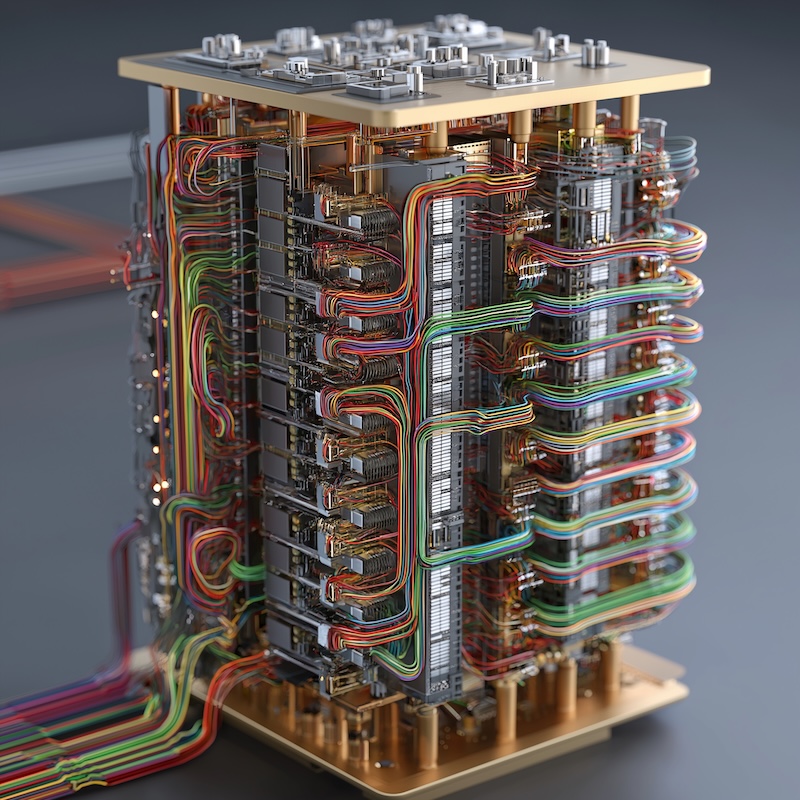
| NVIDIA DGX Spark | A 1-petaflop workstation democratises massive compute, bringing datacenter power to the desk. | Shift exploratory model training and inference testing back to local hardware to save cloud costs. |
| VUNO Profitability | Clinical AI transitions from R&D hype to a commercially viable, profitable reality. | Look for integration opportunities where AI directly solves operational friction in specialized industries. |
| Meta 1,600+ ASR | Open-source automatic speech recognition achieves unprecedented linguistic coverage. | Integrate Meta’s omnilingual models to instantly localize voice interfaces for global user bases. |
| AiEDA Chip Design | AI starts assisting in the sluggish, detail-heavy domain of hardware architecture. | Use agentic tools for repetitive architectural verification, freeing engineers for complex logic design. |
1. Ethics of AI in Medicine Spotlighted at the Vatican
A gathering in Rome — doctors, scientists, ethicists, all walking under the same warm light — met to discuss AI and human dignity.
I love that phrase. Dignity. It’s not often used in tech, but maybe it should be.
Somewhere between code reviews and deployment pipelines, the idea of dignity might be the reminder we didn’t know we needed.
Institutional AI Ethics: From Book Banning to Vatican AI Conferences
Sometimes I think about how the world turns in slow circles.
There were centuries when the Church stood firmly against novelties — suspicious of books, printing presses, and anything that let knowledge travel too freely. New ideas felt unruly back then, almost dangerous.
And now, here we are: the Vatican hosting a conference on AI ethics, talking about dignity, fairness, and the human heart behind technology.
It feels a little like watching an old door open again — carefully, thoughtfully — after a very long time.
History has a lovely sense of humour: the institution that once feared books is now debating neural networks.
Moments like this make me hopeful.
Even the slowest institutions can learn. Even the most cautious voices can join the conversation. And maybe that’s the comforting part — we’re not navigating this alone. We’re learning together, at different speeds, but still moving in the same direction.
In the post Could AI Become a New Religion? I have shared some ideas about AI and the humanity.
2. Developers Say: “AI Code? Yes… but let me check it first.”
A new survey showed that only 9% of developers trust AI-generated code without reviewing it. Honestly, that number made me smile. Not as a criticism — more like recognition.
We’re curious, willing, open — but we still want to feel the shape of the code with our own hands.
Even the friendliest model can leave a mysterious line of code. And then it stares at you. And you stare back :)
3. MIT’s New Way of Thinking About Modular Software
MIT CSAIL introduced a model of building software around concepts and synchronizations — almost like giving the code a grammar that both humans and LLMs can understand.
This concept-and-synchronization model is a modular software architecture that structures code around named concepts and their synchronizations, making codebases more legible to both human engineers and LLM-based coding agents.
When code feels like a foreign language, maybe it simply needs a better dictionary.
4. NVIDIA DGX Spark — A Petaflop, but Make It Cosy
The NVIDIA DGX Spark is finally here — a desktop AI workstation that delivers one petaflop of compute, bringing datacenter-scale performance to an individual developer’s desk. A few years ago, this would’ve sounded like sci-fi.
This shift from cloud-scale to you-and-your-desk-scale feels like a quiet revolution.
Warning: possession of a petaflop may cause unreasonable confidence in spontaneous weekend model training.
Read more at Efficientlyconnected.com
5. VUNO Reports Its First Profitable Quarter
VUNO Inc., a medical-AI company from Korea, turned a profit this quarter.
This might not sound glamorous, but it’s a milestone — a signal that clinical AI is no longer only research papers and hopeful prototypes.
Clinical AI is becoming part of the real world.
6. Meta Releases Omnilingual ASR (1,600+ Languages!)
Meta stepped back into open-source with Omnilingual ASR, a multilingual automatic speech recognition model family covering 1,600+ languages.
It’s more languages than most of us will encounter in a lifetime — but models will. This feels like a step toward a world where language is less of a barrier, and more of a bridge.
Your app can now listen to almost everyone. The only remaining challenge is listening to yourself during debugging.
7. AiEDA — AI Meets Chip Design
AiEDA is an open-source library that applies AI-assisted automation to electronic design automation (EDA) workflows, bringing AI tools into chip design — one of the slowest, most detail-heavy engineering domains we have.
AiEDA is a small sign that AI is starting to help build the very hardware it runs on.
There’s something wonderfully circular about that.
Imagine debugging a chip with an AI that quietly whispers, “I think your transistor is tired.”
Related tools you may want to try next.
Mixo.io generates websites instantly using AI. Builds stunning landing pages without any code or design. Includes a built-in email waiting list and all the tools you need to launch, grow, and test your ideas.
Conclusion: Ethics, Trust, and Hardware Convergence in AI
This week felt gentle, thoughtful — less about huge shocks and more about threads weaving together. Ethics. Trust. Structure. Speech. Chips. Hardware. Healthcare.
Everything touching everything else.
And somewhere in between, developers like us are trying to make sense of it all — one small experiment, one curious evening, one tiny project window at a time.
If any of these stories sparked a thought, or a little idea you want to explore, let me know.
I always enjoy learning new things alongside you.
Stay Ahead in AI, Machine Learning & Python
No hype. Weekly notes on AI tools, Python, and what I'm actually building — plus seven free gifts, including Fantastic AI: The 2026 Toolkit and Git Commands and Contribution Workflow Cheatsheet.
You're in
Check your inbox for Set a password to unlock articles if you want gated tutorials. Log in with the same email.