Weekly AI Signals: Google I/O 2026, the Musk v. OpenAI Verdict, and Code with Claude London
The week of 19–20 May 2026 had one unmissable centrepiece and three stories that reframe what it means.
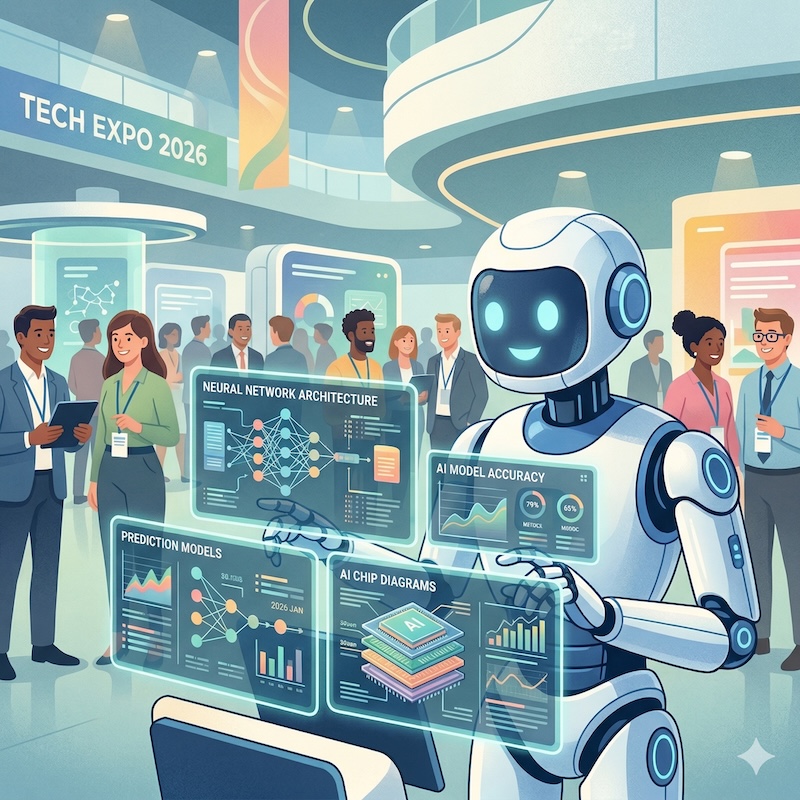
Google I/O is Google’s annual developer conference, and the 2026 edition ran on 19 and 20 May as the most AI-dense developer conference Google has run. The keynote alone covered two new model families, a full agent development platform, a 24/7 personal AI agent, the largest redesign of Google Search in 25 years, and a new $100/month consumer tier. Google now processes over 3.2 quadrillion tokens per month — up seven times year-on-year. The Gemini app has 900 million monthly active users. These are not speculative numbers from a roadmap. They are the current state of the largest AI deployment on the planet.
On the same day — 19 May — Anthropic ran Code with Claude London. The scheduling was not accidental. The night before, a jury in Oakland had taken 90 minutes to throw out Elon Musk’s $150 billion lawsuit against OpenAI. Google threw down the gauntlet, Anthropic fought for developer mindshare on the exact same day, and OpenAI had just dodged a $150 billion bullet. Forty-eight hours of high-stakes collision.
I have picked four signals. The first is long — Google I/O deserves it. The other three are tighter.
Models and Developer Platforms
1. Google I/O 2026 — Gemini 3.5 Flash ships on day one, Antigravity becomes an agent platform, and Gemini Spark is a 24/7 agent in your account
100 things we announced at Google I/O 2026 — Google Blog, 20 May 2026
All the news from the Google I/O 2026 Developer keynote — Google Developers Blog, 19 May 2026
Google pushes "agentic AI" at I/O 2026 with Gemini Omni, Antigravity 2.0 — CyberNews, 19 May 2026
Google’s annual developer conference ran on 19 and 20 May in Mountain View. The keynote lasted just under two hours and covered more distinct announcements than any previous I/O. I want to cover the four things that actually matter structurally, rather than list all one hundred.
Gemini 3.5 Flash — shipped same day, claims frontier capability at Flash speed. This is Google’s headline model announcement. Gemini 3.5 Flash is a large language model in the new Gemini 3.5 family that combines frontier-level intelligence with low-latency execution — the combination that agentic workloads actually need. Google shipped it generally available on 19 May, the day it was announced, via the Gemini API in Google AI Studio and Android Studio. According to Google’s own benchmarks, it outperforms Gemini 3.1 Pro on challenging coding and agentic evaluations: Terminal-Bench 2.1 at 76.2%, GDPval-AA at 1,656 Elo, and MCP Atlas at 83.6%. The claim Google is making is 4× faster than rival frontier models on comparable tasks. Independent verification from Artificial Analysis is still catching up — evaluate before deploying. On pricing, Gemini 3.5 Flash slots in below the Pro tier, consistent with Google’s Flash pricing philosophy of frontier quality at speed-tier cost.
The notable absence: Gemini 3.5 Pro. Google confirmed it is being used internally and is on track for June, but it was not available at the keynote. Sundar Pichai’s announcement of the delay drew audible groans from the live audience, according to multiple reporters in the room. Gemini 3.5 Pro is expected to be Google’s strongest generally available model and the one that most directly competes with Claude Opus 4.7 and GPT-5.5.
Gemini Omni — native multimodal generation, starting with video. Gemini Omni is a native multimodal model family that generates and edits content — text, audio, and video — directly from mixed-media input rather than routing through separate specialised pipelines, with the current emphasis on video generation and editing. The key architectural claim is native multimodality: rather than routing through separate specialised models, Omni handles mixed-media inputs and outputs text, audio, and video simultaneously. Video editing works across multiple turns with natural language — users can modify existing video iteratively rather than generating from scratch each time. Gemini Omni Flash, a faster inference variant, is rolling out to developers via the Gemini API and Agent Platform in the coming weeks. This is a direct response to OpenAI’s Sora and gpt-image-2, and to the video generation push from competitors. Whether native multimodal architecture outperforms specialised pipeline approaches at comparable scale is still an open empirical question.
Antigravity 2.0 — from coding tool to agent development platform. Antigravity 2.0 is an agent-first development platform that orchestrates parallel subagents across workspaces, replacing its earlier form as a coding assistant with an agent sidebar. It is the announcement with the most practical implications for developers building production systems. The two primary views tell the story: Editor view is a familiar IDE interface; Manager view is an orchestration control centre for parallel subagents working across workspaces. Antigravity 2.0 supports parallel subagent execution, scheduled background tasks, and integrations with AI Studio, Android, and Firebase. It co-optimises with Gemini 3.5 Flash and claims 12× the speed of the public API for Gemini model calls within the platform. Enterprise security and compliance are available through the Agent Platform API on Google Cloud. For developers currently using Claude Code or OpenAI Codex, Antigravity 2.0 is the most direct competitive response Google has made in the agentic coding space — and it comes with Google’s cloud infrastructure behind it.
Gemini Spark — a 24/7 personal agent, running on a cloud VM. Gemini Spark is a persistent personal AI agent that runs continuously on Google Cloud virtual machines, tracking user objectives and proactively surfacing information and taking actions across connected accounts. This is the consumer announcement I find most interesting structurally. It checks with you before major actions. It is available in beta for Google AI Ultra subscribers ($100/month, announced at I/O) and includes access to Gmail, Calendar, Drive, and connected services. The framing — “your 24/7 personal agent for work, school and daily life” — is a direct answer to the io device OpenAI is building with Jony Ive. Google’s version runs in the cloud and does not require new hardware. Whether that is an advantage or a limitation depends entirely on the use cases that turn out to matter most.
A note on Search: Google announced AI Mode has surpassed 1 billion monthly users, with queries more than doubling every quarter. The Search box itself has been redesigned for the first time in 25 years — multimodal input now supports text, images, files, videos, and Chrome tabs, with AI reasoning across all of them. Alongside this, information agents in Search run persistently in the background to surface personalised updates. The transition from “search engine” to “agent that monitors on your behalf” is now a publicly stated product direction, not just a research hypothesis.
Why This Matters
The scale numbers are the most important thing to sit with. 3.2 quadrillion tokens per month, up 7× year-on-year. 900 million Gemini app users. AI Mode at 1 billion monthly users. These are not Anthropic or OpenAI numbers — they are Google numbers, backed by Google’s existing surface area across Search, Chrome, Android, Gmail, and YouTube. Google does not need to win the benchmark race to win the deployment race. It needs to be good enough, everywhere people already are. Gemini 3.5 Flash is the model that runs inside that deployment surface. Antigravity 2.0 is the platform for developers building on top of it. Whether the model is the best in any given category matters less than whether it is the one people encounter first, most often, and with the least friction. That is Google’s structural advantage and always has been.
Legal and Governance
2. Musk loses the OpenAI lawsuit — on a technicality, in 90 minutes
Jury throws out Elon Musk's lawsuit against OpenAI in less than two hours — NBC News, 18 May 2026
Musk vs Altman: What to know about the OpenAI verdict — Al Jazeera, 19 May 2026
Musk slams Altman trial verdict as a 'technicality,' vows to appeal — CNBC, 18 May 2026
After a three-week trial, eleven days of testimony, and witnesses including Sam Altman, Greg Brockman, Satya Nadella, and Musk himself, a nine-member federal jury in Oakland took less than ninety minutes on 18 May to dismiss all of Elon Musk’s claims against OpenAI and its leadership.
The verdict was decided on statute of limitations, not on the merits. The jury found unanimously that Musk was aware of the behaviour at the centre of his lawsuit as early as 2021, but did not file his $150 billion case until February 2024 — outside the applicable legal window. Judge Yvonne Gonzalez Rogers immediately adopted the jury’s finding and dismissed the case.
The substance of what Musk alleged — that Altman and Brockman turned a nonprofit founded for the benefit of humanity into a for-profit vehicle for personal enrichment — was never adjudicated. OpenAI’s lawyers argued throughout that the company’s mission has not changed, that it is still governed by a nonprofit board, and that Musk himself had at various points proposed merging OpenAI into Tesla and floated a for-profit structure on the condition he retain control. They characterised the lawsuit as an attempt to damage a competitor after he failed to take it over.
Musk posted on X within minutes of the verdict that the decision was a “calendar technicality” and announced he would appeal. “There is no question to anyone following the case in detail that Altman and Brockman did in fact enrich themselves by stealing a charity,” he wrote. OpenAI’s lead attorney William Savitt called the verdict confirmation that the lawsuit was “a hypocritical attempt to sabotage a competitor.”
The practical context: OpenAI is valued at $852 billion at the time of writing and is preparing for what is expected to be one of the largest IPOs in Silicon Valley history. The verdict removes a major legal risk at a pivotal moment. Musk’s xAI, now merged with SpaceX, is a direct competitor. The two companies’ infrastructure is now entangled through the Anthropic compute deal, which gives a direct competitor (Anthropic) access to the same Colossus 1 facility that SpaceX operates.
Why This Matters
The unresolved question at the heart of this case is important and will not stay dormant. Whether a company can accept large donations under a nonprofit mission, use them to build transformative technology, and then convert to a for-profit structure with those capabilities intact is a genuine legal and ethical question — not a trivial one. It was not answered here. Musk has said he will appeal; whether the appeal has merit on the statute of limitations question is a separate matter. But the question of what obligations AI organisations owe to their stated missions — and who can enforce them — will return. It is too consequential to remain unresolved.
Developer Ecosystem
3. Code with Claude London — Anthropic runs its developer conference on the same day as Google I/O
Code with Claude London — Anthropic, 19 May 2026
Code with Claude London 2026 — Relve, 19 May 2026
Anthropic Is Staging a Developer Revolution in Three Cities — TechFastForward
Anthropic’s Code with Claude developer conference ran in London on 19 May — the same day as Google I/O’s keynote. That scheduling was either a coincidence or a deliberate signal; in a competitive environment this dense, it reads as the latter.
The London event was the second stop on a three-city tour: San Francisco on 6 May, London on 19 May, Tokyo on 10 June. Boris Cherny, Anthropic’s Head of Claude Code, presented the main developer session, covering long-horizon agentic coding, multi-repo work, parallel agent execution, and the infrastructure required to make these workflows production-stable. Anthropic’s Head of Product Ami Vora and API Product Lead Angela Jiang also spoke. Code with Claude Extended — a separate day aimed at independent developers and early-stage founders with hands-on workshops — ran on 20 May.
The conference’s technical agenda stayed focused on what developers are actually building rather than what is theoretically possible: the session descriptions cover production-grade agents, Claude Platform architecture, enterprise workflow integration, and how Anthropic’s Applied AI team supports rollouts. It is a different register from the consumer-facing scale of a Google I/O keynote — more specific, more practitioner-oriented, and aimed at the exact audience that decides which model goes into production.
The timing against I/O matters for one specific reason: developer conferences are a distribution mechanism. A developer who watches Code with Claude London instead of Google I/O keynote is, that day, deepening their Anthropic context rather than their Google context. With 19 May covering both simultaneously, every developer had to choose or split attention. Anthropic is now large enough that it can meaningfully contest that choice — and apparently confident enough to do so directly.
Why This Matters
The developer conference calendar is now a competitive arena. Google I/O, Code with Claude, OpenAI DevDay, and Microsoft Build are all happening within weeks of each other in spring 2026. The labs competing for model quality are the same labs competing for the mindshare of the developers who will decide which models run in their products. That is a distinct competition from benchmark performance and one that does not get enough coverage. Developer tooling, documentation quality, conference access, and community relationships compound over years. Claude Code’s position in GitHub Copilot, the MCP ecosystem, and the enterprise deployment relationships Anthropic is building through the Partner Network are all part of the same distribution fight that Code with Claude London is one visible piece of.
Open Weights
4. Google plays both sides — Gemma 4 lands on Android Bench while Gemini 3.5 takes the stage
Gemma 4: Byte for byte, the most capable open models — Google Blog
Welcome Gemma 4: Frontier multimodal intelligence on device — Hugging Face Blog
InternLM is making scientific AI smaller with Intern-S2-Preview — Startup Fortune, May 2026
The I/O keynote was a proprietary story: Gemini 3.5 Flash, Gemini Omni, Gemini Spark, 900 million users. But on the same day — 19 May — Google quietly added Gemma 4, an open-weights model family released under the Apache 2.0 licence, to its new Android Bench leaderboard, positioning it as a capable, localised coding model for on-device and on-premise deployment. By 21 May, developers on Hugging Face were actively deploying the Gemma 4 26B MoE variant for privacy-first enterprise environments. The model runs 4 billion parameters actively despite its 26B total weight (a mixture-of-experts architecture), making it practical on consumer-grade GPUs.
Gemini and Gemma is a deliberate two-track strategy, and it matters that Google executed both tracks on the same day:
| Gemini 3.5 Flash | Gemma 4 (26B MoE) | |
|---|---|---|
| Deployment | Google Cloud, proprietary API | On-device / on-premise |
| Licence | Proprietary | Apache 2.0 |
| Active parameters | Not disclosed | 4B (of 26B total) |
| Target customer | Cloud-scale consumer and enterprise apps | Regulated industries, security-conscious, on-premise infrastructure teams |
Gemini is Google’s cloud-scale deployment surface — the one with the 3.2 quadrillion token numbers. Gemma is for the enterprises that cannot send data to that surface. These are not the same customer and they do not make the same trust calculation. By pushing Gemma 4 onto the Android Bench leaderboard on I/O day, Google was making both arguments simultaneously — and to different audiences.
The supporting signal from the broader open-weights community came three days earlier. On 15 May, Intern-S2-Preview — a scientific multimodal model from Shanghai AI Laboratory — topped Hugging Face’s weekly trending list. Intern-S2-Preview is a 36B parameter scientific multimodal model (3B active, 256 experts, 262K context) built on top of Qwen3.5 and designed to deliver performance comparable to the trillion-parameter Intern-S1-Pro on core scientific reasoning tasks. The model handles image-text-to-text tasks within a dialogue structure, which matters for developers building local research and analysis agents. Scientific multimodal open-weights have been running well behind their proprietary counterparts; a model in this class reaching the top of trending is a sign that the specialisation gap is closing.
Why This Matters
The open-weights tier is becoming a strategic layer, not a hobbyist category. The enterprise customer who cannot use Gemini for compliance reasons is the same customer Google wants for Workspace, Cloud, and Android. Gemma is the bridge. The fact that Google coordinated Gemma 4’s Android Bench publication with I/O day — rather than releasing it quietly and letting it get buried — suggests deliberate positioning. For developers evaluating open-weights models, the practical question is whether Gemma 4’s Apache 2.0 terms and MoE efficiency can match the workflow they would otherwise build on a proprietary API. That evaluation is happening now, on Hugging Face, in enterprise proofs of concept. Intern-S2-Preview points at a parallel track: open-source specialising into scientific and research domains rather than just attempting to replicate general-purpose frontier capability.
Why This Week’s AI Signals Matter: Google’s Deployment-Scale Strategy
Google I/O 2026 represents a deployment-scale strategy that prioritises ubiquity across existing surfaces — Search, Chrome, Android, Gmail, YouTube — over benchmark supremacy on any single model. When a company announces two new model families, a full agent development platform, a 24/7 personal AI agent, the largest Search redesign in 25 years, and a new $100/month consumer tier in a single two-hour keynote — and ships the flagship model the same day — that is a company firing from a position of confidence.
The scale numbers are why. Gemini processes 3.2 quadrillion tokens per month, up 7× year-on-year. Google does not need to have the best model on any given benchmark. It needs to have a good-enough model on every surface where people already are. Gemini 3.5 Flash is that model. Antigravity 2.0 is how developers build on top of it. And Gemini Spark is what happens when you give that model permission to act autonomously on your behalf, 24 hours a day.
The other three stories connect directly to what that dominance means in practice. Musk’s lawsuit raised whether AI organisations can be held to their founding missions — and got dismissed before the question was answered. The unresolved question goes nowhere; it will surface again, in a different court, at a different valuation. Code with Claude London showed that Anthropic is not conceding the developer layer without a fight — choosing the exact same day as Google’s biggest event to put its own engineers in front of the audience that decides which model goes into production. And Gemma 4’s Android Bench debut on I/O day revealed Google’s second argument: for every enterprise that cannot use Gemini because of compliance or data residency constraints, there is an open-weights alternative, also from Google, also shipping on the same day.
The headline is Google. The signal is that Google is playing every side of the table at once — and everyone else is still showing up anyway.
Did you like this post? Please let me know if you have any comments or suggestions.
Stay Ahead in AI, Machine Learning & Python
No hype. Weekly notes on AI tools, Python, and what I'm actually building — plus seven free gifts, including Fantastic AI: The 2026 Toolkit and AI Coding Assistant Safety Card.
You're in
Check your inbox for Set a password to unlock articles if you want gated tutorials. Log in with the same email.