
What Is Grammarly? An AI Writing Assistant Overview
Grammarly is an AI-powered writing assistant that checks grammar, punctuation, spelling, clarity, tone, and plagiarism in real time across browsers and apps. It is designed to be an effective tool for native and non-native English speakers, and integrates with various platforms, such as Microsoft Word and Google Docs, as a browser extension or a standalone app. In this post, I will cover the most useful features I like in Grammarly, share how I improve my writing progress, and compare several alternatives with comparable features.
Who Developed Grammarly?
Grammarly was founded in 2009 by Alex Shevchenko, Max Lytvyn, and Dmytro Lider. All three grew up speaking English as a second language, and that struggle is exactly what pushed them to build a tool that helps other non-native speakers write with more confidence.
They started with a rule-based and statistical grammar checker, then kept expanding it over the years with a plagiarism checker, a thesaurus, and readability analysis. Today, Grammarly is headquartered in San Francisco with a team spread across offices worldwide. One thing worth flagging since I first wrote this post: in October 2025, Grammarly’s parent company rebranded as Superhuman, folding Grammarly in alongside Coda and Superhuman Mail. Grammarly itself stays the core writing product — the name on the tin hasn’t changed for users.
Grammarly Features: Spellcheck, Word Choice, Readability, and Plagiarism Detection
I use Grammarly to check my emails, documents, and social media posts. It handles grammar, punctuation, and spelling checks, plagiarism detection, sentence structure and word choice, and it helps me improve my vocabulary and writing style. Here’s what I find most useful.
Web Editor
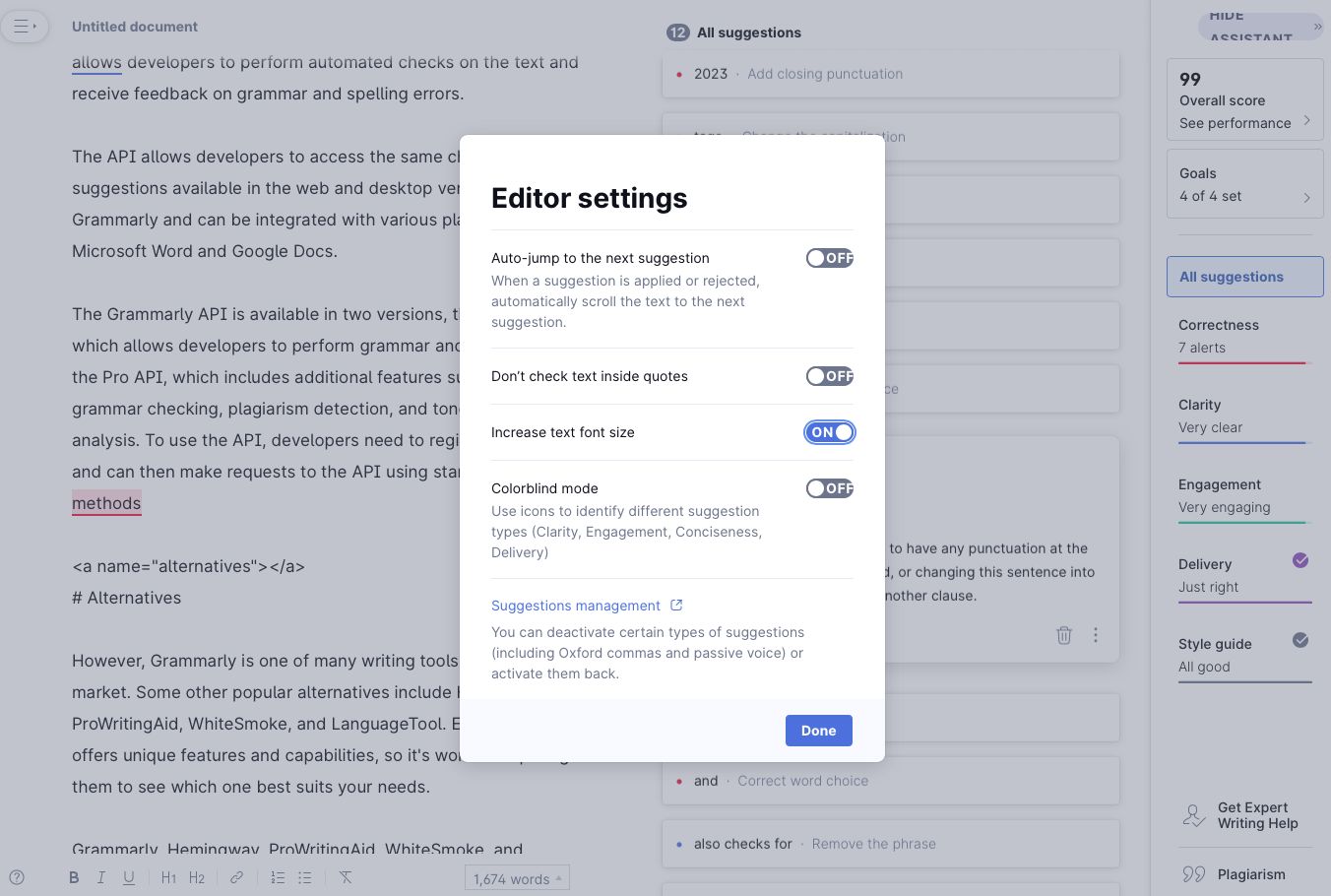
Grammarly web editor preferences
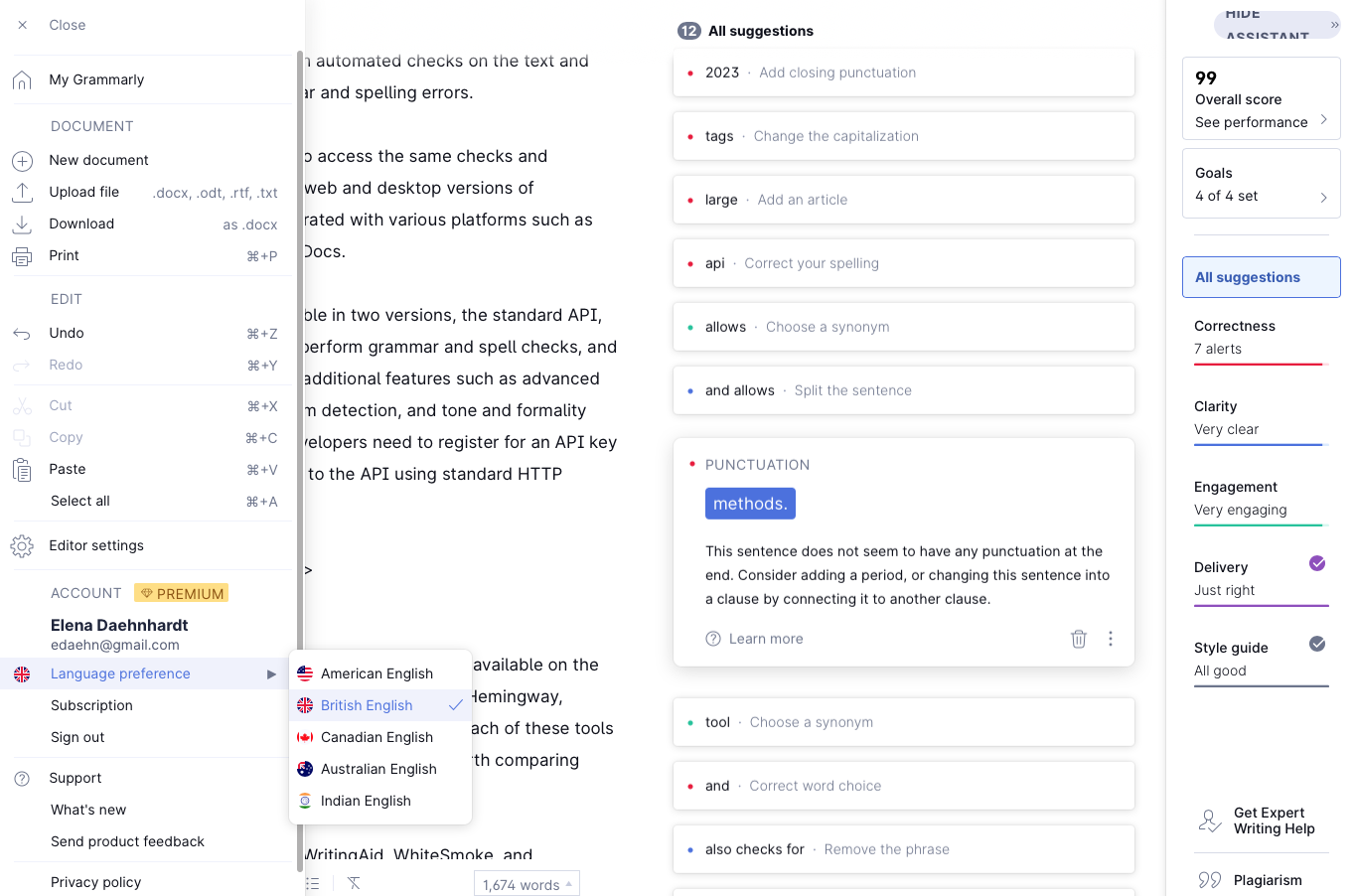
Grammarly language choice
Spellcheck, grammar, and punctuation
One of the critical features of Grammarly’s grammar checker is its ability to detect and correct grammar and punctuation errors in real time as you write.
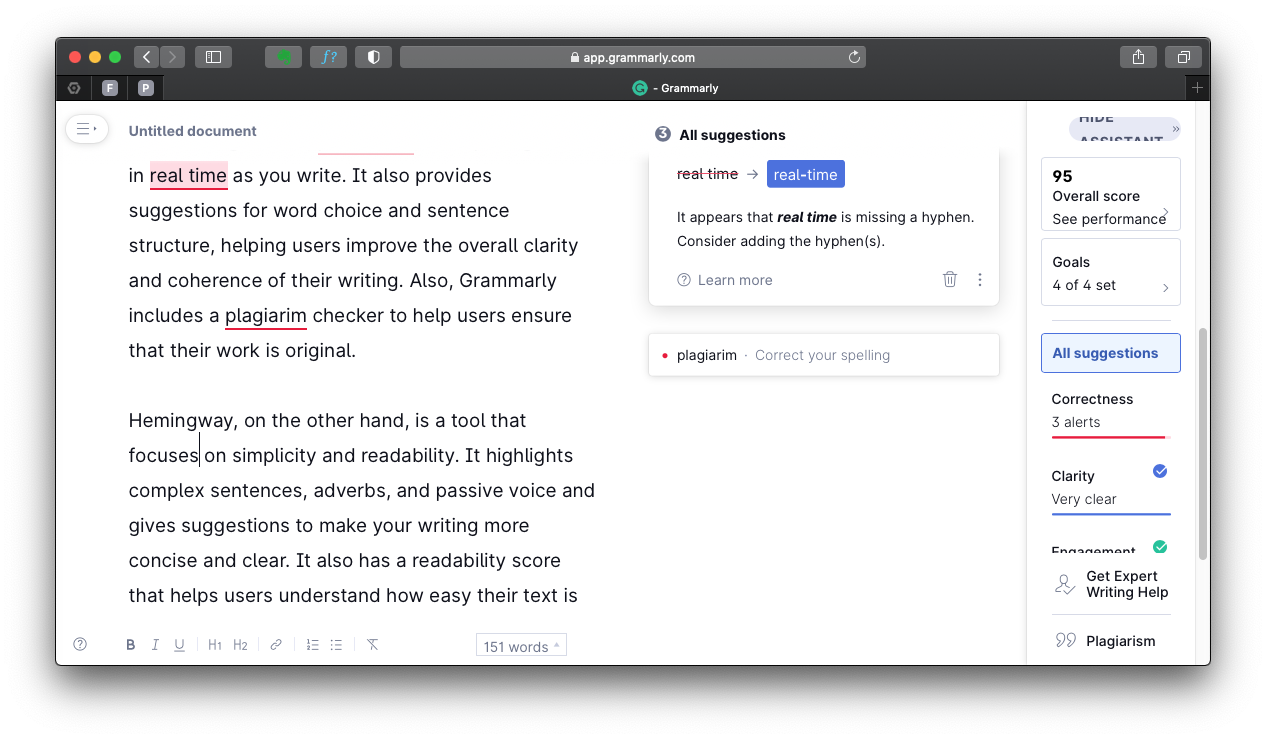
Spelling check in Grammarly
Advice on word choice
I like that Grammarly suggests synonyms as I write — I don’t like being repetitive.
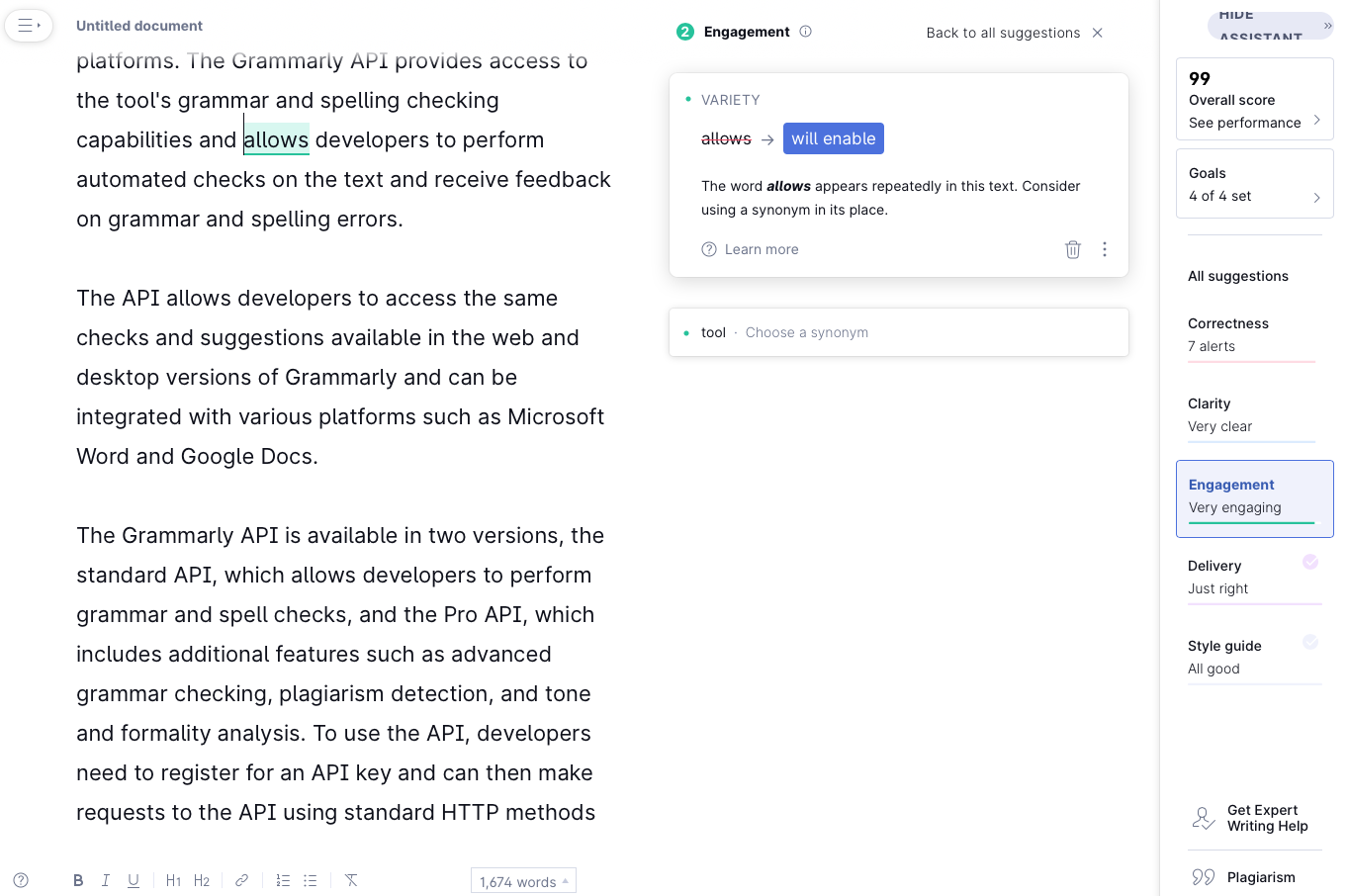
Grammarly word choice
Writing goals
Another helpful feature is Grammarly’s Goals setting, which lets you tell it your audience, formality, and domain — academic, business, casual, and so on — so its suggestions actually fit what you’re writing. That makes it a versatile tool for students and professionals alike.
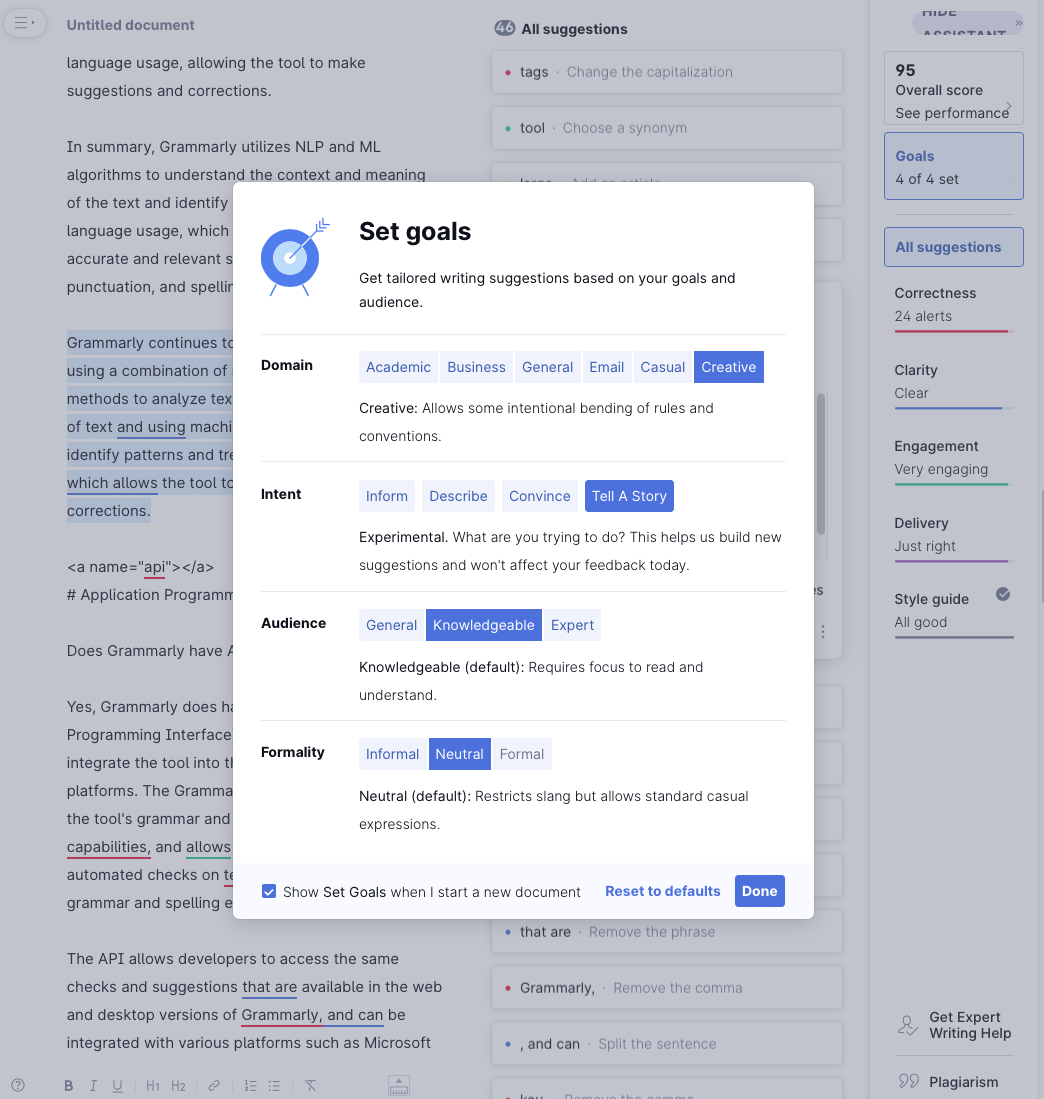
Grammarly writing goals
Readability feedback
Good content needs a good readability score, and Grammarly hands me one as I write.
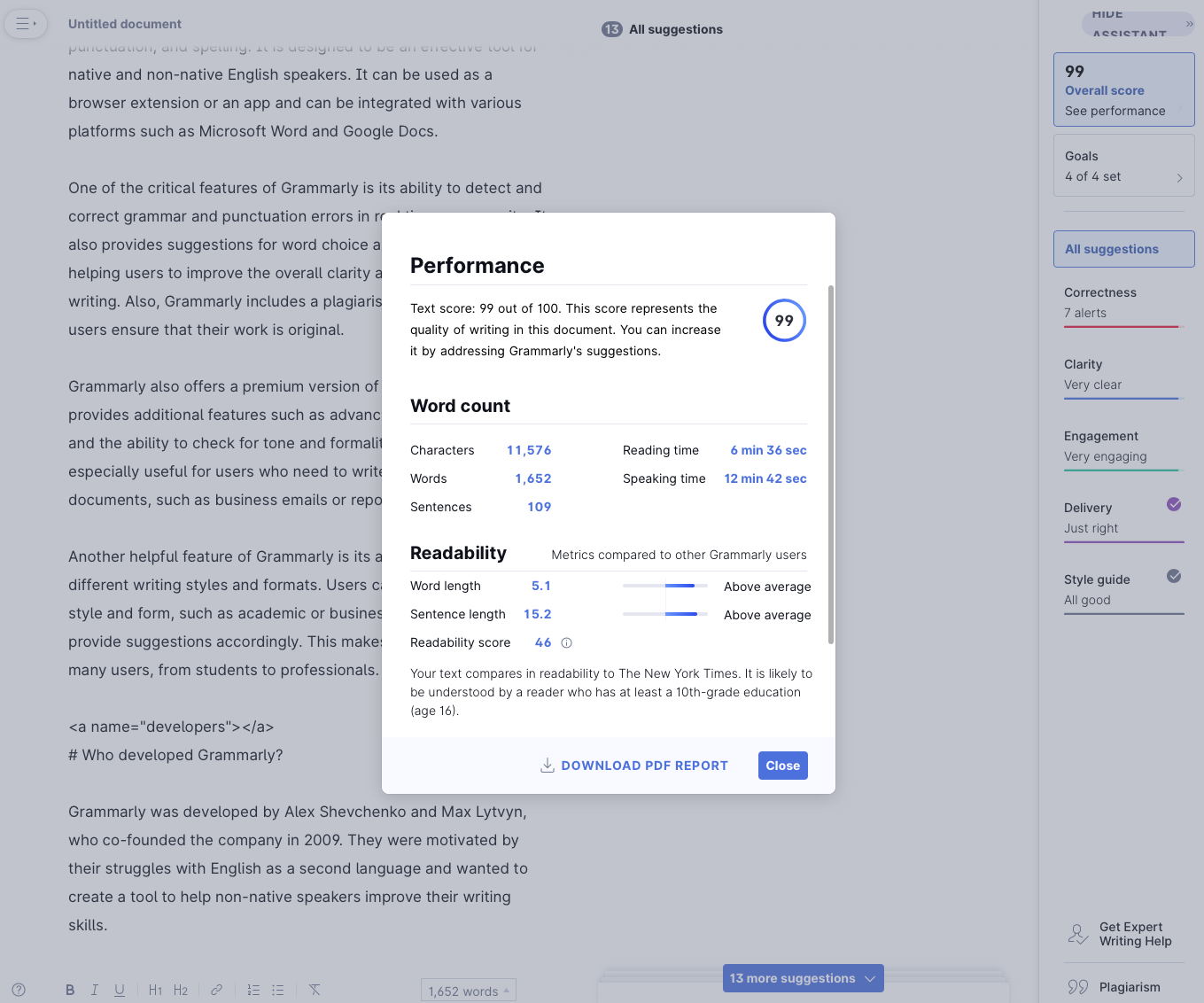
Grammarly readability feedback
Writing with clarity
Grammarly also suggests sentence-structure fixes, which helps me tighten up my writing for clarity.
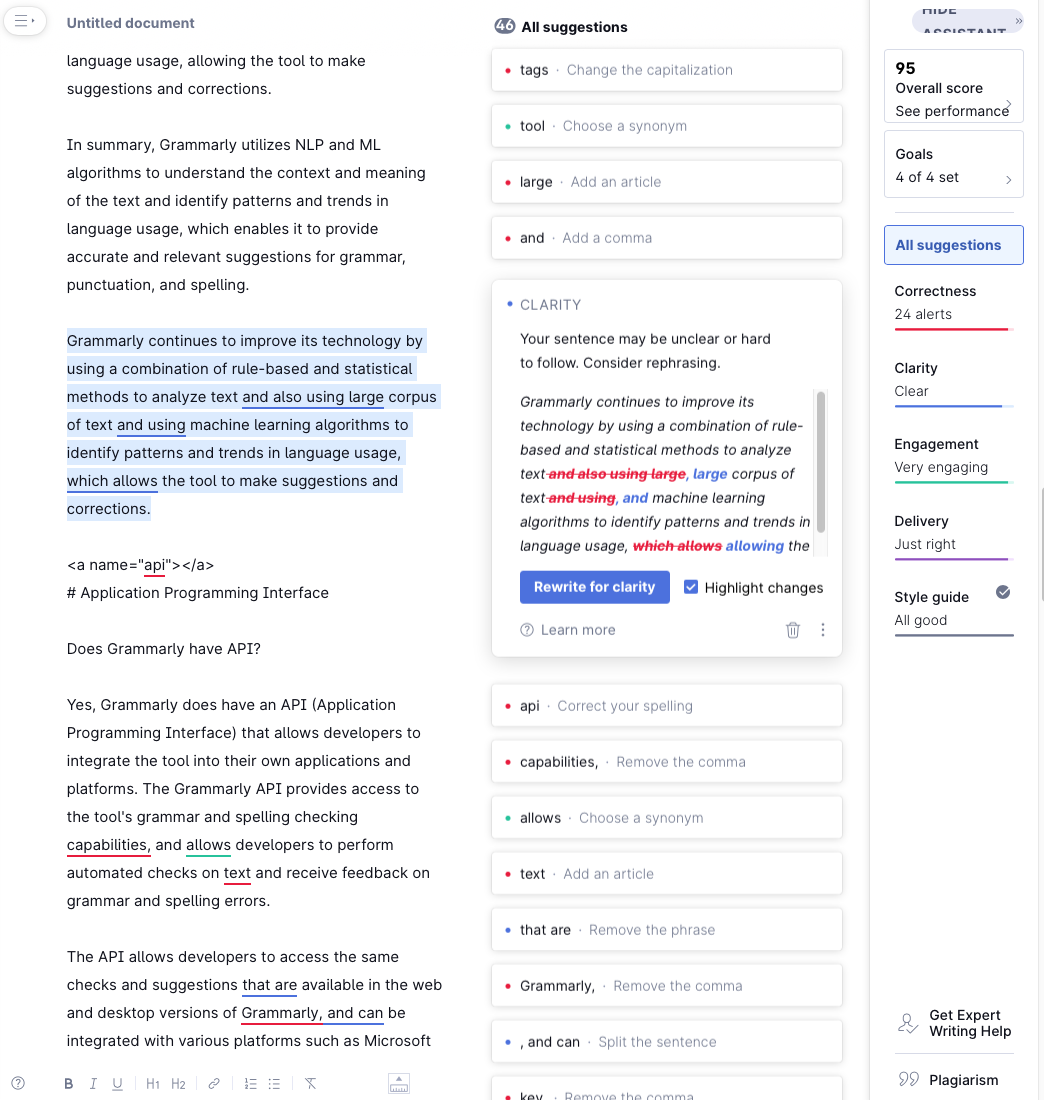
Grammarly writing clarity
Plagiarism checks
Grammarly’s Premium plan also includes a plagiarism checker that flags matches against billions of web pages and academic databases, so I can make sure my work is original.
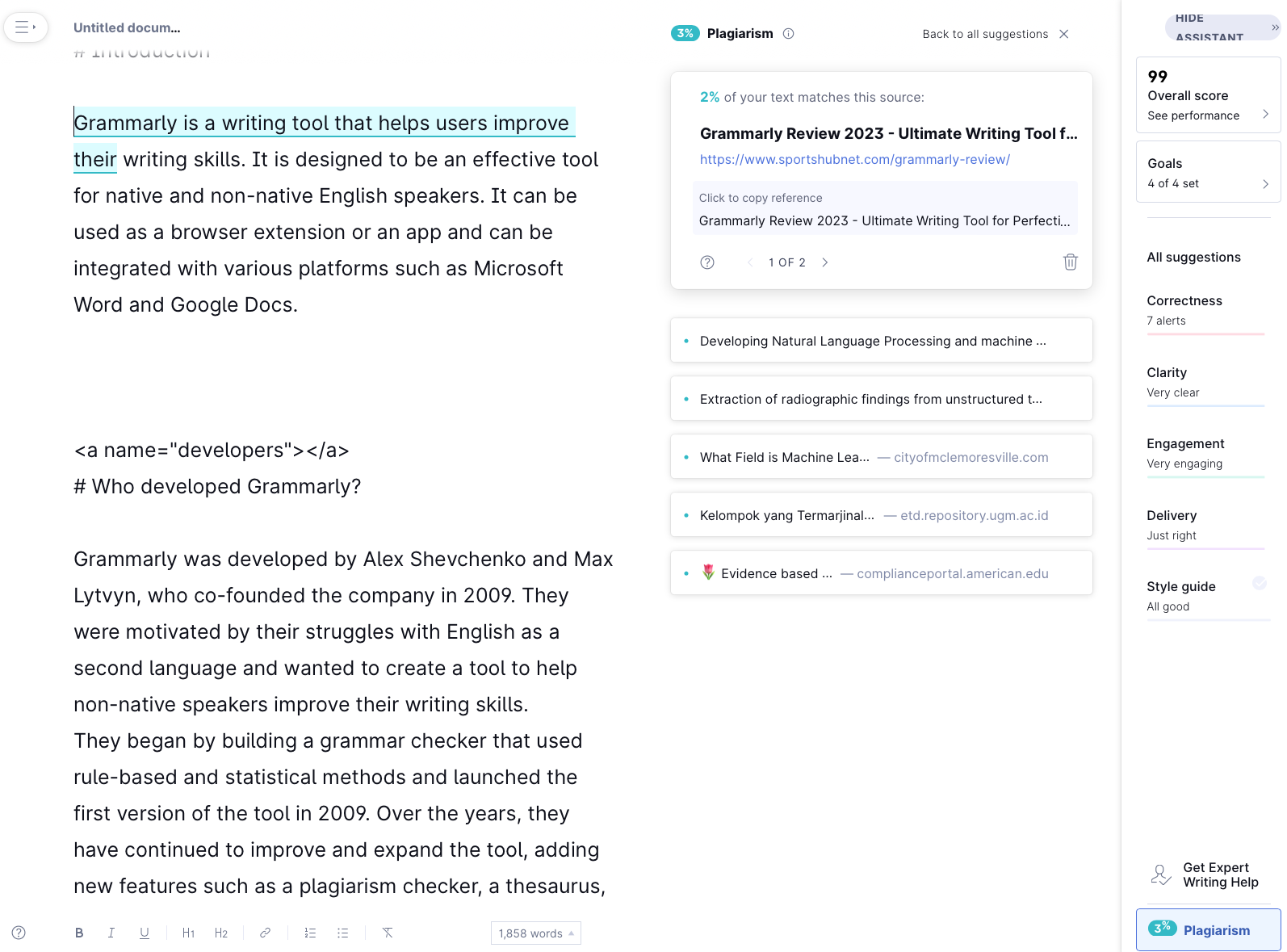
Grammarly plagiarism check
The premium version
Grammarly also offers a Pro plan with advanced grammar checking, full plagiarism detection, and tone detection. It’s especially useful if you write a lot of professional documents, such as business emails or reports.
Writing progress
Finally, what I like most in Grammarly is my weekly writing progress report. I like having a summary of my writing performance sent to my mailbox, along with suggestions of areas to improve. It’s called Grammarly Insights, and it’s simply fantastic!
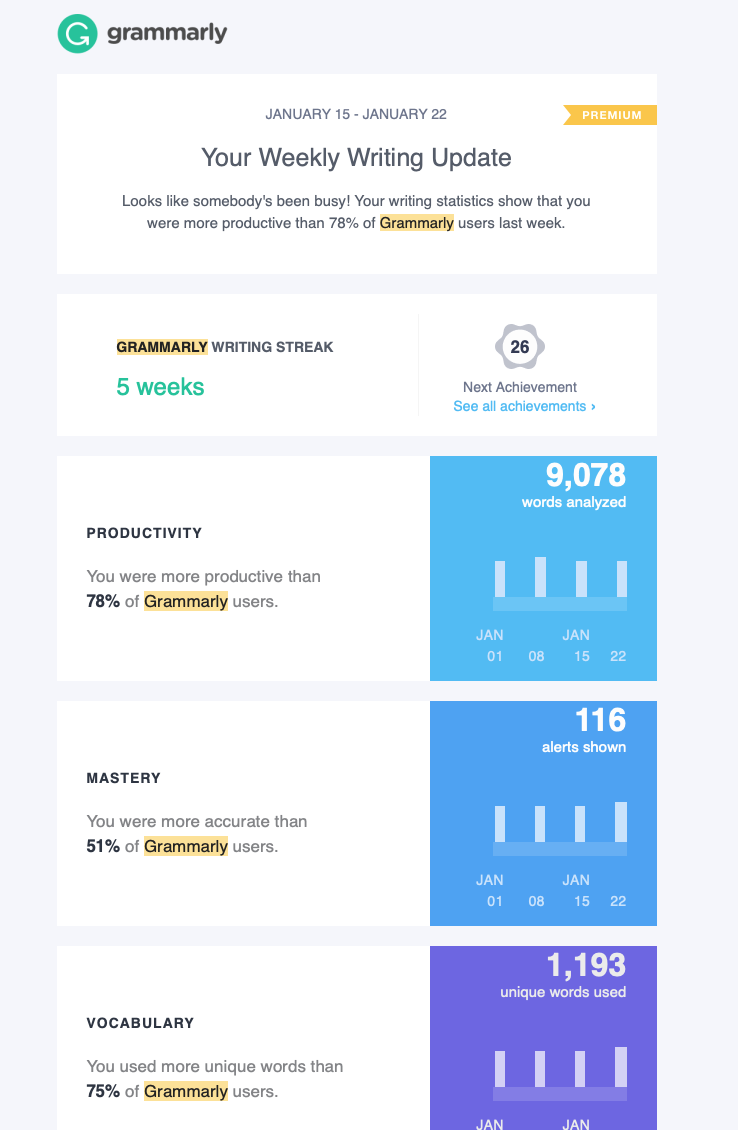
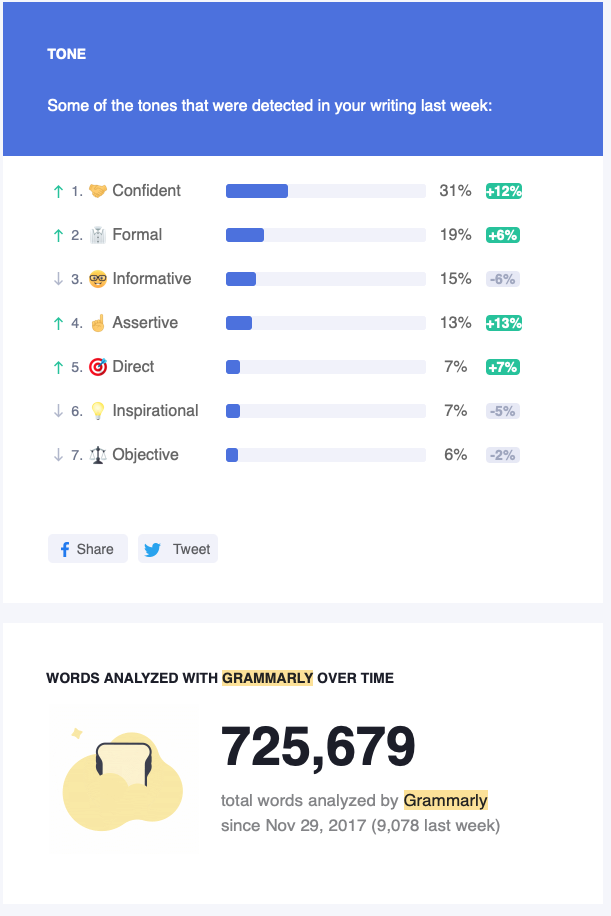
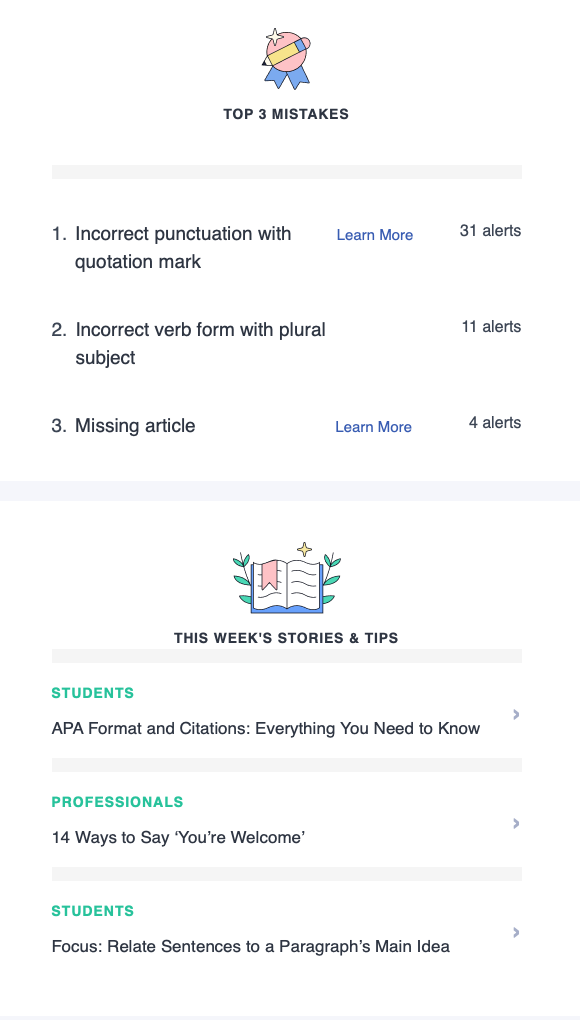
Grammarly Insights, weekly writing update
How Grammarly Works: NLP and Machine Learning
The technology behind Grammarly combines natural language processing (NLP) and machine learning (ML).
NLP is the branch of AI that deals with how computers understand, interpret, and generate human language. Grammarly uses it to work out the context and meaning of what you’re writing, which is what makes its suggestions relevant rather than just mechanical rule-matching.
ML lets Grammarly learn from a huge corpus of text rather than having every rule hand-coded. Its models spot patterns and trends in language use, which is how it catches grammar and punctuation errors and suggests better word choice and sentence structure. Grammarly’s own NLP team has written about how they combine linguistics with deep learning to parse text from single characters up to full documents — worth a read if you want the engineering detail.
Grammarly still leans on rule-based methods too, alongside the statistical ones: predefined grammar rules catch the obvious errors, while the statistical and ML side handles the fuzzier judgement calls.
Grammarly APIs: Integrating Grammar Checking into Applications
Grammarly does have APIs, but they’ve changed shape since I first wrote this post. The old public developer SDK for individual hobbyist integrations is gone — Grammarly shut that down. What’s there now is aimed at organisations: an Analytics API, a License Management API, and a Writing Score API, plus AI Detection and Plagiarism Detection APIs still in beta. Access goes through Grammarly Enterprise or Grammarly for Education, using OAuth 2.0 credentials rather than a simple sign-up API key.
So if you’re hoping to bolt Grammarly’s grammar checking into a weekend side project, that door’s closed for now. If you’re rolling this out across a company or school, it’s worth a look.
Grammarly Alternatives: Hemingway, ProWritingAid, WhiteSmoke, and LanguageTool
However, Grammarly is one of many writing tools available on the market. Some other popular alternatives include Hemingway, ProWritingAid, WhiteSmoke, and LanguageTool. These tools present unique features and capabilities, so it’s worth comparing them to see which best suits your needs.
| Tool | Primary focus | Plagiarism check | Multi-language |
|---|---|---|---|
| Grammarly | Grammar, clarity, tone, word choice | Yes | English |
| Hemingway | Readability, concise sentences, passive voice | No | English |
| ProWritingAid | Grammar, style reports, repetition and cliché detection | Yes | English |
| WhiteSmoke | Grammar plus built-in translator | Yes | 50+ languages |
| LanguageTool | Grammar and context-based errors | No | 30+ languages |
Grammarly’s core strength is grammar, clarity, and word-choice suggestions in real time, plus that plagiarism checker I mentioned above.
Hemingway, on the other hand, focuses on simplicity and readability. It highlights complex sentences, adverbs, and passive voice, and suggests ways to make your writing more concise and clear. It also has a readability score that helps you understand how easy your text is to read.
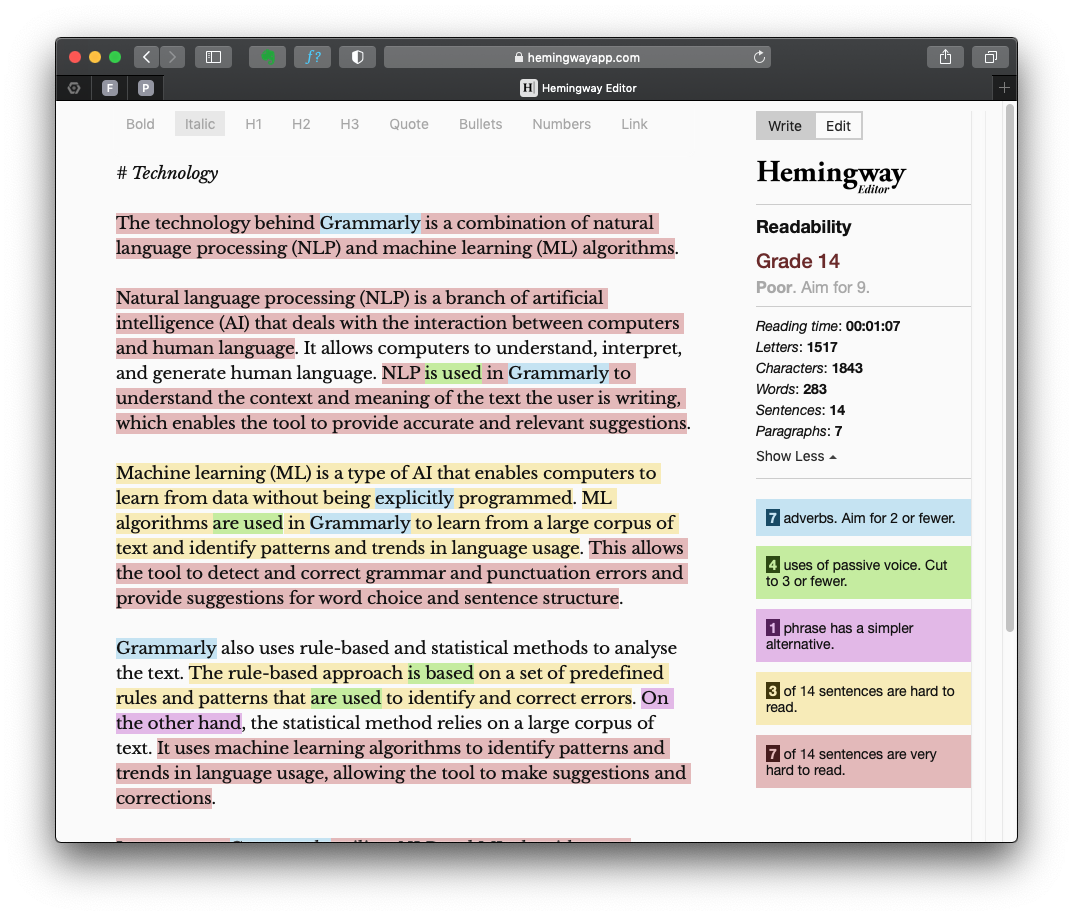
Hemingway
ProWritingAid is a more advanced tool that offers many features, such as grammar and style checking, a thesaurus, and readability analysis. It also provides a detailed report highlighting issues such as repetition and cliché, which helps you improve your writing.
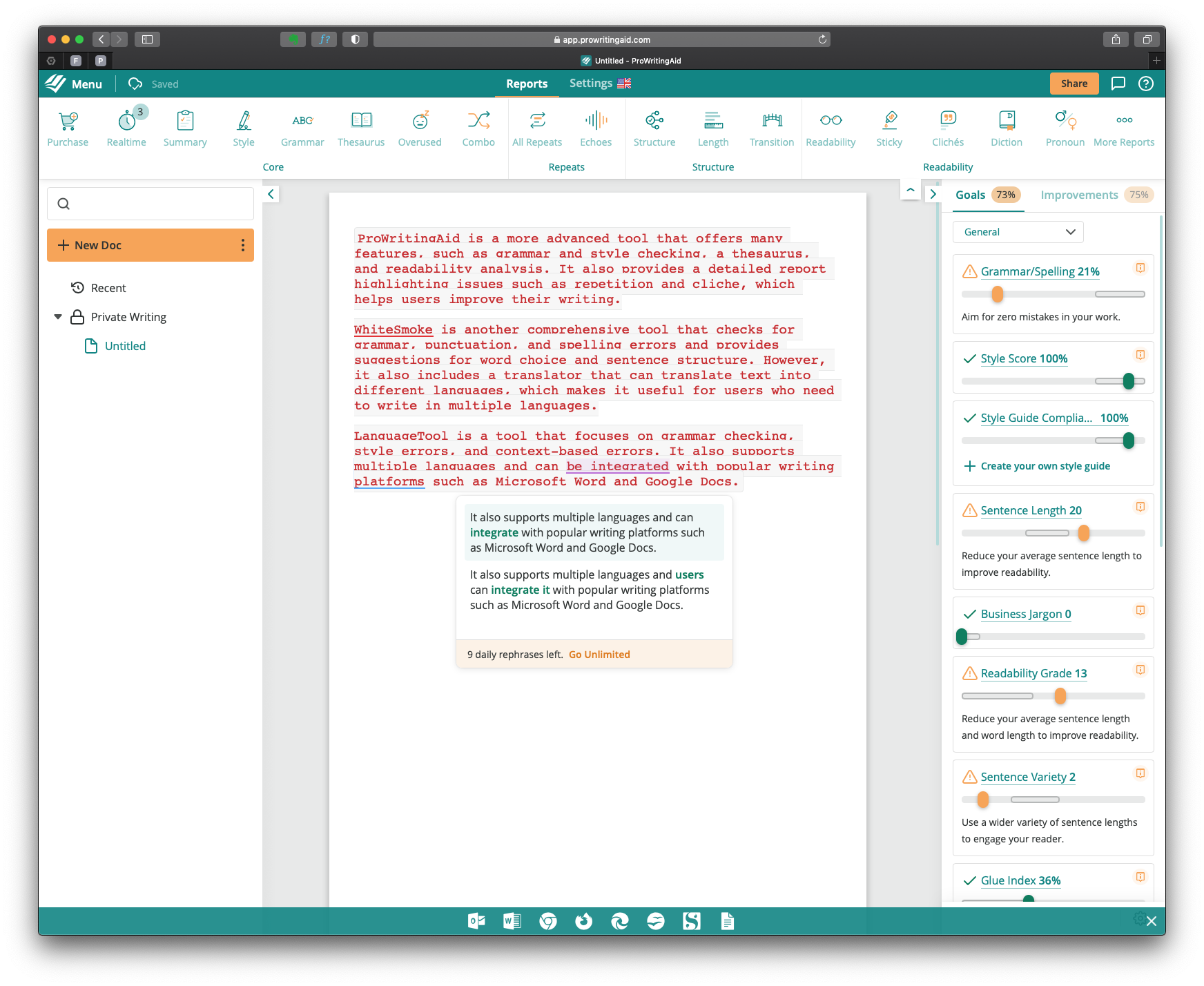
ProWritingAid
WhiteSmoke is another comprehensive tool that checks for grammar, punctuation, and spelling errors and provides suggestions for word choice and sentence structure. It also includes a translator covering 50+ languages, which makes it useful if you write in more than one language.
LanguageTool focuses on grammar checking, style errors, and context-based errors, and it now supports 30+ languages.
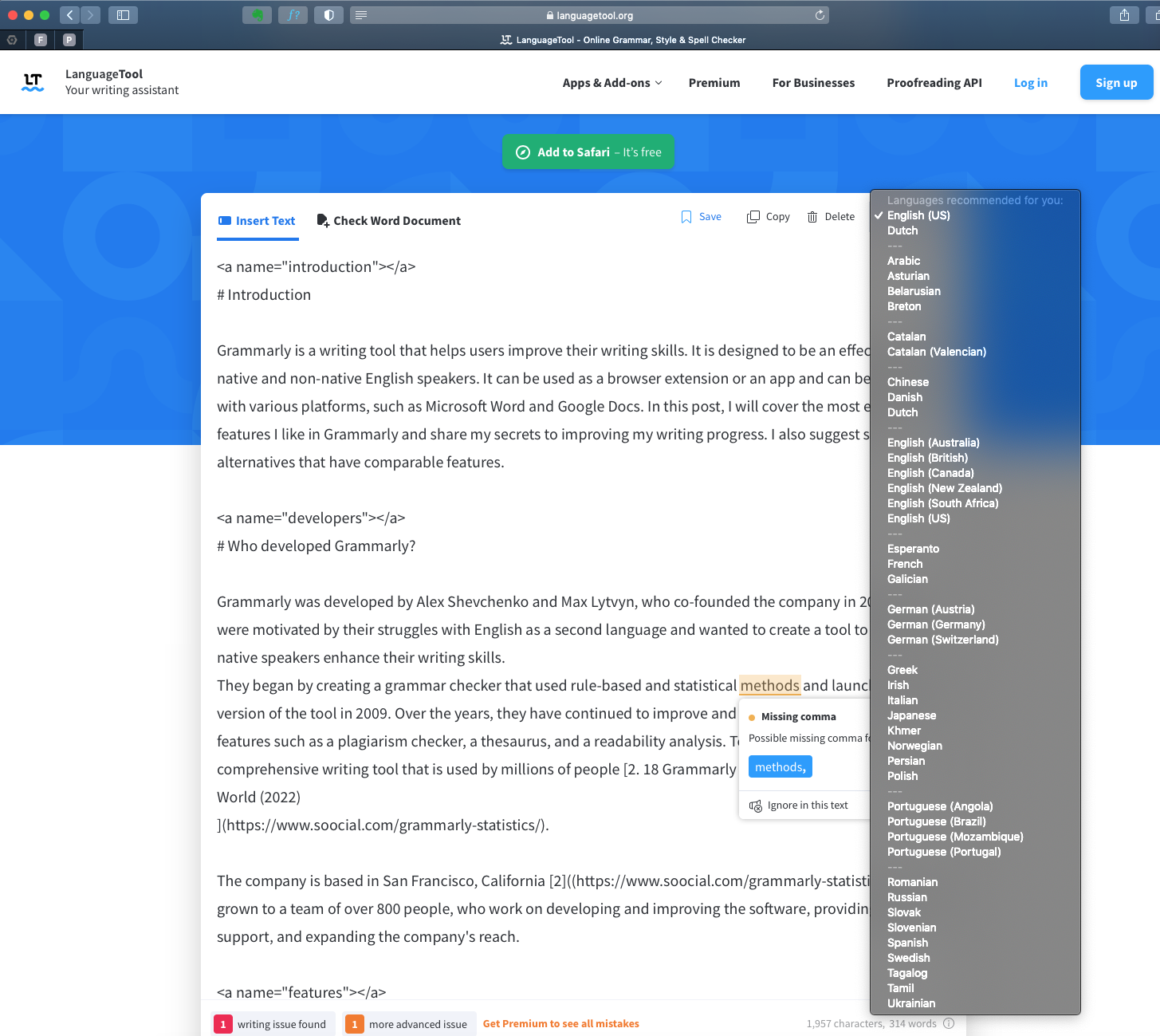
LanguageTool
Another comparable web tool is Quillbot, which has similar functionality to Grammarly. Additionally, it works also with the German language.
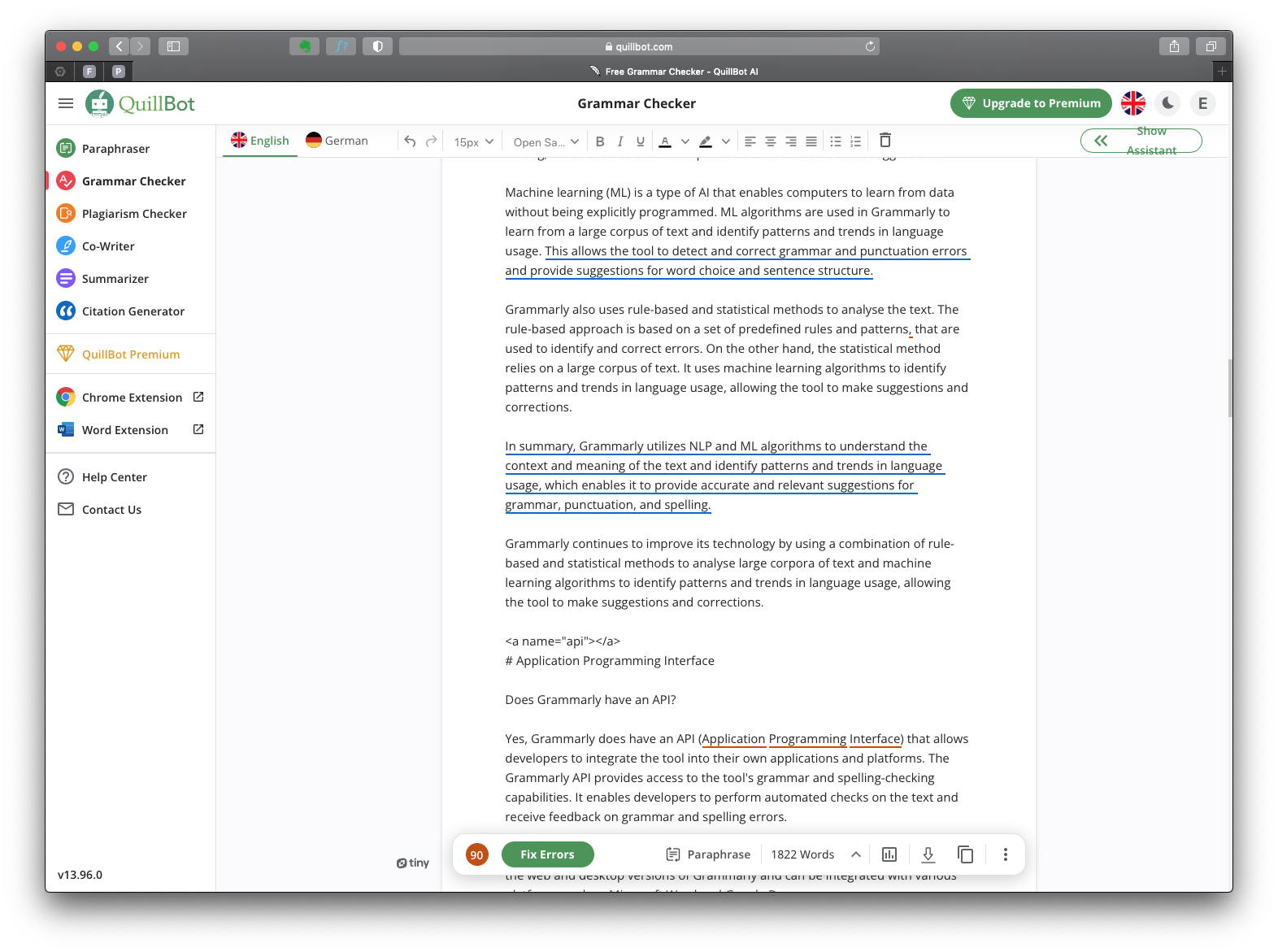
Quillbot
Ultimately, the best writing tool for you will depend on your specific needs and preferences. If you want a comprehensive tool that checks for grammar, punctuation, and spelling errors and provides suggestions for word choice and sentence structure, Grammarly is a good option. However, Hemingway might be better if you want a tool that emphasises simplicity and readability. ProWritingAid, WhiteSmoke, and LanguageTool have unique features that suit different needs.
Final Thoughts: Is Grammarly Worth It?
Grammarly is a cloud-based writing assistant that combines rule-based grammar checking with machine-learning language models to correct text and suggest improvements in real time. It’s an effective tool for grammar, punctuation, and spelling — the real-time error detection, word-choice suggestions, and plagiarism checker are genuinely useful. What I like most is how it’s improved my English writing: I get good ideas for rewriting content and catching issues I’d otherwise miss, and that weekly progress report keeps me honest about where I need to improve. Let me know if you rate any of the alternatives above, or if you use something else entirely — I’m curious.
p.s. My apologies for creating another long post. I wanted to do a short Grammarly review and ended up comparing it to other tools. I promise to make my next post smaller. Keep reading!
Did you like this post? Please let me know if you have any comments or suggestions.
Posts about AI Apps that might be interesting for youDisclaimer: I used ChatGPT while preparing this post, which is why I've listed it in my references section below. Most of the text is rewritten by me, as a human, and spellchecked with Grammarly.
References
4. Grammarly Plagiarism Checker
5. What are Goals? (Grammarly Support)
8. Common Questions About Weekly Grammarly Insights Reports
9. Grammarly’s NLP Team Builds the Future of Communication
17. LanguageTool — Supported Languages
18. Grammarly Analytics API (Developer Docs)
Stay Ahead in AI, Machine Learning & Python
No hype. Weekly notes on AI tools, Python, and what I'm actually building — plus seven free gifts, including Fantastic AI: The 2026 Toolkit and Vibe Coding Checklist.
You're in
Check your inbox for Set a password to unlock articles if you want gated tutorials. Log in with the same email.