AI Coding Assistants & IDE WorkflowsElena Daehnhardt |

Image credit: Illustration created with Midjourney, prompt by the author.
Image prompt“An illustration representing cloud computing” |
AI Coding Assistants & IDE Workflows
This series moves from foundational ideas about AI coding support to practical IDE workflows and real-world integrations.
Series Progress
15 of 29 posts published
All Posts in This Series
Part 1: Vibe coding with Generative AII've been getting into "vibe coding" recently, quickly prototyping some of my ideas, and working on my pet projects. I must confess that the AI-assisted coding is a very addictive activity, and must be taken with caution since it has some security implications and requires a careful prompts engineering. |

|
Part 2: Antigravity 1.11.9 vs Cursor 2.1.42 (Universal): A Practical ComparisonA structured head-to-head comparison of Antigravity 1.11.9 and Cursor 2.1.42 — two IDEs with opposing philosophies: outcome delegation vs conversational assistance. |
|
Part 3: My Multi-Agent WorkflowA structured guide to building a calm, dependable multi-agent publishing workflow: which AI tool operates at which layer, and how to wire them together without chaos. |

|
Part 4: On AI Coding AssistantsNot all LLMs write code the same way. After months of prototyping, debugging, and building architectures with Google Gemini, ChatGPT, and Claude AI, here is a technical breakdown of how they compare, and why the Model Context Protocol (MCP) changes everything. |

|
Part 5: Cursor AI for Python DevelopmentTraditional AI chatbots require you to manually paste code snippets back and forth. Cursor AI fundamentally changes this dynamic by operating as an IDE built entirely around contextual AI agents. Here is my technical review of its RAG-based codebase indexing and Composer features for Python development. |

|
Part 6: Vibe Coding with Cursor AITesting Cursor AI in Agent Mode feels like coding with a slightly eccentric but eager partner. Friendly, fast, sometimes forgetful — here’s how GPT-5, Auto mode, and grok-code-fast stack up, with real specs. |

|
Part 7: A few thoughts on Cursor 2.0Cursor 2.0 shifts from autocomplete to autonomous agents via the Composer model and Sandboxed Terminal. Evaluate if this IDE migration is right for your workflow with our Decision Matrix. |

|
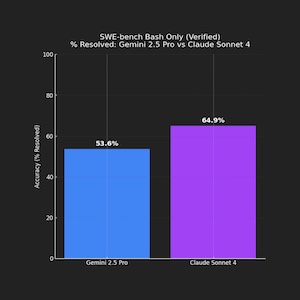
Part 8: Gemini CLI versus Claude CLICommand-line AI tools are the new pocket knives of coding life. We compare Gemini CLI and Claude CLI, detailing their installation, privacy profiles, SWE-bench accuracy, and how to integrate them via Python. |
|
Part 9: AI Coding Support: Revolutionizing Software Development with Intelligent AssistanceComing SoonDiscover how AI is transforming software development through intelligent coding support. Learn about the latest AI tools, techniques, and best practices that are revolutionizing how developers write, debug, and maintain code. This post is currently being written and will be published soon. |

|
Part 10: Cursor AI with MCP toolsA practical walkthrough for connecting Cursor AI to MCP servers so the assistant can use external tools, APIs, and project context safely. |
|
Part 11: Using GitHub Co-Pilot with PyCharmComing SoonGitHub Co-Pilot is a game-changer in the world of coding and programming. It's an excellent addition to any developer's toolkit. Make sure to follow the tips discussed in this post to make the most out of Co-Pilot and increase your productivity. This post is currently being written and will be published soon. |

|
Part 12: Python coding with chatGPTIn this post, I did some Python coding with chatGPT. We have coded a neuron, a simple neural network, and learned how to train it. I am pleased with the result. I think that chatGPT has excellent potential for CS students and all coders that want to update their skills effectively. Is it an end of the StackOverflow? We cannot see the future. However, we still need social interaction with humans, and AI cannot substitute human communication. |

|
Part 13: GPT Implications for CodingThe AI evolution has implications for programming and programmer jobs. GPT usage allows for quicker product releases and a focus on user requirements. However, low-coding jobs could be delegated to AI, new skills for AI-assisted programming be required or access to sophisticated models only available to some. The new coding age is upon us. In this blog post, I highlight the opportunities and challenges of AI-assisted code generation and share my experiences using chatGPT. |

|
Part 14: How to Use Claude AIWhat is Claude AI? What can we do with it, and how? Let's explore this fantastic AI assistant by Anthropic. |

|
Part 15: AI-Powered Development Environments: The Next Generation of IDEsComing SoonExplore the future of software development with AI-powered development environments. Discover how next-generation IDEs are revolutionizing coding with intelligent assistance, automated workflows, and predictive capabilities. This post is currently being written and will be published soon. |
|
Part 16: AI Video CreationComing SoonIn this post, I will discuss voice synthesis and cloning, and mention fantastic AI tools and APIs for creating high-quality human-like voices from text or for automatic voice dubbing. This post is currently being written and will be published soon. |

|
Part 17: AI-Powered Code Review: Revolutionizing Quality Assurance in Software DevelopmentComing SoonDiscover how AI is revolutionizing code review and quality assurance in software development. Learn about automated code analysis, intelligent bug detection, and AI-powered quality assurance tools that are transforming how we ensure code quality. This post is currently being written and will be published soon. |
|
Part 18: Can Gemini Rewrite in My Writing Style?Coming SoonA practical experiment on style transfer with Gemini, including prompt design, limitations, and editorial quality checks. This post is currently being written and will be published soon. |

|
Part 19: Cursor AI for sending Newsletter emailsComing SoonHave you ever wondered if AI will make you a lazy programmer? In this post, I share my journey with Cursor AI after a month of extensive testing. At the end, I will list some prompts that helped me to rebuild my newsletter subscription mailer with a nice user interface, CSV import, and an automatic post description generation with AI. This post is currently being written and will be published soon. |
|
Part 20: Why I love GPT-5Coming SoonA practical reflection on GPT-5 strengths for coding, writing, and analysis, including tradeoffs and workflow patterns. This post is currently being written and will be published soon. |

|
Part 21: Business planning with Claude AIComing SoonWhat is Claude AI? What we can do with it and how? Let's explore this fantastic AI assistant by Anthropic. This post is currently being written and will be published soon. |
|
Part 23: Using Cursor and Codex CLI Together: A Calm Way to Automate BloggingComing SoonCursor and Codex CLI often look like overlapping tools. They’re not. Used together, they form a calm, powerful workflow where AI handles the mechanical work and you stay in control of voice, structure, and meaning. This post is currently being written and will be published soon. |

|
Part 24: Building an AI Publishing Pipeline with Multi-Agent OrchestrationComing SoonA practical guide to building a cost-conscious multi-agent AI pipeline that drafts, edits, and publishes blog posts — with a human keeping final control. This post is currently being written and will be published soon. |
|
Part 25: Building an AI Publishing Pipeline with Multi-Agent OrchestrationComing SoonA practical guide to building a cost-conscious multi-agent AI pipeline that drafts, edits, and publishes blog posts — with a human keeping final control. This post is currently being written and will be published soon. |
|
Part 26: Composio MCP: connect Claude, Cursor and AI agents to 1,500+ toolkitsRunning one MCP server per service works until you have a dozen of them. Composio puts GitHub, Gmail, Notion, Slack and 1,500+ other toolkits behind a single MCP connection, handles authentication, and lets the agent discover tools on demand instead of loading them all into the context window. Here is how it works, how to set it up, and when it is worth the extra dependency. |
|
Part 27: Composio Alternatives: A Map of the MCP Integration LandscapeComposio is not the only way to connect AI agents to your tools, and 'Composio alternative' can mean two quite different things. Here is an honest map of the connector platforms that supply the tools and the MCP gateways that govern them, with a clear recommendation for each type of reader. |
|
Part 28: Google Antigravity vs Cursor 2: Seven Months In, the Dust Has SettledComing SoonSeven months after Google Antigravity and Cursor 2 launched within weeks of each other, a clearer winner has emerged — and it might not be either of them. This post is currently being written and will be published soon. |

|
Part 29: Google Antigravity vs Cursor 3: The Battle for Your Terminal, Nine Months LaterA nine-month review of Google Antigravity and Cursor — two AI IDEs with opposite philosophies — updated for where both tools stand in August 2026 as AI coding agent adoption hits 95% of developers. |
|
Part 30: Google Antigravity vs Cursor 2: The Battle for Your TerminalComing SoonA detailed comparison of Google Antigravity and Cursor 2 — two AI-driven IDEs launched just weeks apart. How Gemini 3 Pro, agent-first architecture, and verification artifacts stack up against Cursor’s speed-focused Composer model, multi-model support, and native DevTools integration. This post is currently being written and will be published soon. |
|
Getting Started
New to this series? Start with Part 1: Vibe coding with Generative AI.
Each post builds on the previous one, so reading them in order is recommended. Each post also works on its own if you need to jump to a specific topic.