Elena' s AI Blog

Technical Blogging & SEO Systems Series

Elena Daehnhardt

Midjourney AI-generated art
Image credit: Illustration created with Midjourney, prompt by the author.
Image prompt

“An illustration representing cloud computing”

Technical Blogging & SEO Systems

This series is about the practical machinery behind a technical blog — not just writing posts, but the systems that get them read: search optimisation, analytics, link building, and the publishing tools I rely on day to day.

Series Progress

16 of 31 posts published


All Posts in This Series

Part 1: Medium alternatives for Technical bloggers

Coming Soon

A practical syndication guide for technical bloggers: canonical handling, platform adaptation, and measurable distribution strategy.

This post is currently being written and will be published soon.

Medium alternatives for Technical bloggers

Part 2: Regaining Website Traffic After Google Updates

Coming Soon

A practical recovery playbook for traffic drops after Google updates, focusing on diagnostics, remediation, and measurement.

This post is currently being written and will be published soon.

Regaining Website Traffic After Google Updates

Part 3: Guest Post Template: AI and Python Topics

Coming Soon

A practical guest-post template for AI and Python topics, including quality requirements, formatting rules, and submission checklist.

This post is currently being written and will be published soon.

Guest Post Template: AI and Python Topics

Part 4: Monitor Affiliation links with Google Analytics

Coming Soon

In this short post I describe monitoring affiliation links with Google Analytics, GA4.

This post is currently being written and will be published soon.

Monitor Affiliation links with Google Analytics

Part 5: How I have created this website?

Coming Soon

In Data Science, we have so many terms explaining concepts and techniques that it is easy to need clarification and get a clear understanding of all data science components and steps. In this post, I fill the gap by explaining the two most essential components of data science, data analysis and exploration. To make things clear and precise, I will outline both approaches, compare them and show the usage of Python Pandas for data exploration and analysis. I will show several practices using Pandas and graph drawing using Python.

This post is currently being written and will be published soon.

How I have created this website?

Part 6: Using SEO Plugins and Ahrefs Effectively

Coming Soon

A practical SEO workflow using plugins and Ahrefs for keyword discovery, on-page checks, and measurable content improvements.

This post is currently being written and will be published soon.

Using SEO Plugins and Ahrefs Effectively

Part 7: How to increase web traffic with Pinterest

Coming Soon

A practical Pinterest traffic playbook covering pin design, keyword mapping, scheduling cadence, and analytics feedback loops.

This post is currently being written and will be published soon.

How to increase web traffic with Pinterest

Part 8: Obsidian for Creative Thinkers

Coming Soon

A practical Obsidian setup guide with AI plugin usage, vault organization, linking strategy, and workflow templates.

This post is currently being written and will be published soon.

Obsidian for Creative Thinkers

Part 9: My SEO updates (200% more traffic in one month)

Coming Soon

This post discusses advanced SEO practices to enhance your web traffic. We will focus on utilising web analytics, researching LSI keywords, and enhancing website loading speed to boost search engine ranking and enhance user experience. Implementing the strategies explained in this post doubled my website traffic in just one month!

This post is currently being written and will be published soon.

My SEO updates (200% more traffic in one month)

Part 10: Obsidian or Notion?

Coming Soon

A practical comparison of Obsidian and Notion for technical writing, knowledge management, and Git-based publishing workflows.

This post is currently being written and will be published soon.

Obsidian or Notion?

Part 11: Turning Your Private GitHub Repo into an Obsidian Vault

Coming Soon

How I turned my private GitHub Pages repository into an Obsidian vault, and built a calm, integrated workflow for writing, coding, and publishing.

This post is currently being written and will be published soon.

Turning Your Private GitHub Repo into an Obsidian Vault

Part 12: Why do I like Obsidian?

Coming Soon

A practical reflection on why Obsidian works well for long-form technical writing, idea linking, and reproducible note workflows.

This post is currently being written and will be published soon.

Why do I like Obsidian?

Part 13: Adding TL;DR Sections to Your GitHub Pages Blog

Coming Soon

A practical guide to adding reusable TL;DR front-matter sections in Jekyll for better scanability and SEO clarity.

This post is currently being written and will be published soon.

Adding TL;DR Sections to Your GitHub Pages Blog

Part 14: How I Support My Blogging with AI Assets

Coming Soon

A practical monetization workflow for AI-generated assets across blogging, stock platforms, and direct digital products.

This post is currently being written and will be published soon.

How I Support My Blogging with AI Assets

Part 15: The Case of the Zombie Post (and How to Exorcise It)

Coming Soon

A practical debugging note for duplicate Jekyll posts after file renames, with deterministic rebuild and cache reset steps.

This post is currently being written and will be published soon.

The Case of the Zombie Post (and How to Exorcise It)

Part 16: SEO and Indexing my Blog

Today, I received an email from the Google search console team informing me about an issue with my blog pages related to a duplicate without a user-selected canonical. I was intrigued about making my blog more search engine friendly and seeing what happens after SEO.

SEO and Indexing my Blog

Part 17: Moving to GA4

On July 1st, we are moving to GA4, which is essential to ensure that our website analytics are processed without delay due to the transition. Herein I share my GA4 setup in Google Analytics.

Moving to GA4

Part 18: How I Built This Blog — and How You Can Too

I get asked how I built this blog more often than almost anything else. Here is the honest answer — GitHub Pages, Jekyll, Markdown, a sprinkle of HTML, and a form service that keeps spam out. No WordPress, no server bills, full control.

How I Built This Blog — and How You Can Too

Part 19: Avoid SEO Penalties on Medium

Republishing your blog posts on Medium is a smart way to reach a wider audience and enhance engagement without compromising your original content's SEO value. This post explains how to properly use canonical tags to avoid duplicate content issues when republishing.

Avoid SEO Penalties on Medium

Part 20: Creating Websites with AI on Mixo.io

Have you ever wished for a website that writes itself? This dream is now a reality thanks to the advancement in Artificial Intelligence (AI). With Mixo.io, you can create stunning websites using AI technology--in minutes! In this blog post, we will explore website creation with Mixo.io.

Creating Websites with AI on Mixo.io

Part 21: Blog Writing with AI in MindStudio

BlogGenie created a draft of this post at YouAI (MindStudio) and aims to demonstrate how AI writing assistants can streamline the blog generation process. It focuses specifically on leveraging YouAI for overall framing and BlogGenie for on-page SEO best practices. This allows for creating initial drafts in seconds rather than hours. You still have to edit and correct an outline to finalise your post.

Blog Writing with AI in MindStudio

Part 22: AI reads my blog

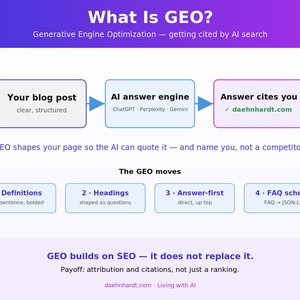
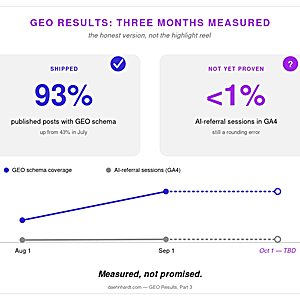
Traditional SEO is a brutal game for independent bloggers. But recently, I noticed a surge in a different kind of traffic ChatGPT and other AI bots are actively reading my blog. Here is how you can track AI traffic in GA4, manage bot access, and optimise your content to be cited by AI search engines.

AI reads my blog

Part 23: Regaining Website Traffic After Google Updates

As a small website owner, I understand the challenges we face. I write about AI and Python coding, sharing my knowledge with fellow professionals and students. However, the recent Google updates have led to a significant drop in traffic. With Google providing over 90% of our traffic, the struggle to regain our website visits is real. Is there any information about the Google SE website feature that's crucial or any ranking details shared publicly?

Regaining Website Traffic After Google Updates

Part 24: Iberia’s Day-long Blackout

Yesterday, we had a total blackout in Portugal. Around 12:30 p.m. on Monday, the entire Iberian Peninsula went dark. For roughly twelve hours, almost 60 million people in Spain and Portugal—plus pockets of southwestern France—lost grid power, forcing airports, hospitals, and rail hubs onto emergency generators and confusing city centres.

Iberia’s Day-long Blackout

Part 25: Say Goodbye to Grammar Gaffes with Grammarly!

Grammarly is a writing tool that helps users improve their grammar, punctuation, and spelling. It is designed to be an effective tool for native and non-native English speakers. It can be used as a browser extension or an app and be integrated with various platforms, such as Microsoft Word and Google Docs. I like to have also my writing progress reports sent weekly to see my writing performance and areas to improve. In this post, I share my Grammarly experience and discuss the technology behind Grammarly-like tools.

Say Goodbye to Grammar Gaffes with Grammarly!

Part 26: The Most Useful AI-Content and Plagiarism Detection Tools

With the development of AI-content generators such as chatGPT, we have a new need to identify such content, and the tools of AI-content detection are currently being developed. Writing assistants and plagiarism detection tools also include AI-content detection. In this post, I talk about the most visible AI tools that help us mitigate plagiarism and motivate us to create original and well-written content. Indeed, I will start with the definition of plagiarism, why it's terrible, and move quickly into helpful tools in AI-content and plagiarism detection that are available today.

The Most Useful AI-Content and Plagiarism Detection Tools

Part 27: Two years of Elena's AI Blog

Elena, a passionate AI blogger with a background in engineering and consultancy, brings her expertise and a mission to demystify machine learning for her readers.

Two years of Elena's AI Blog

Part 28: Guest posts about AI and Python

This blog is not only about coding or AI; it is about living with AI in human society, striving for happiness and building on technological advances. You can publish your quest post about anything related to Python coding and AI. It is easy. I will explain how.

Guest posts about AI and Python

Part 29: Three years of Elena's AI Blog 🎈

We live in this era of rapid AI evolution, which is yet challenging to understand and live in, even for people with computer science backgrounds. I like, however, to make things easy to understand while learning new technologies as a passion. My blog, now three years old, connects technology with everyday understanding, reflecting my passion for coding and commitment to making complex concepts accessible.

Three years of Elena's AI Blog 🎈

Part 30: How to Host Your Blog for Free with GitHub Pages

GitHub Pages lets you host a blog for free, with your own custom domain, no servers to manage, and no hosting bill at the end of the month. Here is everything you need to go from zero to published.

How to Host Your Blog for Free with GitHub Pages

Part 31: A Journey Through AI and Code

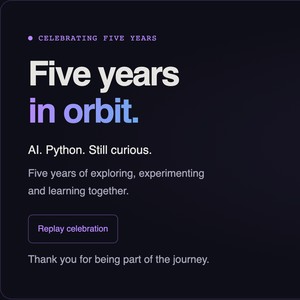
Another year has passed, and Elena's AI Blog is now four years old! Join me as I reflect on the year we shifted from generative AI to agentic orchestration, and outline the strategic roadmap for 2026.

A Journey Through AI and Code

Getting Started

New to this series? Start with Part 16: SEO and Indexing my Blog.

Each post builds on the previous one, so reading them in order is recommended. Each post also works on its own if you need to jump to a specific topic.


All Posts