Elena' s AI Blog
  Browse by topic  · Browse by tag

Other Tags

AI browser extensions


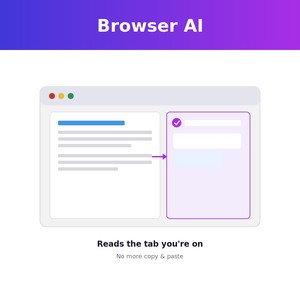
AI browser extensions give models direct read and action access over active browser tabs. Here is how six of them compare, six concrete technical use cases, and the prompt injection security risks to watch out for. Read more...

Google Antigravity vs Cursor 3: The Battle for Your Terminal, Nine Months Later


A nine-month review of Google Antigravity and Cursor — two AI IDEs with opposite philosophies — updated for where both tools stand in August 2026 as AI coding agent adoption hits 95% of developers. Read more...

Production Hardening: Idempotency, Run Isolation, and Crash Safety


LangGraph replays a node from the start every time it resumes after an interrupt, so a `finalized` flag alone cannot stop a side effect from firing twice. Here's how stable run identity, atomic file writes, and operation-level idempotency keys turn a crash into a tested recovery path instead of a corrupted report. Read more...

Why Multi-Model Routing Is the Real AI Cost Lever in 2026


Picking a cheaper model saves a bit. Routing every request to the right model, and caching the parts that repeat, saves a lot more. Here is the cost math behind multi-model routing and prompt caching, with real numbers. Read more...

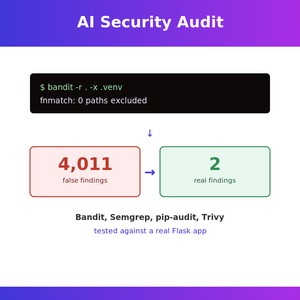
I Asked AI to Audit My Flask App. First, I Had to Audit the AI


I built four reusable AI skills to audit Flask applications. Their first real run found two flaws in their own scanning instructions — and two genuine vulnerabilities in my app. Read more...

How to Run a Multi-LLM Stack as a Team of One


With open models polarising into 2.8-trillion-parameter giants and sub-4GB pocket reasoners, hardcoding API clients is officially a production anti-pattern. Here is how to build a unified, resilient AI gateway layer in 10 minutes using Docker and LiteLLM. Read more...

Qualcomm, RISC-V, and the Crack in Nvidia's Monopoly


Qualcomm circled Jim Keller's RISC-V startup Tenstorrent for up to $10bn, China drafted a $295bn plan to build AI data centres without Nvidia, and the Agentjacking attack turned fake Sentry errors into remote code execution on developers' machines. Read more...

Local AI Agents with Cline, Ollama, and MCP


A practical guide to Cline, Ollama, and MCP — runnable stdio + FastAPI example, where to discover servers, and a short student-oriented note on security vs public directory listings. Read more...

Google I/O 2026: 900M Users, Musk Loses, Gemma Ships


Google I/O dominated the week — Gemini 3.5 Flash shipped the day it was announced, Gemini Omni brought native multimodal generation, Antigravity 2.0 turned Google's coding tool into a full agent platform, and Gemini Spark arrived as a 24/7 personal agent running on cloud VMs. On the same day, Anthropic's Code with Claude London went head to head with I/O for developer attention, and Google quietly added Gemma 4 to its Android Bench leaderboard — the open-weights play for the enterprises that cannot use the cloud version. And a jury in Oakland took 90 minutes to throw out Elon Musk's $150 billion lawsuit against OpenAI. Four signals. Two days. One very loud week. Read more...

Two AI Assistants, One Blog Navigation Overhaul


A real-world experiment: Codex with GPT-5.3-Codex Medium planned and built a new tag and search system. Antigravity with Gemini 3.1 Pro fixed what was fragile and added features I had not even thought to ask for. My suitcase was packed — eventually. Read more...

The Digital Butler or Trojan Horse? A Privacy Playbook for Persistent AI Agents


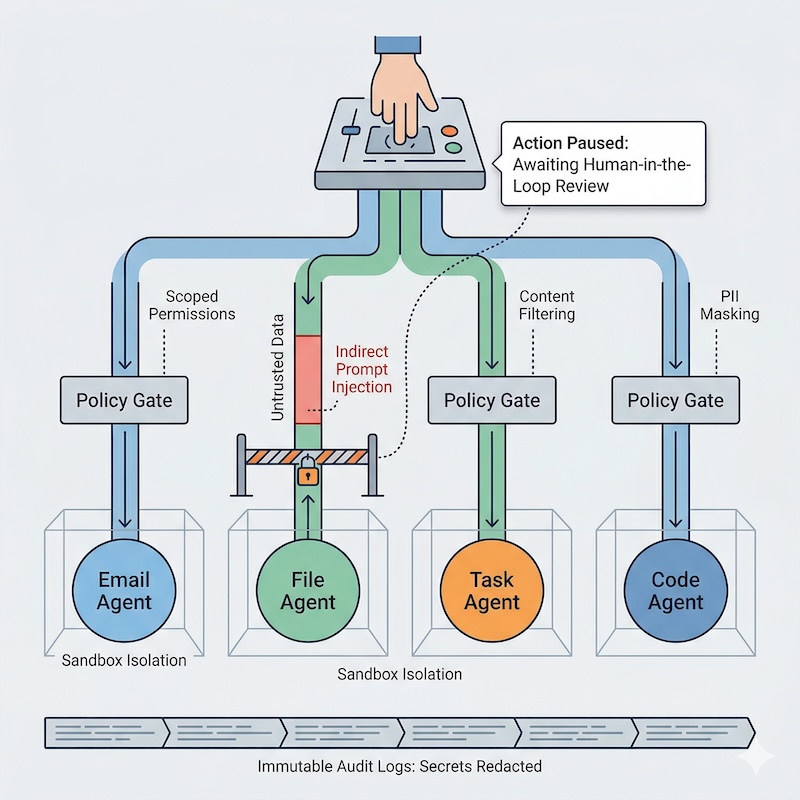
Persistent AI agents can save hours each week, but they also turn hidden prompt injections into real-world actions unless you design strict controls. This guide shows how to harden agent workflows with policy gates, isolation, scoped permissions, and safe auditing. Read more...

Vibe Coding Wasn't Enough — The Lightweight System I Use to Turn AI Prompts into Deployed Apps


Vibe coding can generate working apps in minutes — but most don’t last. I replaced chaotic prompting with a simple, spec-driven AI workflow that turns ideas into reliable, deployed tools. Read more...

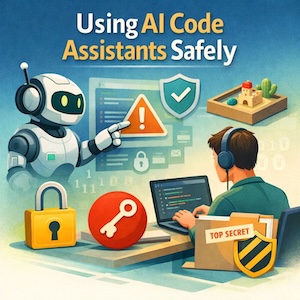
Using AI Code Assistants Safely


A practical, human guide to using generative code assistants safely — without leaking secrets, breaking trust, or losing control of your work. Read more...

My Multi-Agent Workflow


A structured guide to building a calm, dependable multi-agent publishing workflow: which AI tool operates at which layer, and how to wire them together without chaos. Read more...

Hardware Handshakes, Prompt Injection Reality, and AI Beyond the Screen


A structured breakdown of the final week of 2025: the $20B Nvidia–Groq deal, OpenAI's prompt injection admission, the CONTEXT.md best practice, and Waymo's Gemini deployment. Read more...

Antigravity 1.11.9 vs Cursor 2.1.42 (Universal): A Practical Comparison


A structured head-to-head comparison of Antigravity 1.11.9 and Cursor 2.1.42 — two IDEs with opposing philosophies: outcome delegation vs conversational assistance. Read more...

The New Skill Stack, from Writing Code to Managing Intelligence


The era of the bricklayer is over; the era of the architect has begun. A structured guide to the new Developer Skill Stack, from writing agent contracts to tracking AI energy costs. Read more...

Ethics, Gravity, and the Future We're Actually Building


Google's Antigravity IDE killed the text editor in favour of agent orchestration, while the WHO demanded humanity 'hold the pen.' Explore the architectural shifts of Gemini 3 and why the AI Wild West is officially over. Read more...

Gemini CLI versus Claude CLI


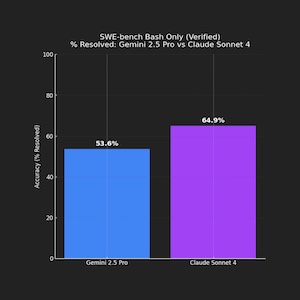
Command-line AI tools are the new pocket knives of coding life. We compare Gemini CLI and Claude CLI, detailing their installation, privacy profiles, SWE-bench accuracy, and how to integrate them via Python. Read more...

1 2