Elena' s AI Blog

Generative AI is a type of artificial intelligence that can create new content, like text, images, music, or code, based on patterns it has learned from existing data.


  Browse by topic  · Browse by tag

Other Tags

Two AI Assistants, One Blog Navigation Overhaul


A real-world experiment: Codex with GPT-5.3-Codex Medium planned and built a new tag and search system. Antigravity with Gemini 3.1 Pro fixed what was fragile and added features I had not even thought to ask for. My suitcase was packed — eventually. Read more...

AI is the New Literacy


AI literacy is becoming as fundamental as reading and writing — a set of skills that shapes who can fully participate in modern work and life. Here is what it looks like in practice, for everyone. Read more...

Cursor AI with MCP tools


A practical walkthrough for connecting Cursor AI to MCP servers so the assistant can use external tools, APIs, and project context safely. Read more...

This Week in AI: Regulation Heat, Cloud Bets, and Agentic Shopping


A structured breakdown of this week's AI signals: PwC reveals only 12% of CEOs get AI ROI, Meta faces a child-safety trial, chip export oversight advances, and Google's UCP proposes agentic commerce standards. Read more...

The Week AI Got Practical: Laws, Power, and Open Models


A structured breakdown of the week's AI signals: state-level safety laws harden, Texas becomes an AI infrastructure node, and Google advances agentic commerce rails. Read more...

Cursor Made Me Do It


AI makes software development feel frictionless, leading to unprecedented feature bloat. We explore the symptoms of AI scope creep and define a strict architectural framework to maintain control. Read more...

Gemini CLI versus Claude CLI


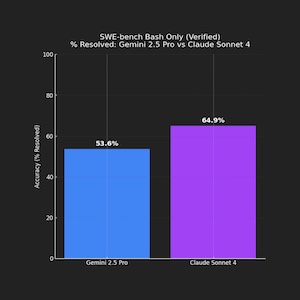
Command-line AI tools are the new pocket knives of coding life. We compare Gemini CLI and Claude CLI, detailing their installation, privacy profiles, SWE-bench accuracy, and how to integrate them via Python. Read more...

Vibe Coding with Cursor AI


Testing Cursor AI in Agent Mode feels like coding with a slightly eccentric but eager partner. Friendly, fast, sometimes forgetful — here’s how GPT-5, Auto mode, and grok-code-fast stack up, with real specs. Read more...

Workflow Automation with n8n


Manual content pipelines inevitably fail at scale. After outgrowing brittle Python cron jobs, I migrated my infrastructure to n8n—a self-hosted, node-based orchestration layer. Here is the technical breakdown of configuring databases, managing OAuth2 security, and deploying AI-driven agents. Read more...

Cursor AI for Python Development


Traditional AI chatbots require you to manually paste code snippets back and forth. Cursor AI fundamentally changes this dynamic by operating as an IDE built entirely around contextual AI agents. Here is my technical review of its RAG-based codebase indexing and Composer features for Python development. Read more...

On AI Coding Assistants


Not all LLMs write code the same way. After months of prototyping, debugging, and building architectures with Google Gemini, ChatGPT, and Claude AI, here is a technical breakdown of how they compare, and why the Model Context Protocol (MCP) changes everything. Read more...

Self-critical AI


Can Large Language Models achieve meta-cognition regarding their own stylistic patterns? In this primary research experiment, I tested Gemini, ChatGPT, and Claude to see if they could not only replicate my human writing style, but actively self-correct when confronted with AI-detection tools like Grammarly. Read more...

Vibe coding with Generative AI


I've been getting into "vibe coding" recently, quickly prototyping some of my ideas, and working on my pet projects. I must confess that the AI-assisted coding is a very addictive activity, and must be taken with caution since it has some security implications and requires a careful prompts engineering. Read more...

AI reads my blog


Traditional SEO is a brutal game for independent bloggers. But recently, I noticed a surge in a different kind of traffic ChatGPT and other AI bots are actively reading my blog. Here is how you can track AI traffic in GA4, manage bot access, and optimise your content to be cited by AI search engines. Read more...

How to Use Claude AI


What is Claude AI? What can we do with it, and how? Let's explore this fantastic AI assistant by Anthropic. Read more...

How CustomGPT Mitigates AI Hallucinations


CustomGPT reduces AI errors using specialised knowledge, quality data, and user feedback. Along with RAG, it provides accurate and reliable content for various applications. Read more...

Is DeepSeek R1 Secure?


There is a big question about DeepSeek's security (and also the security of any software product, in fact), safety, and legal usage outside of China. I am sharing my opinion and some relevant links on this topic. Read more...

DeepSeek R1 With Ollama


This post explores the use of Ollama, a state-of-the-art language modelling framework, in conjunction with pre-trained models such as DeepSeek R1. Read more...

Multimodal AI


Multimodal AI is rapidly evolving, pushing the boundaries of what machines can understand and achieve by combining information from multiple modalities like text, images, audio, and video. This post explores the core techniques of realising multimodal AI, existing systems and related research. Read more...

Generative AI vs. Large Language Models


Generative AI and Large Language Models (LLMs) are both important concepts in artificial intelligence, but they are not the same. Generative AI refers to different models that can create various types of content, such as text, images, and music. LLMs are a specific type of generative AI that focuses on understanding and producing human language. This post explains their differences, highlights key techniques like Transformers and GANs, and mentions important open-source projects. Read more...

What is RAG? How Retrieval-Augmented Generation actually works


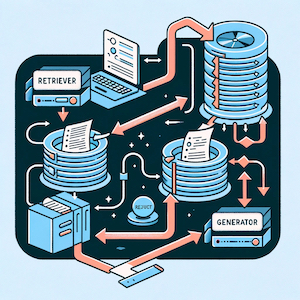
Large language models are impressive, but they suffer from a major flaw they hallucinate facts because they are essentially just predicting the next word. Retrieval-Augmented Generation (RAG) fixes this by grounding the AI in verified data before it answers. Here is an overview of how it works and the current state of research. Read more...

1 2 3