Elena' s AI Blog
  Browse by topic  · Browse by tag

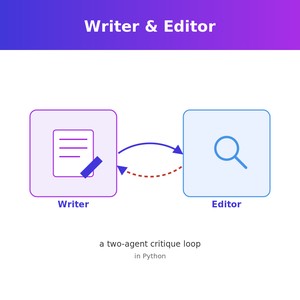
Python Functions: Writing Reusable Code


Functions are the building blocks of reusable Python code. In this post we cover def, parameters, return values, default arguments, *args, **kwargs, type hints, and lambda — all with birds. Read more...

Python Error Handling: When Birds Misbehave


Things go wrong in every program. Python's exception system gives you the tools to handle errors gracefully, raise your own, and write code that fails helpfully rather than silently. Read more...

AI’s New Defaults and Hidden Costs


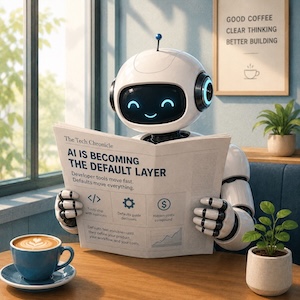
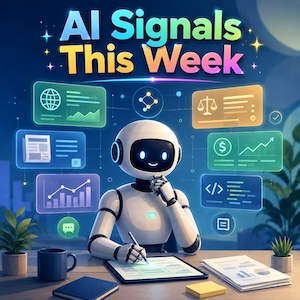
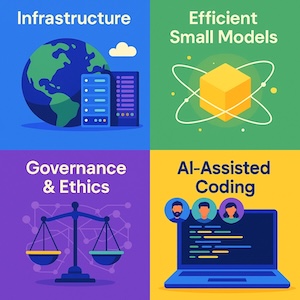
This week’s AI signals were less about one dramatic model launch and more about AI becoming infrastructure. GPT-5.5 Instant became the default model many ChatGPT users will meet first. Google shipped practical developer updates for multimodal retrieval, webhooks, and faster Gemma inference. Microsoft added automated right-sizing for AI-heavy SQL workloads. DeepMind and CCP framed EVE Online as a living lab for long-horizon agents. The EU’s Digital Omnibus pushed AI governance toward concrete implementation timelines. CAISI expanded pre-release frontier model testing. A Chinese court signalled that AI adoption alone does not justify dismissal. And data centres became a ratepayer and permitting fight. Read more...

AI is the New Literacy


AI literacy is becoming as fundamental as reading and writing — a set of skills that shapes who can fully participate in modern work and life. Here is what it looks like in practice, for everyone. Read more...

Capability Meets Constraint


This week's AI signals mark a sharper turning point: frontier capability kept rising, while multimodal enterprise launches and cybersecurity controls moved into production. OpenAI expanded GPT-5.5, DeepSeek released V4, NVIDIA announced Nemotron 3 Nano Omni, IBM released Granite 4.1, and Anthropic launched Claude Security public beta. Read more...

Cursor AI with MCP tools


A practical walkthrough for connecting Cursor AI to MCP servers so the assistant can use external tools, APIs, and project context safely. Read more...

Codex CLI Part 4: Advanced Operations, Troubleshooting, and Team Patterns


Part 4 closes the Codex CLI series with advanced operational patterns: non-interactive automation, permission strategy, troubleshooting playbooks, and team-level standards for reliable adoption. Read more...

Has the open-source gap closed?


OpenAI ended the week by releasing GPT-5.5 — codenamed Spud — retaking the top spot across 14 benchmarks and positioning itself explicitly as an agent runtime rather than a chat model. Two Chinese labs shipped frontier-quality models on the same day: Alibaba's Qwen 3.6-Max-Preview closed its weights for the first time, and Moonshot's open-source Kimi K2.6 reached #4 on the global intelligence index, level with Western frontier labs. OpenAI's gpt-image-2 introduced reasoning into image generation. Google confirmed Gemini will power the next Siri. Amazon committed another $25 billion to Anthropic. And the Stanford AI Index documented a field accelerating faster than every institution surrounding it. Nine signals. A week that moved the map. Read more...

Codex CLI Part 3: Practical Workflows for Blogging and Python Development


A practical, high-depth guide to using Codex CLI for blog editing and Python delivery: review loops, safe refactoring, debugging, and non-interactive automation with explicit guardrails. Read more...

Agents, Cyber Models, and the Safety Stack Tightening Up


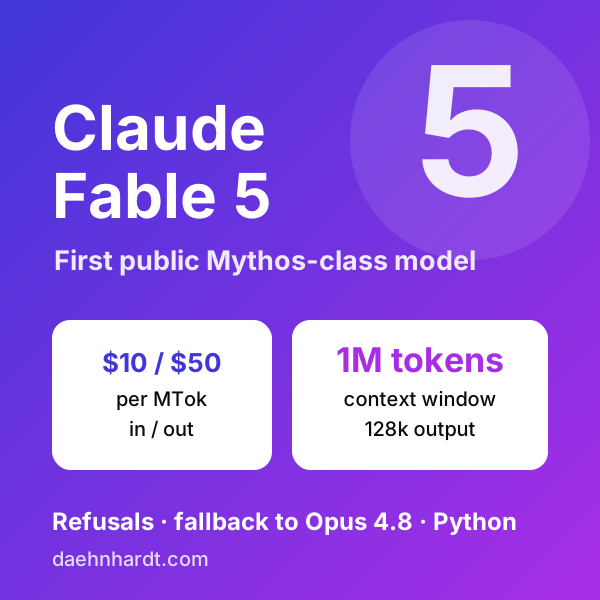
This week's clearest AI signal was not a giant new general model. It was the rapid convergence of stronger agent tooling, more cyber-capable systems, and tighter safety controls. Anthropic shipped Claude Opus 4.7 with new cyber safeguards. OpenAI expanded trusted cyber access, upgraded its Agents SDK, and pushed Codex deeper into real developer workflows. Microsoft launched a cheaper production-grade image model. Meanwhile, Anthropic's Mythos triggered a real regulatory response across central banks and governments. Read more...

AI Signals: Controlled Releases and Platform Integration


This week’s AI signals point to a shift toward controlled releases and platform integration. Meta launched Muse Spark, Microsoft expanded its multimodal stack, and efficiency improvements continue to shape deployment. Instead of rapid disruption, the focus is on deliberate progress and clearer strategic direction. Read more...

AI Signals: From Models to the Full Stack


This week’s AI signals show a clear shift from models to the full stack. Microsoft expanded its multimodal model lineup, AI is being used to design chips, and new AI-native devices are emerging. At the same time, a powerful Anthropic model remains unreleased due to safety concerns, trust is lagging behind adoption, and startup valuations are accelerating again. Read more...

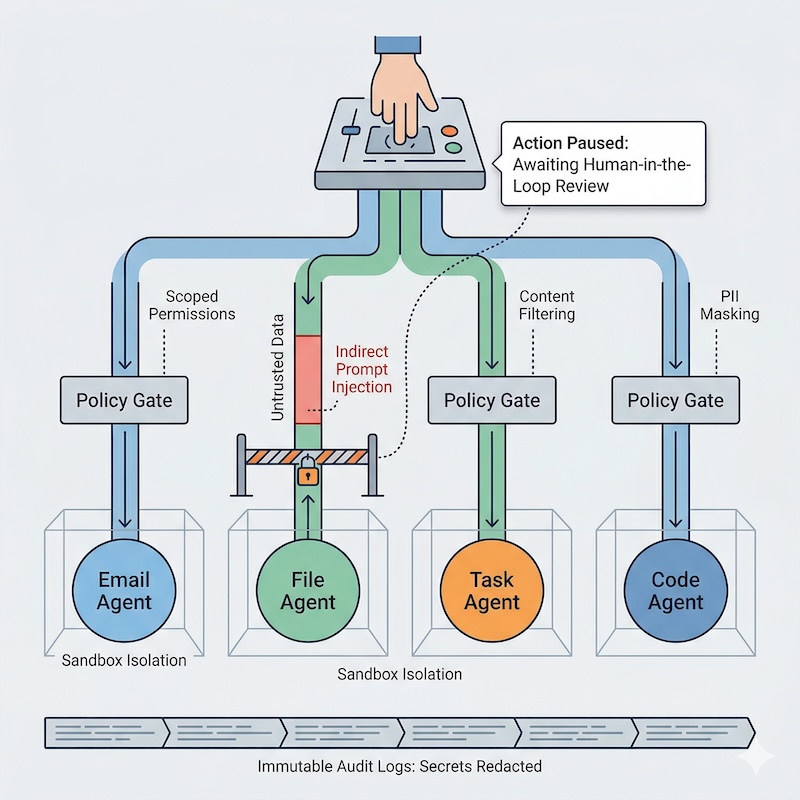
The Digital Butler or Trojan Horse? A Privacy Playbook for Persistent AI Agents


Persistent AI agents can save hours each week, but they also turn hidden prompt injections into real-world actions unless you design strict controls. This guide shows how to harden agent workflows with policy gates, isolation, scoped permissions, and safe auditing. Read more...

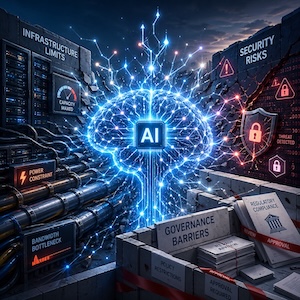
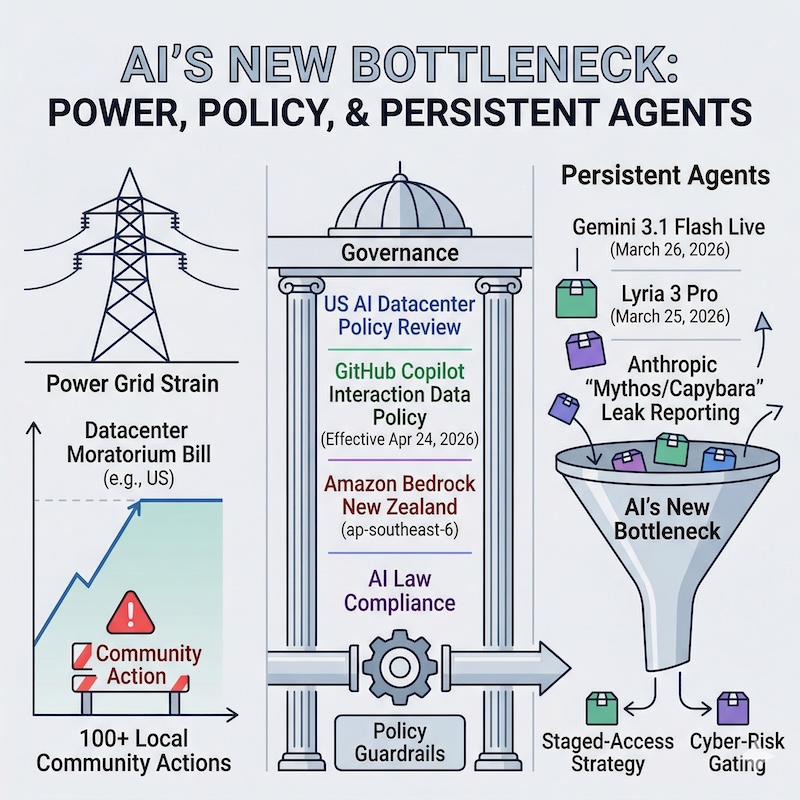
AI's New Bottleneck


The week, AI signals shifted attention from generic model chatter to concrete releases and constraints. Google launched Gemini 3.1 Flash Live and Lyria 3 Pro for developers, while reports of Anthropic's unreleased Mythos/Capybara model highlighted high-capability safety pressure. At the same time, U.S. datacenter policy and GitHub's Copilot data-default change reinforced that governance and infrastructure are now product-critical. Read more...

Infrastructure Is the New Frontier


This week’s biggest AI signal was not a new frontier model. It was the fast consolidation of infrastructure, distribution, and cost. Nvidia pushed agentic AI and robotics as stack problems. Anthropic invested in enterprise distribution and tested asynchronous delegation. Microsoft, Mistral, and OpenAI advanced the efficiency tier. Xiaomi and Rakuten showed how global and contested the open-weight race has become. Read more...

Edge AI in Everyday Operations


Practical ways businesses can use Edge AI to make faster, local decisions without replacing existing systems or relying on constant cloud connectivity. Read more...

Better Models, Burnout, and a $599 Mac


GPT-5.4 arrived with native computer use and a 1M-token context window. Anthropic moved further toward becoming an enterprise platform. And Block's layoffs, alongside new HBR research on "AI brain fry," made one thing clear: this week's real signal was not just better models, but what AI is doing to work. Read more...

My Inbox Is a Black Hole (and How I Escaped It)


47,000 unread emails, a cosmic quantity of newsletters, and one determined person with Gmail search operators and a plan. Here is how I escaped the inbox black hole — manually, intelligently, and sometimes with AI help. Read more...

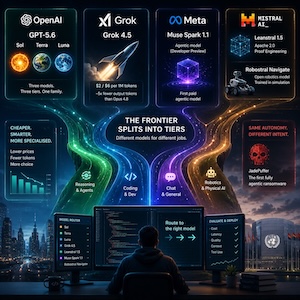
AI Is Splitting Into Tiers


Three fast, cheap models landed in the same week — Gemini 3.1 Flash-Lite, GPT-5.3 Instant, and Qwen3.5-9B. That is not a coincidence. The cost-performance frontier just moved. Read more...

Vibe Coding Wasn't Enough — The Lightweight System I Use to Turn AI Prompts into Deployed Apps


Vibe coding can generate working apps in minutes — but most don’t last. I replaced chaotic prompting with a simple, spec-driven AI workflow that turns ideas into reliable, deployed tools. Read more...

72.5%, $710B, and a March in London


This week's signals trace a collision between software and reality: Anthropic's leap in computer automation, a record-breaking $710B cloud capex plan, and the resulting shockwaves in consumer electronics prices and global energy policy. Read more...

Live Design Testing with GitHub Pages and a Custom Domain


Want to preview two completely different blog designs at domain.com/test1 and domain.com/test2 while keeping your main blog running perfectly? Here is how to do it with two extra GitHub repositories — no downtime, no risk. Read more...

Testing Blog Designs with Git Branches and GitHub Pages


Did you know you can publish different versions of your GitHub Pages blog on separate branches and preview them live before committing to a design? Here is how I do it. Read more...

How to Host Your Blog for Free with GitHub Pages


GitHub Pages lets you host a blog for free, with your own custom domain, no servers to manage, and no hosting bill at the end of the month. Here is everything you need to go from zero to published. Read more...

OpenClaw Isn't a Chatbot Anymore. It's Infrastructure.


AI agents like OpenClaw are wonderful tools — but without strict access rules and proper supervision, they can turn an ordinary Tuesday into something you will be explaining to HR for weeks. In this post, we explore the very real risks of deploying AI assistants carelessly, from leaked credentials to messages you absolutely did not mean to send. Most importantly, we look at how to use OpenClaw the right way, because when deployed thoughtfully, it is one of the most exciting and capable tools we are only just beginning to understand. Read more...

Git Cherry-Pick: The Surgeon's Knife


merging takes everything. Rebase rewrites everything. But sometimes, you just want that ONE bug fix from the development branch applied to production. That's where git cherry-pick comes in. Read more...

Agentic AI at Scale: New models, $30B, and the UKRI Strategy


Weekly AI Signals for February 12-19, 2026: Claude Sonnet 4.6, Gemini 3.1 Pro, Anthropic's $30B Series G, and UKRI's £1.6 billion AI strategy show how capability, capital, and sovereignty are shaping AI at scale. Read more...

Type Less, Do More: My Top 10 Git Aliases


If you type 'git checkout' fifty times a day, you're wasting time. In this post, I share my personal list of Git aliases that help me work faster and smarter. Read more...

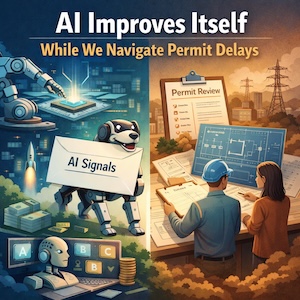
AI Improves Itself While We Argue About Permits


This week's signals show AI capability racing ahead while real-world constraints tighten: $2.5B inference funding, self-improving models from OpenAI and Anthropic, ByteDance's restricted video AI, and data centres stuck in permit battles. The gap between what models can do and what infrastructure can support is becoming the central story. Read more...

Git Hooks: The Robot Butler for Your Code


Why remember to run tests when a robot can do it for you? In this post, I explain Git Hooks and how to set up simple automations that ensure you never commit broken code again. Read more...

Codex CLI Part 2 — Security Controls & Safe Editing


Learn how Codex CLI balances permissions and approvals to keep you in control. Master essential commands like /diff and /review, understand the three security modes, and make your first safe code edits with full visibility. Read more...

The AI Paradox: Lightning Fast and Gridlocked


This week's signals were about constraints and acceleration at once: AI-assisted cloud attacks, multi-year grid queues in Europe, new infrastructure funds, and consumer GPU pricing pressures — alongside fast adoption of consumer AI apps. Read more...

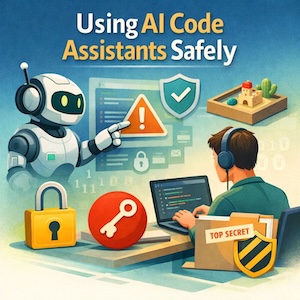
Using AI Code Assistants Safely


A practical, human guide to using generative code assistants safely — without leaking secrets, breaking trust, or losing control of your work. Read more...

Chips, Capex, and Code Risk


This week’s AI signals were practical rather than flashy: Microsoft’s earnings tied AI to long-term capex, Anthropic pushed export-focused regulation, China approved limited H200 imports, and everyday compute continued to rise. Together, they point to AI becoming infrastructure — budgeted, regulated, and increasingly constrained. Read more...

Stop Committing Garbage: A Masterclass in .gitignore


A clean repository is a happy repository. In this post, I dive into how to use .gitignore effectively to prevent system files, secrets, and dependencies from polluting your project history. Read more...

Edge AI in Everyday Operations


Practical ways businesses can use Edge AI to make faster, local decisions without replacing existing systems or relying on constant cloud connectivity. Read more...

This Week in AI: Regulation Heat, Cloud Bets, and Agentic Shopping


A structured breakdown of this week's AI signals: PwC reveals only 12% of CEOs get AI ROI, Meta faces a child-safety trial, chip export oversight advances, and Google's UCP proposes agentic commerce standards. Read more...

Git Stash: The CTRL-Z for Your Working Directory


Git Stash is the temporary clipboard for your code changes. Learn how to stash, pop, and manage work-in-progress efficiently without polluting your commit history. Read more...

Getting Started with Codex CLI


Learn what Codex CLI is, how to install it on Mac, Linux, and Windows, and take your first steps with this AI coding assistant that runs in your terminal. Read more...

The Week AI Got Practical: Laws, Power, and Open Models


A structured breakdown of the week's AI signals: state-level safety laws harden, Texas becomes an AI infrastructure node, and Google advances agentic commerce rails. Read more...

My Multi-Agent Workflow


A structured guide to building a calm, dependable multi-agent publishing workflow: which AI tool operates at which layer, and how to wire them together without chaos. Read more...

Signals from the AI Supply Chain


A structured breakdown of this week's AI signals: TSMC confirms AI chip demand is structural, Apple partners with Google Gemini to power Siri, and Google introduces the Universal Commerce Protocol for agentic shopping. Read more...

AI's Week of Limits: Safety, Control, and Real-World Physics


A structured breakdown of the week's AI signals: France chooses Mistral for sovereign AI, Nvidia pivots to inference at CES, Grok exposes the deployment safety gap, and fusion labs show where AI earns real trust. Read more...

As 2025 Closes: AI's Week of Regulation, Infrastructure, and Autonomy


A structured breakdown of the final week of 2025: China's emotional AI regulations, the SoftBank–DigitalBridge $4B infrastructure deal, and Meta's $2B+ acquisition of autonomous agent startup Manus. Read more...

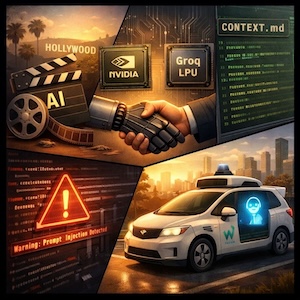
Hardware Handshakes, Prompt Injection Reality, and AI Beyond the Screen


A structured breakdown of the final week of 2025: the $20B Nvidia–Groq deal, OpenAI's prompt injection admission, the CONTEXT.md best practice, and Waymo's Gemini deployment. Read more...

Merry Christmas and a Very Happy New Year!


As 2025 draws to a close, I wish my readers a happy, healthy, and prosperous New Year 2026! A short reflection on AI, human creativity, and the value of individual voices. Read more...

AI Interfaces, Safety, and Multimodal Systems


A structured breakdown of this week's AI signals: Google's Gemini 3 Flash raises the bar for speed, A2UI lets agents build their own interfaces, and OpenAI/Anthropic add structural safety for younger users. Read more...

Antigravity 1.11.9 vs Cursor 2.1.42 (Universal): A Practical Comparison


A structured head-to-head comparison of Antigravity 1.11.9 and Cursor 2.1.42 — two IDEs with opposing philosophies: outcome delegation vs conversational assistance. Read more...

Labs, Law and New Hardware Horizons


A structured breakdown of this week's AI signals: DeepMind's automated lab, OpenAI's screenless hardware, and why 42 attorneys general are demanding strict LLM safeguards. Read more...

A Short Tale of Bravery (at the Dentist)


A personal story about facing the drill, followed by an AI Dentistry Evolution Matrix detailing how AI and robotics are quietly becoming the dentist's ultimate co-pilot. Read more...

AGI Timelines, 3D Vision, and the Reality of AI Scams


A structured breakdown of the week's AI signals: from DeepMind's 2030 AGI forecast and Meta's SAM3D breakthrough to the chilling reality of voice-cloning scams. Read more...

A Journey Through AI and Code


Another year has passed, and Elena's AI Blog is now four years old! Join me as I reflect on the year we shifted from generative AI to agentic orchestration, and outline the strategic roadmap for 2026. Read more...

The New Skill Stack, from Writing Code to Managing Intelligence


The era of the bricklayer is over; the era of the architect has begun. A structured guide to the new Developer Skill Stack, from writing agent contracts to tracking AI energy costs. Read more...

Claude Opus, ChatGPT Shopping, EV Forecasting and DeepSeekMath-V2


A structured breakdown of this week’s most meaningful AI shifts—from Claude Opus 4.5's coding enhancements to ChatGPT shopping agents, and DeepSeek's open-source mathematical breakthroughs. Read more...

Ethics, Gravity, and the Future We're Actually Building


Google's Antigravity IDE killed the text editor in favour of agent orchestration, while the WHO demanded humanity 'hold the pen.' Explore the architectural shifts of Gemini 3 and why the AI Wild West is officially over. Read more...

Ethics, Code, Chips, and a Petaflop on Your Desk


A structured breakdown of the week's AI workflow shifts: from NVIDIA's desktop petaflop and MIT's LLM modularity to why 91% of developers still insist on reviewing AI-generated code. Read more...

Could AI Become a New Religion?


A gentle exploration of how institutions move from resisting scientific novelty to shaping AI ethics. We examine the theological limits of artificial intelligence and why kindness and human dignity must guide the future we build. Read more...

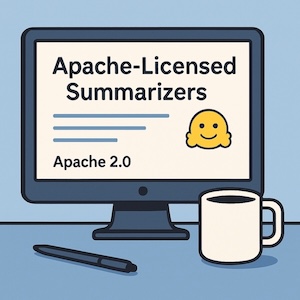
Apache-Licensed Summarizers


Looking for summarisation models you can safely use in your app? Here is a definitive guide to Apache-licensed transformer models, complete with selection matrices and production gotchas. Read more...

AI Weekly — Agents Grow Up, Clouds Get Bigger


OpenAI books a mountain of AWS compute, Google ships production tooling for agents, and GitHub adds org-wide steering. A structured breakdown of the week's AI workflow shifts. Read more...

A few thoughts on Cursor 2.0


Cursor 2.0 shifts from autocomplete to autonomous agents via the Composer model and Sandboxed Terminal. Evaluate if this IDE migration is right for your workflow with our Decision Matrix. Read more...

AI Infrastructure, Small Models, and Multi-Agent Coding


NVIDIA pushes exaflop limits, IBM releases lightweight edge models, and GitHub networks AI coding agents. A structured breakdown of the week's hardware and workflow shifts. Read more...

Quantum Thinking, Light Models, Living Networks


Google achieves quantum leaps, researchers build 1.7M parameter 3D models, and telecom networks self-optimise. A structured breakdown of the week's critical AI infrastructure shifts. Read more...

Should you use rebase?


Rebase isn't safer than merge—it's cleaner. Learn when to use Git rebase, how to avoid destroying your team's history, and the disaster recovery commands to undo your mistakes. Read more...

LoRA fine-tuning wins


You no longer need to retrain entire language models. LoRA allows you to teach new capabilities via tiny adapters. Here is the architectural code, deployment cheat sheets, and production pitfalls. Read more...

AI Honesty, Agents, and the Fight for Truth


California mandates AI transparency, Microsoft pushes agents to the OS level, and publishers fight for source attribution. A structured breakdown of the week's critical AI policy shifts. Read more...

Safety, Agents, and Compute


Three major AI announcements dropped this week that demand architectural attention. Google taught agents to use computers visually. DeepMind built an agent that automatically patches vulnerabilities. OpenAI secured 6 gigawatts of compute capacity. Here is the technical delta and how builders must adapt. Read more...

Cursor Made Me Do It


AI makes software development feel frictionless, leading to unprecedented feature bloat. We explore the symptoms of AI scope creep and define a strict architectural framework to maintain control. Read more...

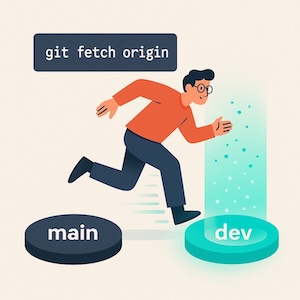
I have cloned my git repository and landed on main. How to get your branch


Cloning a repository defaults to the main branch, often leaving developers confused about how to access remote development branches. Here is the architectural reason why, and the two-second command to fix it. Read more...

AI Got Rules, Wheels & a Lab Coat


AI just got new safety rules, Europe is steering into autonomous roads, and MIT taught models some physics. Busy week. Read more...

AI’s Busy Week


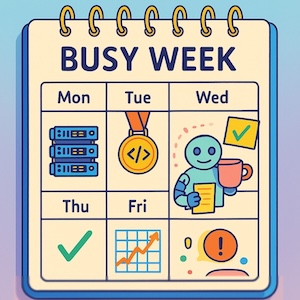
From Britain’s sovereign AI push to coding models that think like engineers, this week’s breakthroughs show AI growing brains, memory, and initiative — plus some long-overdue policy wins. Read more...

Gemini CLI versus Claude CLI


Command-line AI tools are the new pocket knives of coding life. We compare Gemini CLI and Claude CLI, detailing their installation, privacy profiles, SWE-bench accuracy, and how to integrate them via Python. Read more...

AI this week


ChatGPT goes mainstream with 700M weekly users, Google finds a cure for hallucinations, GPT-5 Codex rewrites your code, textbooks finally get personal, and AR learns when to keep quiet. Read more...

Vibe Coding with Cursor AI


Testing Cursor AI in Agent Mode feels like coding with a slightly eccentric but eager partner. Friendly, fast, sometimes forgetful — here’s how GPT-5, Auto mode, and grok-code-fast stack up, with real specs. Read more...

AI weekly news


This week in AI: leaner models beating the giants, Google rewriting the speed–accuracy trade-off, AI that codes for scientists, smarter DNA design, and OpenAI trying to tame the AI job market. Read more...

AI weekly


We have picked up new AI happenings this week: GRPO for smarter training, reasoning models that cut the nonsense, entry-level jobs under pressure, Nano Banana stealing the image crown, and GPT-5 hacks unlocking hidden power. Read more...

How to Create a Weekly Menu with ChatGPT-5


This week, I let ChatGPT-5 into my kitchen. The result? A complete weekly meal plan for two people, tailored macros, batch-cooking flows, fridge-friendly PDFs, and even a laminated checklist with tick boxes. Read more...

AI weekly wins


This week, AI became cheaper, more natural, and a lot more practical. Oxford’s new optimiser slashes training bills by 80%, OpenAI’s voice system talks like a real human, and Google’s ‘Nano Banana’ image model quietly outshines the big players. Somewhere between a notebook for AI memory and hybrid reasoning for everyone, the field is shifting from expensive experiments to everyday tools. Read more...

Who Did the AI Learn From?


Large Language Models learn similarly to Rembrandt's apprentices — by endlessly studying the masters. Yet, modern AI models hide their sources. We explore the legal and ethical necessity of a structured transparency framework for AI training data. Read more...

This week in AI


This week’s AI breakthroughs make the technology feel less like distant research and more like practical tools. From open-source giants and real-time voice recognition to edge creativity, workplace automation, and smarter data reasoning — here are five updates worth your attention. Read more...

Processes


Managing processes on Linux, macOS, and Windows requires understanding how to check what’s running, how to stop it (politely or forcefully), and how to run tasks in the background. This guide provides OS-specific cheat sheets for tools such as ps, top, kill, Task Manager, and tasklist. Read more...

This week in AI


From Europe’s multilingual AI surge to Google’s ultra-efficient Gemma model, Meta’s self-supervised vision leap, and new tools reshaping AI safety and testing — here are the top AI developments this week. Read more...

Brewing with Homebrew


Manually compiling software from source or navigating dependency hell on macOS is inefficient. Homebrew solves this by providing a robust package management layer. Here is a complete setup guide, command cheat sheet, and a list of essential developer tools. Read more...

Workflow Automation with n8n


Manual content pipelines inevitably fail at scale. After outgrowing brittle Python cron jobs, I migrated my infrastructure to n8n—a self-hosted, node-based orchestration layer. Here is the technical breakdown of configuring databases, managing OAuth2 security, and deploying AI-driven agents. Read more...

Will SaaS Survive?


SaaS isn't dying—it's evolving. AI is disrupting traditional workflows and pricing models, but innovative companies are adapting by becoming infrastructure layers, owning domain expertise, and focusing on outcomes rather than interfaces. Read more...

This week in AI


This week in AI saw groundbreaking releases from industry giants. OpenAI unveiled GPT-5 along with open-source GPT-OS-120b and 20b, making high-end AI accessible from laptops to phones. Google introduced DeepPolisher for genome error correction and Genie 3 for creating interactive virtual worlds. Alibaba launched GSPO powering Qwen3, plus Qwen-Image for free text-to-image generation. Anthropic rolled out Persona Vectors for consistent AI personalities. New mobile-ready AI models and coding assistants rounded out a week that made AI faster, more open, and more integrated into everyday tech. Read more...

Cursor AI for Python Development


Traditional AI chatbots require you to manually paste code snippets back and forth. Cursor AI fundamentally changes this dynamic by operating as an IDE built entirely around contextual AI agents. Here is my technical review of its RAG-based codebase indexing and Composer features for Python development. Read more...

On AI Coding Assistants


Not all LLMs write code the same way. After months of prototyping, debugging, and building architectures with Google Gemini, ChatGPT, and Claude AI, here is a technical breakdown of how they compare, and why the Model Context Protocol (MCP) changes everything. Read more...

GitHub Gists


Sharing code snippets via Slack or email can lead to formatting issues. GitHub Gists offers a solution for easily sharing or saving code or text for future use. In this post, I explain how to use Gists effectively. Read more...

Self-critical AI


Can Large Language Models achieve meta-cognition regarding their own stylistic patterns? In this primary research experiment, I tested Gemini, ChatGPT, and Claude to see if they could not only replicate my human writing style, but actively self-correct when confronted with AI-detection tools like Grammarly. Read more...

My little setback


In this post, I write about what's happening in my life and why I did not post these weeks. Read more...

AI Talk with Human Feel


In this post, I write about Text-to-speech, multilingual voice generation, and voice cloning with the great-quality voices in ElevenLabs. Read more...

Iberia’s Day-long Blackout


Yesterday, we had a total blackout in Portugal. Around 12:30 p.m. on Monday, the entire Iberian Peninsula went dark. For roughly twelve hours, almost 60 million people in Spain and Portugal—plus pockets of southwestern France—lost grid power, forcing airports, hospitals, and rail hubs onto emergency generators and confusing city centres. Read more...

Vibe coding with Generative AI


I've been getting into "vibe coding" recently, quickly prototyping some of my ideas, and working on my pet projects. I must confess that the AI-assisted coding is a very addictive activity, and must be taken with caution since it has some security implications and requires a careful prompts engineering. Read more...

Git Log


The git log command allows you to view your project's history by listing commits with their authors, dates, and messages. It's essential for debugging, tracking changes, and understanding your project's evolution. It is indeed my favourite Git command. Read more...

AI reads my blog


Traditional SEO is a brutal game for independent bloggers. But recently, I noticed a surge in a different kind of traffic ChatGPT and other AI bots are actively reading my blog. Here is how you can track AI traffic in GA4, manage bot access, and optimise your content to be cited by AI search engines. Read more...

Cross-Validation Techniques


Building a machine learning model is easy; proving it actually works on unseen data is the hard part. In this post, we cover cross-validation techniques—from traditional K-Fold to Stratified and Time-Series splits—using hands-on examples in scikit-learn. Read more...

How to Use Claude AI


What is Claude AI? What can we do with it, and how? Let's explore this fantastic AI assistant by Anthropic. Read more...

How CustomGPT Mitigates AI Hallucinations


CustomGPT reduces AI errors using specialised knowledge, quality data, and user feedback. Along with RAG, it provides accurate and reliable content for various applications. Read more...

Storing Your Local Project to GitHub


This post shows you how to create a Git repository for your local (Python) project and push it to GitHub using the command line and a personal access token. Following these steps, you can securely host your code on GitHub for easy access and collaboration. Read more...

Python Flask TODO App


Ready to build your first web application? In this tutorial, we will construct a fully functional TODO app using Python, Flask, and SQLite. You will learn how to route requests, manage a database, and render HTML templates. Read more...

Is DeepSeek R1 Secure?


There is a big question about DeepSeek's security (and also the security of any software product, in fact), safety, and legal usage outside of China. I am sharing my opinion and some relevant links on this topic. Read more...

DeepSeek R1 With Ollama


This post explores the use of Ollama, a state-of-the-art language modelling framework, in conjunction with pre-trained models such as DeepSeek R1. Read more...

Python Virtual Environments


If you are working on multiple Python projects, you will eventually run into a dependency nightmare. Virtual environments solve this by isolating packages per project. Here is my practical guide to creating, managing, and safely deleting Python virtual environments. Read more...

AI in 2024


As 2025 approaches, let's reflect on 2024's key AI advancements, including specialized models, growth in AI creativity, and the introduction of the AI Act. Here are my thoughts on the notable events. Read more...

Multimodal AI


Multimodal AI is rapidly evolving, pushing the boundaries of what machines can understand and achieve by combining information from multiple modalities like text, images, audio, and video. This post explores the core techniques of realising multimodal AI, existing systems and related research. Read more...

🌟 Merry Christmas and a Very Happy New Year! 🌟


As we approach 2025, I wish my readers a joyful, healthy, and successful New Year! Read more...

Three years of Elena's AI Blog 🎈


We live in this era of rapid AI evolution, which is yet challenging to understand and live in, even for people with computer science backgrounds. I like, however, to make things easy to understand while learning new technologies as a passion. My blog, now three years old, connects technology with everyday understanding, reflecting my passion for coding and commitment to making complex concepts accessible. Read more...

My Orthopedic Rehab in Bavaria


Andreas and I are in Bavaria, Germany, doing our rehab with some fantastic results. You see the first snow view out of a window of our clinic. It is so beautiful here in Bavaria, which helps people recover physically and mentally. Read more...

Generative AI vs. Large Language Models


Generative AI and Large Language Models (LLMs) are both important concepts in artificial intelligence, but they are not the same. Generative AI refers to different models that can create various types of content, such as text, images, and music. LLMs are a specific type of generative AI that focuses on understanding and producing human language. This post explains their differences, highlights key techniques like Transformers and GANs, and mentions important open-source projects. Read more...

Celebrate Halloween with AI


Halloween, celebrated on October 31, has its roots in ancient Celtic rituals. Halloween allows us to unleash our creativity by crafting spooky costumes and decorations. In this post, I will suggest several ways to celebrate Halloween with the help of AI. AI can provide eerie sound effects, assist in costume design, offer voice modification features, and present fun filters for your face. Enjoy the celebration! Read more...

Gaining muscles, losing weight


Rehabilitating from a knee operation can be challenging, but it's possible to transform your body while recovering. I want to share my story of losing weight and improving my strength after a severe knee injury. Read more...

Avoid SEO Penalties on Medium


Republishing your blog posts on Medium is a smart way to reach a wider audience and enhance engagement without compromising your original content's SEO value. This post explains how to properly use canonical tags to avoid duplicate content issues when republishing. Read more...

What is RAG? How Retrieval-Augmented Generation actually works


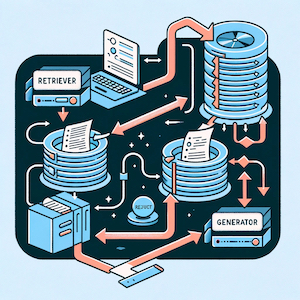
Large language models are impressive, but they suffer from a major flaw they hallucinate facts because they are essentially just predicting the next word. Retrieval-Augmented Generation (RAG) fixes this by grounding the AI in verified data before it answers. Here is an overview of how it works and the current state of research. Read more...

Git Checkout for overwriting directories from different branches


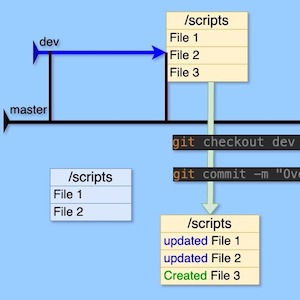
To overwrite the "scripts" directory in the master branch with the files from the "scripts" directory of the "dev" branch, you can use the Git checkout command. Just be cautious, as this will completely replace the files in the destination branch. Read more...

Regaining Website Traffic After Google Updates


As a small website owner, I understand the challenges we face. I write about AI and Python coding, sharing my knowledge with fellow professionals and students. However, the recent Google updates have led to a significant drop in traffic. With Google providing over 90% of our traffic, the struggle to regain our website visits is real. Is there any information about the Google SE website feature that's crucial or any ranking details shared publicly? Read more...

I have started to walk again


After a knee operation and slow recovery, I'm improving my walking stamina and muscle strength. This experience gave me a new perspective on mobility issues and time management. I've learned to appreciate the value of pausing and reflecting. I'm grateful for the support of family, friends, and medical staff. It's important to prioritize exercise and time. Read more...

Logging in Python


In this post, I cover everything from the basics of logging to configuring logging to output messages to different destinations. I also included some examples of logging levels and how to log messages at different levels based on the severity of the issue. Read more...

Guest posts about AI and Python


This blog is not only about coding or AI; it is about living with AI in human society, striving for happiness and building on technological advances. You can publish your quest post about anything related to Python coding and AI. It is easy. I will explain how. Read more...

Regulation on artificial intelligence has already been published


The AI Regulation has already been published, and it will imply compliance with several obligations, such as transparency and human oversight, when the AI System is deemed high-risk. It is important to remain updated and understand how this regulation will be applied. Read more...

Git Remotes


This post is about managing remote repositories in Git. We explore tasks such as adding, renaming, removing remotes, and updating remote URLs. We also practice fetching, pulling, and pushing changes to and from remote repositories. Read more...

Narrow AI, General AI, Superintelligence, and The Real Intelligence


I discuss the main AI types in this post. I share my understanding of the possibility of general intelligence in the future. Read more...

ARC-AGI benchmark and a hefty prize


I am sharing information about the recent Kaggle competition launch, which focuses on advancing general intelligence. Read more...

Sending Emails with Python and receiving your messages


Running a static site on GitHub Pages means I don't have a backend to process forms or send newsletters. But that hasn't stopped me. Here is how I handle incoming messages, and how I use Python and Gmail to send automated emails. Read more...

Can AI hallucinate?


AI hallucinations are a critical phenomenon in AI, referring to instances where AI systems generate inaccurate or nonsensical information. This post explores the main causes of AI hallucinations, their implications, possible benefits, and existing solutions. Read more...

How recommendation engines actually work (with Python code)


Ever wondered how Netflix or Spotify manages to guess what you want to watch or listen to next? The secret lies in recommendation algorithms. Here is a look at the math behind collaborative and content-based filtering, and how to implement them in Python. Read more...

To cite or perish


Proper citation is a must to maintain academic and ethical integrity. It is a valuable skill that promotes respect for other people, creates a chain of arguments paramount in research and science, and protects one's life efforts in the future. Herein, I write my approach to citation. This might be useful for my student readers. Read more...

Go with the flow


I recently underwent a major operation due to an accident, which required me to put all my energy into rehabilitation and training. I pushed myself harder than ever before and worked tirelessly towards my recovery. It was a challenging experience, shared in this post. Read more...

Robots and True Love


In this post, I write about robots and their creation challenges in real-life tasks, research areas, safety and ethical considerations, and future aspirations. I also briefly refer to a few starting points for creating robots with Raspberry Pi and Python. Read more...

Virtual Presenters (AI Avatars in-depth)


Digital humans are taking over training modules and marketing videos, and the technology is surprisingly accessible. Here is a look at my favourite platforms for creating AI avatars, plus a quick guide to generating your own in Python. Read more...

Super-girls don't cry in face-swaps


I wanted to see myself flying over Niagara Falls as a superhero. Here is how I did it — InsightFace Bot, Midjourney, and a Python/OpenCV implementation with Haar cascades and seamless blending. Read more...

Podcast: How can we build trust and safety around AI?


Lawyer Cláudia Lima Costa is an expert in Artificial Intelligence and has created an amazing podcast that raises pertinent questions about trust and safety in AI systems. I was fortunate enough to be invited to a relaxed discussion where I shared my views on various topics related to AI, such as AI evolution, AI applications, data sources for training models, copyright, data protection, privacy-preserving techniques, and achieving reliable, explainable, safe, and helpful AI. Read more...

Explainable AI is possible


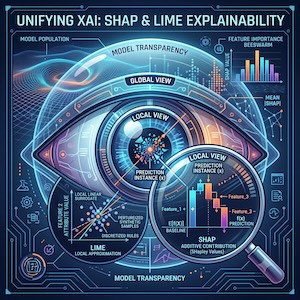
The complexity of AI, particularly deep learning models, has led to the "black box" criticism, highlighting the lack of understanding about how deep learning models arrive at their decisions. While there's truth to this concern, having a nuanced view is important. In this post, I share my view on AI explainability, that it is complex, however possible. Read more...

OpenAI's Model Show-off


OpenAI's GPT models are highly sophisticated machine learning models that are used in various fields such as natural language processing, coding assistance, and content creation. OpenAI's newest video-generating model, Sora, sets a new benchmark in video generation technology, which I quickly explore in this post. Read more...

In-love with the chatbot


In the age of artificial intelligence, where chatbots are becoming increasingly sophisticated, the concept of falling in love with a chatbot is no longer a far-fetched idea. While some may question the possibility of a genuine emotional connection with a machine, there are individuals who have developed strong emotional attachments to these digital companions. Read more...

What is Docker?


Docker lets you quickly deploy microservices, cloud-native architectures, or web apps. In this post, we will use Docker to create a reliable environment for Flask applications that efficiently manages dependencies and deployment intricacies. Read more...

chatGPT and Friends


ChatGPT is a powerful language model that has revolutionised the way we interact with technology. This post explores ChatGPT and its alternatives, delving into their capabilities, applications, and ethical considerations. Read more...

AI Synthesised Voices


In this post, I discuss voice synthesis and cloning, and mention fantastic AI tools and APIs for creating high-quality human-like voices from text or for automatic voice dubbing. Read more...

How I Built This Blog — and How You Can Too


I get asked how I built this blog more often than almost anything else. Here is the honest answer — GitHub Pages, Jekyll, Markdown, a sprinkle of HTML, and a form service that keeps spam out. No WordPress, no server bills, full control. Read more...

✨ Merry Christmas and Happy New Year with AI! 🎆🎇


Merry Christmas and a Very Happy New Year! I wish you much health, happiness and love in 2024. I am also sharing a few AI apps to celebrate the new year. All the best! Read more...

🎉✨ Cheers to new beginnings 🎊✨


This year, this website changed its design and became responsive and dark-mode friendly; we have added more than 30 content-rich posts on coding and AI and tested fantastic AI apps. With heartfelt thanks for your unwavering support, we wish our friends and readers a 2024 filled with health, joy, love, and boundless possibilities. Read more...

Joking Flask App


Build a joke-serving web app with Flask from scratch. We cover routing, Jinja2 templates, static files, form handling, and how to avoid the classic "request is not defined" trap. Read more...

Restoring deleted files in Git


A late-night Wi-Fi glitch wiped a folder of images from my Git repository. Here is exactly how I got them back—and what I learned about navigating Git history along the way. Read more...

Living with AI in Pursuit of Happiness


This blog is not about coding or AI; it is about living with AI in human society, striving for happiness and building on technological advances. Read more...

Blog Writing with AI in MindStudio


BlogGenie created a draft of this post at YouAI (MindStudio) and aims to demonstrate how AI writing assistants can streamline the blog generation process. It focuses specifically on leveraging YouAI for overall framing and BlogGenie for on-page SEO best practices. This allows for creating initial drafts in seconds rather than hours. You still have to edit and correct an outline to finalise your post. Read more...

Creating Websites with AI on Mixo.io


Have you ever wished for a website that writes itself? This dream is now a reality thanks to the advancement in Artificial Intelligence (AI). With Mixo.io, you can create stunning websites using AI technology--in minutes! In this blog post, we will explore website creation with Mixo.io. Read more...

Bright ideas at Web Summit 2023


In this post, I write about my experience attending the World's largest and most prominent technology conferences. I had the pleasure of attending ten technology-focused tracks of Web Summit. What did I learn? Was the Web Summit useful for me? Read more...

Cool Wallpaper with QR code for iPhone


When my iPhone is locked, I can share my website address with a QR code. How to use reportlab and Python to generate a QR code for the iPhone wallpaper? Read more...

Bias-Variance Challenge


In machine learning, we usually start from a simple baseline model and progressively adjust its complexity until we reach that spot with the best model performance. How can we do this? Let's detail the most essential machine learning concepts and the bias-variance challenge. Read more...

Travelling, just sent my e-mails


I am on my way. You have received my email if you subscribed :) Read more...

Decision Tree versus Random Forest, and Hyperparameter Optimisation


Decision trees, with their elegant simplicity and transparency, stand in stark contrast to the robust predictive power of Random Forest, an ensemble of trees. In this post, we compare the key distinctions, advantages, and trade-offs between these two approaches. We will use Scikit-Learn for training and testing both models and also perform hyperparameter optimisation to find both model parameters for improved performance. Read more...

Machine-Learning Process


The machine learning process involves a series of steps and activities designed to develop and deploy machine learning models to solve specific problems or make predictions. To simplify, we create programs that take in data and produce desired results in machine learning. There are several stages in the machine-learning process that we briefly describe in this post. Read more...

The water genie told me a story


I am back home. I have had nine flights in the last month and feel exhausted. I was delighted to see my family and had a few things to do. So happy that it all went well. Come again later and plunge into the whole sea of machine learning travel. It will be technical. We will start with a droplet and will come with more later. Read more...

Two years of Elena's AI Blog


Elena, a passionate AI blogger with a background in engineering and consultancy, brings her expertise and a mission to demystify machine learning for her readers. Read more...

Why AI will never void humanity?


Why AI will never void humanity? What AI wants badly? I was thinking about these questions while travelling. I will share my initial thoughts with you, my dear reader. Read more...

Generate Music with AI


In this post, we will get into music generation with AI. We will briefly explore existing AI applications generating audio. We will explore transformer usage while coding music generation with HuggingFace transformers in Python. Read more...

A Warm August and Vacation


In this post, I write about what's happening in my life. August 2023 is quite warm, and I have decided to have a short vacation, which is much needed since I am preparing a surprise for you, my dear reader. Read more...

AI-Free Website Design


In this post, I write about my efforts in creating CSS and HTML pages for my website with chatGPT and why I ended up doing it myself while learning from the bot, Google Search, CodePen and w3schools. Read more...

Preserve your local changes on Git Pull


When we get the Git error on pull - your local changes to the following files would be overwritten by merge - it means that you have some uncommitted changes in the working directory. Git cannot perform the merge operation because those changes would be lost or overwritten during the merge process. Read some good solutions to resolve this error while keeping local changes. Read more...

Leveraging Git Tags


Git tags are useful for marking specific points in a repository's history, such as release points or important milestones. They provide a way to easily reference and access specific versions of your codebase. Let's dive deeper into the details of working with Git tags. Read more...

GPT Implications for Coding


The AI evolution has implications for programming and programmer jobs. GPT usage allows for quicker product releases and a focus on user requirements. However, low-coding jobs could be delegated to AI, new skills for AI-assisted programming be required or access to sophisticated models only available to some. The new coding age is upon us. In this blog post, I highlight the opportunities and challenges of AI-assisted code generation and share my experiences using chatGPT. Read more...

Moving to GA4


On July 1st, we are moving to GA4, which is essential to ensure that our website analytics are processed without delay due to the transition. Herein I share my GA4 setup in Google Analytics. Read more...

Mastering Midjourney Prompts for Stunning Images


In this post, I write about creating stunning designs in Midjourney. We create AI-generated designs for an ice cream cafe. In the end, I list all prompts and handy keywords to take away for your fantastic own creations. Read more...

Git Failed to Push Some Refs


I was away from my big MAC computer and did some repository updates using my laptop. When arriving back, I could not push an update from my big MAC computer. Git updates were rejected because my current branch is behind. That happens quite often when we should integrate the remote changes before pushing git updates. Herein I am sharing possible solutions in detail. Read more...

The Magic of AI Tools


In this post, I list some of my favorite AI applications for productivity and fun. Read more...

The Remarkable Evolution and Milestones of AI


In this post, I outline the AI evolution and its most prominent milestones with chatGPT and Midjourney. Read more...

Loop like a Pro with Python Iterators


This post explains the basics of Python iterators and their successful alternatives, such as list comprehension. While these alternatives use more memory, they are still useful in practice. The post also covers advanced techniques for working with iterators, including using the itertools module and creating generators with the yield keyword. By mastering iterators, readers can create elegant and efficient code and become better Python programmers. Read more...

The Token Way to GitHub Security


In this brief post I describe the setup and usage of GitHub personal access tokens. Read more...

From Dutch Golden Age to AI Art: A Journey with Vermeer and AI


In this post, I collaborated with ChatGPT to explore the captivating World of Dutch art and Johannes Vermeer. As an art critic and historian, ChatGPT provides fascinating insights into Vermeer's masterpieces and the historical events that influenced them. I also share my emotional experience of visiting a Vermeer art exhibition, and we'll have some fun creating AI art with Jasper.ai, DALL-E, Stable Diffusion Playground and Midjourney bot. Take advantage of my tips for refining ChatGPT's output and the prompts I used to get the best results. Join me on this adventure and discover the beauty of Dutch art and AI-art outcomes! Read more...

The SSH host key mystery


What do you call a developer who's afraid of the dark? A Git-in-the-middle attacker! But seriously, if you've ever seen a warning message about a changed SSH host key while pushing code changes, don't panic - it might just be a legitimate update. To fix the issue, simply delete the saved RSA key fingerprint and let the SSH client verify the new one. And remember, always keep an eye out for those pesky man-in-the-middle attackers lurking in the shadows! You can learn how to create and use SSH keys, explained so simply in this post. Read more...

The Most Useful AI-Content and Plagiarism Detection Tools


With the development of AI-content generators such as chatGPT, we have a new need to identify such content, and the tools of AI-content detection are currently being developed. Writing assistants and plagiarism detection tools also include AI-content detection. In this post, I talk about the most visible AI tools that help us mitigate plagiarism and motivate us to create original and well-written content. Indeed, I will start with the definition of plagiarism, why it's terrible, and move quickly into helpful tools in AI-content and plagiarism detection that are available today. Read more...

Audio Signal Processing with Python's Librosa


In this post, I focus on audio signal processing and working with WAV files. I apply Python's Librosa library for extracting wave features commonly used in research and application tasks such as gender prediction, music genre prediction, and voice identification. To succeed in these complex tasks, we need a clear understanding of how WAV files can be analysed, which I cover in detail with handy Python code snippets. Read more...

Machine Learning Tests using the Titanic dataset


In this post, we created and evaluated several machine-learning models using the Titanic Dataset. We have compared the performance of the Logistic Regression, Decision Tree and Random Forest from Python's library scikit-learn and a Neural Network created with TensorFlow. The Random Forest Performed the best! Read more...

Say Goodbye to Grammar Gaffes with Grammarly!


Grammarly is a writing tool that helps users improve their grammar, punctuation, and spelling. It is designed to be an effective tool for native and non-native English speakers. It can be used as a browser extension or an app and be integrated with various platforms, such as Microsoft Word and Google Docs. I like to have also my writing progress reports sent weekly to see my writing performance and areas to improve. In this post, I share my Grammarly experience and discuss the technology behind Grammarly-like tools. Read more...

Data exploration and analysis with Python Pandas


In Data Science, we have so many terms explaining concepts and techniques that it is easy to need clarification and get a clear understanding of all data science components and steps. In this post, I filled the gap by explaining data science's two essential components, data analysis and exploration. To clarify things, I have shown both approaches, compared them, and provided Python code using Pandas dataframe and graph drawing. Read more...

Python coding with chatGPT


In this post, I did some Python coding with chatGPT. We have coded a neuron, a simple neural network, and learned how to train it. I am pleased with the result. I think that chatGPT has excellent potential for CS students and all coders that want to update their skills effectively. Is it an end of the StackOverflow? We cannot see the feature. However, we still need social interaction with humans, and AI cannot substitute human communication. Read more...

Happy New Year!


My best wishes for 2023! I wish you happiness, health, and excellent luck in the New Year! Let your best wishes come true, and your professional goals are achieved with success! Read more...

chatGPT Wrote me a Christmas Poem


In this post, I shared my thoughts on chatGPT, its technology, and its possible societal implications. I also asked it to write a Christmas poem for me, which was pretty good! Read more...

SEO and Indexing my Blog


Today, I received an email from the Google search console team informing me about an issue with my blog pages related to a duplicate without a user-selected canonical. I was intrigued about making my blog more search engine friendly and seeing what happens after SEO. Read more...

Git Commands and a Contribution Workflow


I have created a list of arguably the most useful Git commands and an example contribution workflow. I have also found a great JavaScript application for learning Git branching! Read more...

Learning new things


Computer Science, Data Science, Machine Learning, databases, coding, data wrangling, math, statistics, linear algebra, matrix operations, and many other things. This list is broad and constantly updated with new things. How to find your path and not lose yourself along the way? Students or novice Data Scientists often approach me about where to begin. I do not know, but I am sharing my ideas in this post. Read more...


Linters and Git Pre-commit


It's great to focus on code development while keeping the coding style right. This could be achieved with automatic formatting checks before committing files into the code repository. In this post, I have described the pre-commit usage with git hooks and a simple setup for checking Python files. Read more...

Python classes and pigeons


Happy 1st of September, dear visitors. I have decided to write a letter to you. The letter concerns pigeons and Python classes, the essential OOP concepts such as inheritance, polymorphism, and encapsulation. Read more...

Reverting Commits in GitHub


This post is about reverting your changes in GitHub. Sometimes it's good to step back and think about something different, right? With the use of git reset, revert and rebase we can remove changes from commits or even history. Read more...

MAC OS Speed Up


After a while, my Mac OS computer started to work slower. I have searched for possible solutions to run my computer faster without much latency. We can upgrade our computer storage and install a more powerful processor unit to speed up Mac OS. In this blog post, I will, however, focus on a more straightforward way without any system upgrades, which are costly and take time. Read more...

TensorFlow: Romancing with TensorFlow and NLP


In this post we will create a simple poem generation model with Keras Sequential API. Read more...

Collaboration in GitHub


In this post, I have covered GitHub collaboration when working with other team members. Git branching, forking, pull requests, and issues were briefly explained. Read more...

Floating-point format and Mixed Precision in TensorFlow


When creating large Machine Learning models, we want to minimise the training time. In TensorFlow, it is possible to do mixed precision model training, which helps in significant performance improvement because it uses lower-precision operations with 16 bits (such as float16) together with single-precision operations (f.i. using float32 data type). Google TPUs and NVIDIA GPUs devices can perform operations with 16-bit datatype much faster Read more...

Coding in Portugal


I am in Portugal. I live and breathe the freshness of the Ocean. Its vivid colors and wind make me happy, and I feel like a part of something bigger, omnipresent, and eternal. The springtime is the best time to be here when you like flowers and delicate fragrances loating in the air. Read more...

TensorFlow: Evaluating the Saved Bird Species Prediction Model


In this post, I have described the process of in-depth model evaluation. I have reused the previously created EffecientNetB0 model, which is fine-tuned with the 400 Bird Species Kaggle dataset. As a result, I have found out which bird species are not well predicted. Read more...

TensorFlow: Transfer Learning (Fine-Tuning) in Image Classification


We used a 400 species birds dataset for building bird species predictive models based on EffeicientNetB0 from Keras. The baseline model showed already an excellent Accuracy=0.9845. However, data augmentation did not help in improving accuracy, which slightly lowered to 0.9690. Further, this model with a data augmentation layer was partially unfrozen, retrained with a lower learning rate, and reached an Accuracy=0.9850. Read more...

Anaconda Environments


It might be challenging to manage different projects and their requirements when we do Python coding with loads of varying package versions and intricate setups. Luckily, we have a secret tool for managing and switching between different setups or environments. Conda is a package manager allowing us to work with different environments from a command line. Please do not mix it up with the Anaconda, which is helpful in scientific computing and includes a set of packages including NumPy, Scipy, Jupiter notebooks, and Conda. Read more...

TensorFlow: Transfer Learning (Feature Extraction) in Image Classification


Image classification is a complex task. However, we can approach the problem while reusing state-of-the-art pre-trained models. Using previously learned patterns from other models is named "Transfer Learning." This way, we can efficiently apply well-tested models, potentially leading to excellent performance. Read more...

TensorFlow: Convolutional Neural Networks for Image Classification


In this post, I have demonstrated CNN usage for birds recognition using TensorFlow and Kaggle 400 birds species dataset. We observed how the model works with the original and augmented images. Read more...

TensorFlow: Multiclass Classification Model


In Machine Learning, the classification problem is categorising input data into different classes. For instance, we can categorise email messages into two groups, spam or not spam. In this case, we have two classes, we talk about binary classification. When we have more than two classes, we talk about multiclass classification. In this post, I am going to address the latest multiclass classification, on the example of categorising clothing items into clothing types. Read more...

Feature preprocessing


Machine Learning algorithms often require that data is in a specific type. For instance, we can use only numerical data. In other cases, ML algorithms would perform better or converge faster when we preprocess data before training the model. Since we do this step before training the model, we call it preprocessing. Read more...

TensorFlow: Evaluating the Regression Model


In this post, we have performed the evaluation of four regression models using TensorFlow. MAE and MSE error metrics were used to compare the Sequential models while finding the best neural network architecture regarding the defined hyperparameters. Read more...

TensorFlow: Regression Model


I have described regression modeling in TensorFlow. We have predicted a numerical value and adjusted hyperparameters to better model performance with a simple neural network. We generated a dataset, demonstrated a simple data split into training and testing sets, visualised our data and the created neural network, evaluated our model using a testing dataset. Read more...

TensorFlow: Global and Operation-level Seeds


In training Machine Learning models, we want to avoid any ordering biases in the data. In some cases, such as in Cross-Validation experiments, it is essential to mix data and ensure that the order of data is the same between different runs or system restarts. We can use operation-level and global seeds to achieve the reproducibility of results. Read more...

Tensors in TensorFlow


TensorFlow is a free OS library for machine learning created by Google Brain. Tensorflow has excellent functionality for building deep neural networks. I have chosen TensorFlow because it is pretty robust, efficient, and can be used with Python. In this post, I am going to write about how we can create tensors, shuffle them, index them, get information about tensors with simple examples. Read more...
GitHub Codespaces


GitHub codespaces provide a development environment running in the cloud. A codespace environment is created with the help of configuration files added to a GitHub repository. Read more...

TensorFlow on M1


TensorFlow is a free OS library for machine learning created by Google Brain. Tensorflow has excellent functionality for building deep neural networks. I have chosen TensorFlow because it is pretty robust, efficient, and can be used with Python. Since I like Jupyter Notebooks and Conda, they were also installed on my system. Next, I am going through simple steps to install TensorFlow and the packages above on M1 macOS Monterey. Read more...

Mining Microblogs for Culture-awareness in Web Adaptation


In this post, I am briefly writing up about what I did in my PhD research at Heriot-Watt University and the main idea behind the thesis. Read more...
Artificial Neural Networks


Artificial neural networks (ANNs) are the cornerstone of Deep Learning algorithms. The name and the architecture are adopted from the human brain's neural network. ANNs are designed to simulate human reasoning based on how neurons communicate. ANNs contain a set of artificial neurons connected. Read more...
Minimalism in Coding and Design


Nowadays, technology advances so rapidly that I sometimes feel like running after leaving the train. More technical knowledge is needed every day. Yesterday, it was GIT and workflows, and today it is Docker. What is next? Read more...
Deep Learning with DataCamp and Twitter


While having some machine learning experience of working with Scikit Learn, I was always interested in Deep Learning. The plan is to learn basic concepts and apply algorithms to a real-life situation, which I have always liked. Read more...
GIT in 10 minutes


Version control systems are handy to keep track of file versions. This is useful for tracking your code, scripts and text information. Currently, GIT is one of the best open-source and cross-platform version control solutions. It enables distributed repository management; it works fast over HTTP and ssh protocols. GIT is relatively easy to use, with command-line utility or Graphical User Interface. Read more...
Are we raising from ashes?


The Phoenix bird is a fantastical bird known from ancient Greeks mythology. Read more...

Merry Xmas and a Very Happy New Year!


It was quite a challenging year so far. Many things happened, a rollercoaster of 2021, and we are still riding with the pandemics. But I am very grateful that my dear people are all well. This is what I wish for the following year. Read more...

Python Programming Language


Python is relatively easy to learn and beginner-friendly. I like Python because you can program any kind of project with it. It is open-source and free for anyone to use. Python has well-tested machine learning libraries and a very supportive community. I will overview herein a basic syntax of the Python programming language. This will be useful for beginners or people who move quickly from another programming language to Python. Read more...
Hi! I'm Elena. Welcome to my blog.


I'm a machine learning engineer and researcher. I have been fascinated by computer science, Artificial Intelligence, technology, and philosophical questions from an early age. Read more...

Tools and Data to Experiment with Machine Learning


Python open-source library scikit-learn provides a comprehensive selection of machine learning techniques (regression, classification, clustering), feature selection, metrics, preprocessing, and other functionality. At this moment, Scikit-learn, is lacking deep learning functionality; however, we can use TensorFlow with the Scikit Flow wrapper for creating neural networks using the Scikit-learn approach. Read more...

Deep Learning vs Machine Learning


Artificial Intelligence (AI) is a field of computer science. AI provides methods and algorithms to mimic human intelligence, reasoning, and decision-making and provide insights, which businesses could use in research or industry to build new exciting and innovative products or services. Machine Learning (ML) is a subset of AI with algorithms that learn from data. In this post, we sort out the differences between AI and ML. Read more...